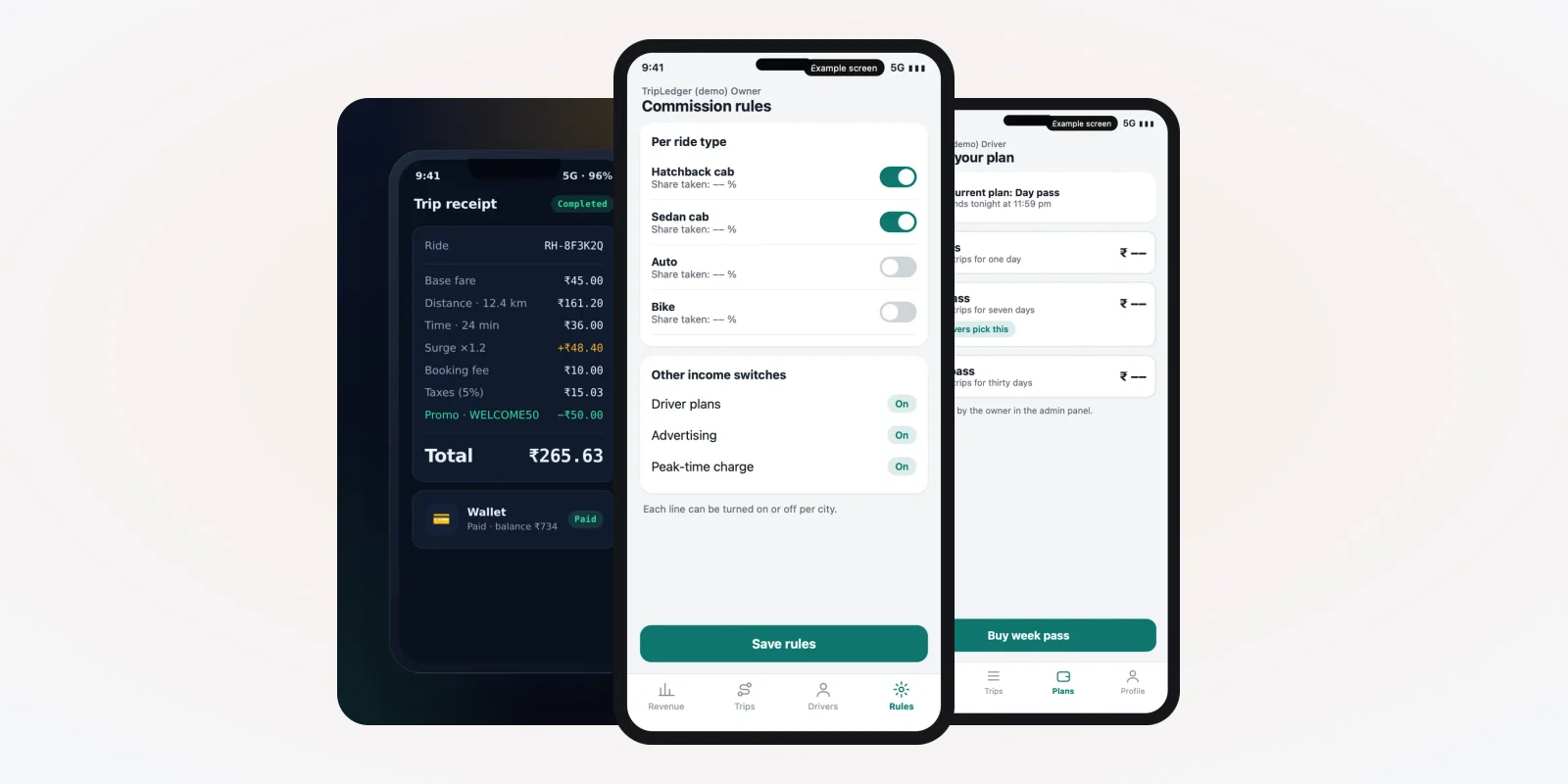
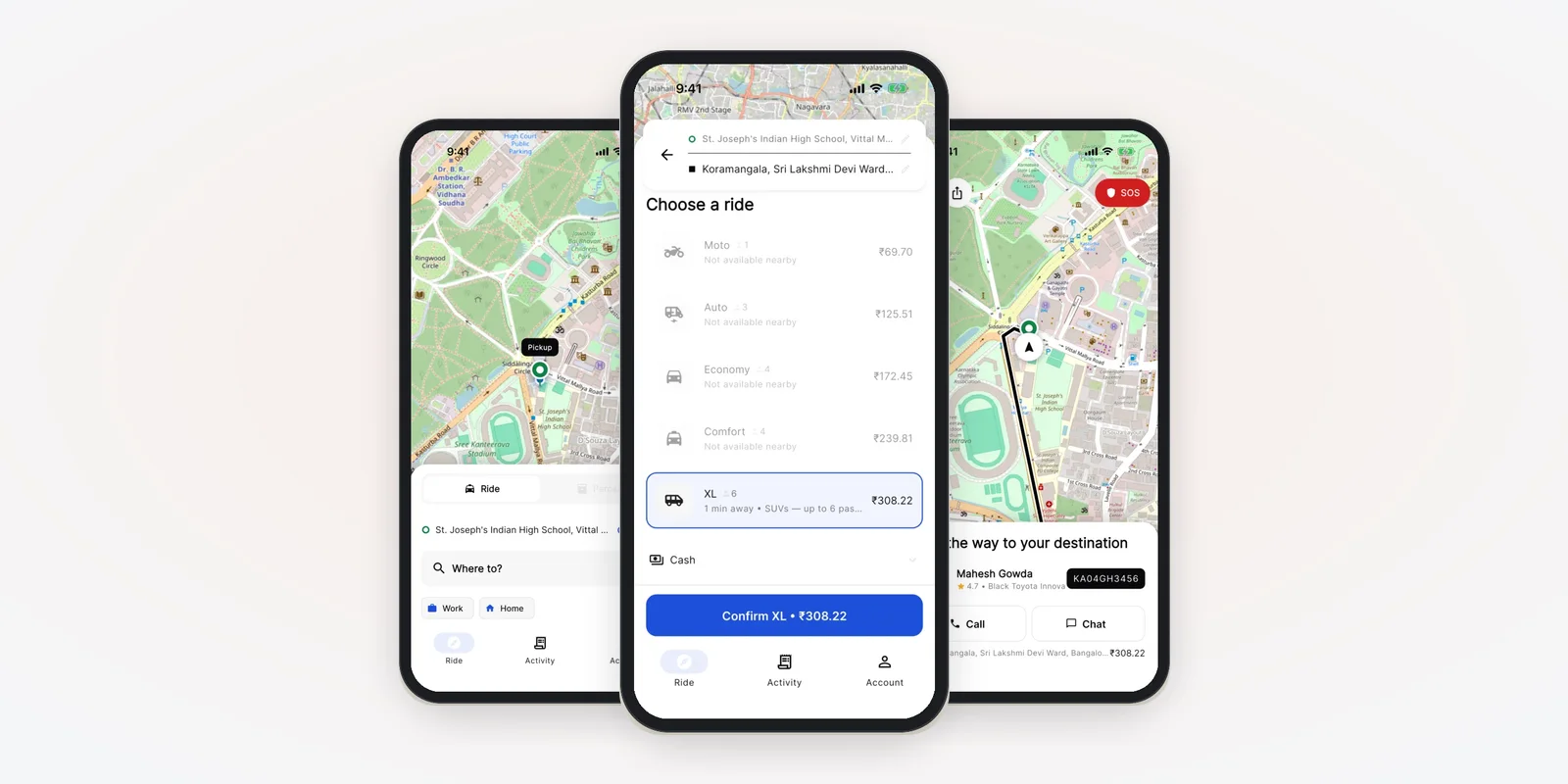
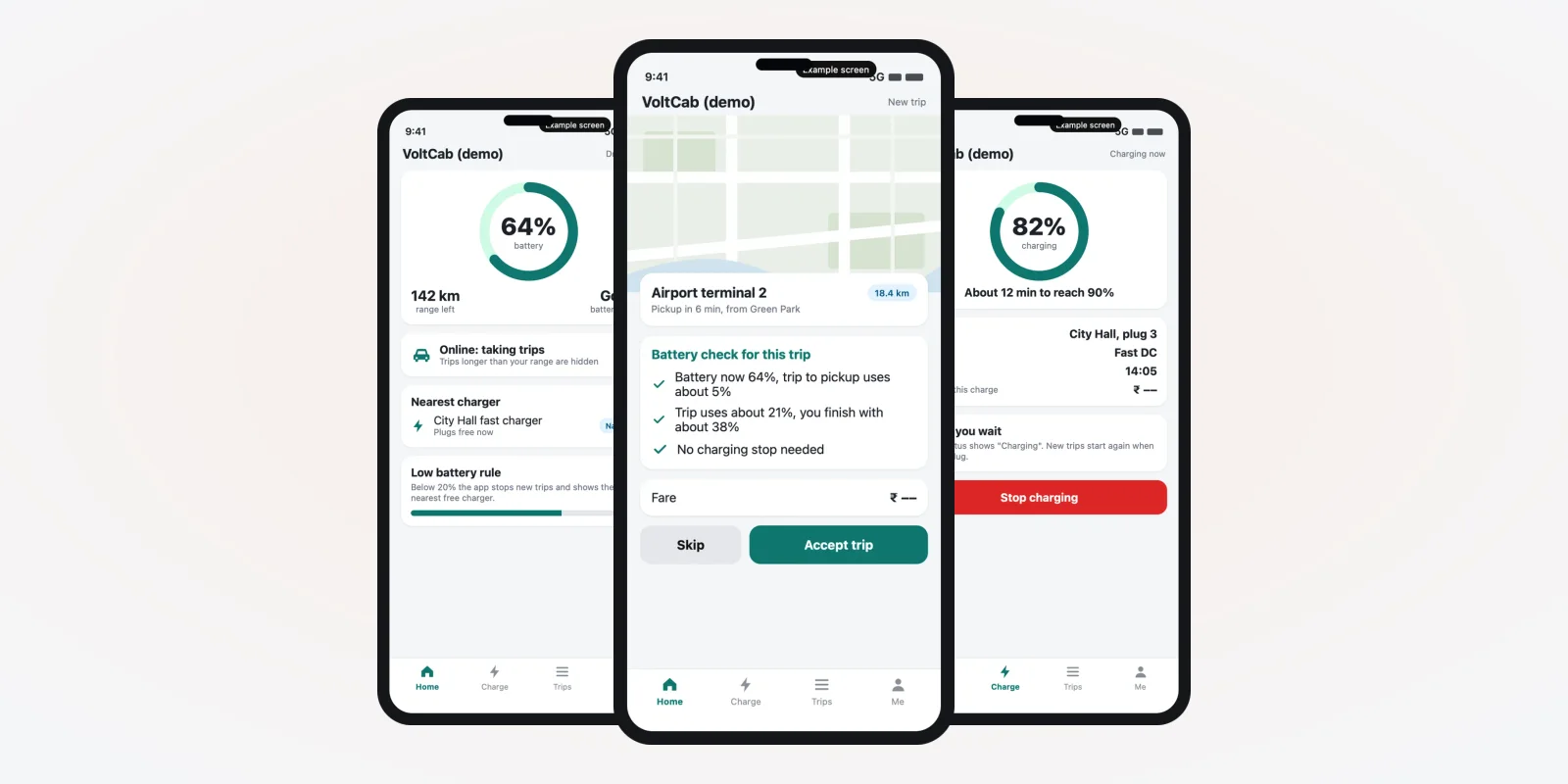
How to Start a Taxi Business in Nigeria With Your Own App
Start a taxi business in Nigeria step by step, and see the cash, sign-in, driver-papers and fare screens your own taxi app needs.

Written by Prabhjot Kaur, Product Manager
Reviewed by the PRS India software & mobile app development team
14 min read
Written from production. Our articles draw on products we run live and the client work behind them, and are revised as the systems they describe evolve.
Starting a taxi business in Nigeria is not the same as starting one in Europe or India. Many riders pay cash. Phone data can drop in the middle of a trip. Roads in Lagos jam without warning. Drivers want to know their papers are in order before they go online. A taxi business in Nigeria needs an app made for these facts.
This guide explains how to start, step by step, and why many new owners choose to build their own taxi app instead of joining a big ride app as a driver. We show the screens such an app needs. We also explain how PRS India builds it for you, under your name.
Key takeaways
- Pick one city or a few areas first, such as Ikeja and the Island in Lagos. Grow after the first area runs well.
- Cash trips must be a first-class payment type in your app, with card and bank transfer next to it.
- Rules differ by state and change over time. Ask the state transport office before you launch.
- Driver papers should live in the app, with a warning before each one ends.
- If you build your own app, the brand, the rider list and the source code are yours.
What a Nigerian taxi business looks like
Most new owners start in one of three ways. Some own a few cars and hire drivers. Some own no cars and sign up drivers who bring their own. Some run a taxi service for a hotel, a school or a company. All three need the same base: a way to take a booking, send it to a driver, and keep a record of every trip.
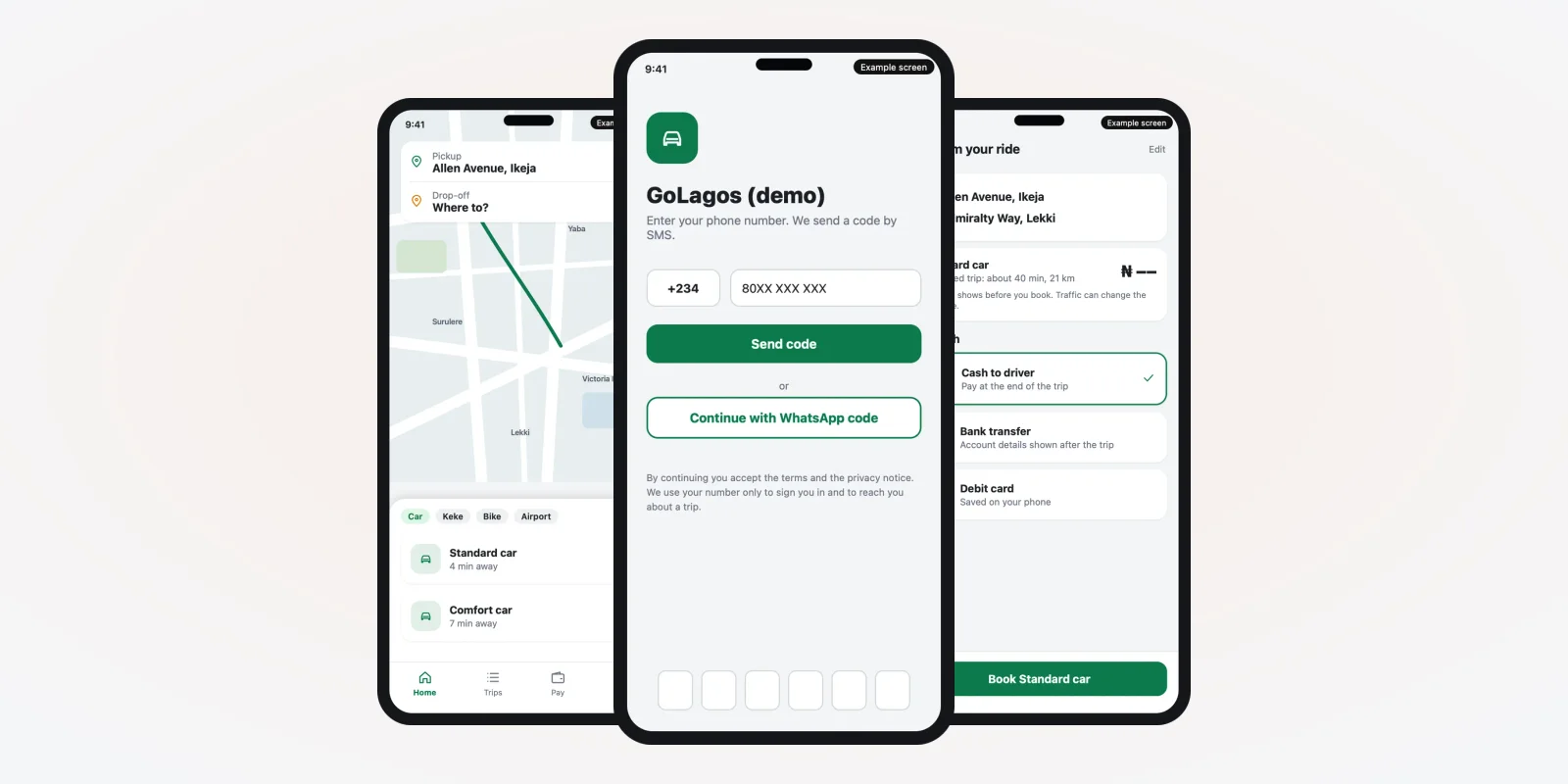
Think about what a rider in Lagos does. She opens the app at Allen Avenue and types a place in Lekki. She wants to see the fare first. She may pay cash. She wants to send the trip to her sister. The screens below show these steps as an example design.
Step one: choose your city and ride types
Do not start with every city. Pick the areas you know. A new owner in Lagos might start with Ikeja and the airport road. Another might start with Victoria Island and Lekki. A new owner in Abuja, Port Harcourt or Ibadan can use the same method.
Then choose the ride types. A standard car and a comfort car are the common start. Some owners add Keke (tricycle) or bike rides later. Rules for these differ by area, so ask the state office first.
Your rider app starts with a local look
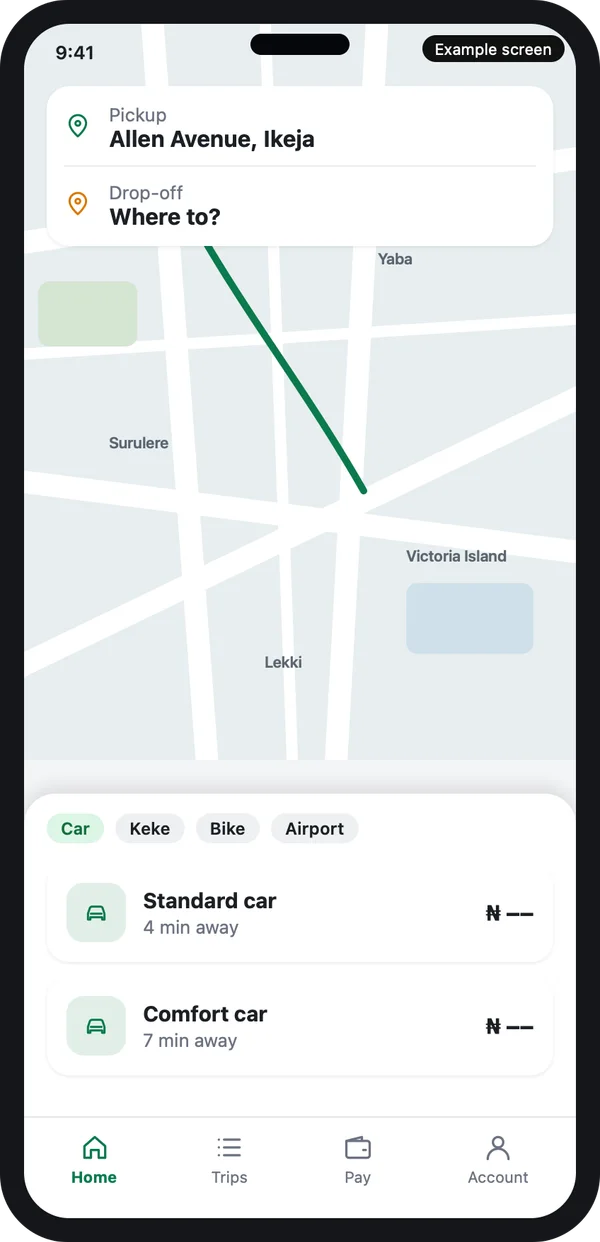
The home screen shows a map and local area names. The rider picks Car, Keke, Bike or Airport. The nearest drivers show on the map with the minutes to arrive.
The same app can be set for Abuja or Port Harcourt by adding those areas in the admin. You do not need a new app for each city.
Step two: sort your papers and rules
Taxi work in Nigeria is covered by national and state rules. The Federal Road Safety Corps handles driver's licences and road safety across the country. States, such as Lagos, can set their own rules for taxi and ride-hailing operators. You can start at the Lagos State Government site and ask the transport ministry what applies to you.
Check before you launch. We could not use an official rule text for this guide. Rules on operator licences, driver badges and fees change. Check the latest rules with the state transport office and a lawyer. This guide does not give legal advice.
What operators usually ask drivers to show is a short list: driver's licence, vehicle papers, insurance, a road-worthiness paper and a government ID. Confirm the exact list for your state. Your app should let you change this list without a new build.
The problem
Where new taxi owners lose money
These six problems come up again and again for new owners.
- Cash not recorded. The driver takes the cash and the trip is never entered. You cannot see what the car earned.
- Papers end quietly. Insurance runs out and nobody notices until a stop on the road.
- Weak network. The trip freezes at a bad spot and the rider calls the driver again and again.
- SMS codes arrive late. The rider waits for a login code, gives up and uses another app.
- Fare disputes. The driver says one fare, the rider says another. Fuel cost changes make this worse.
- Calls instead of bookings. Every booking runs through your phone, so you cannot grow past a few cars.
Step three: build the app around how people pay and sign in
This is where an app made for Nigeria differs from one copied from another country. Two screens decide a lot: sign-in and payment.
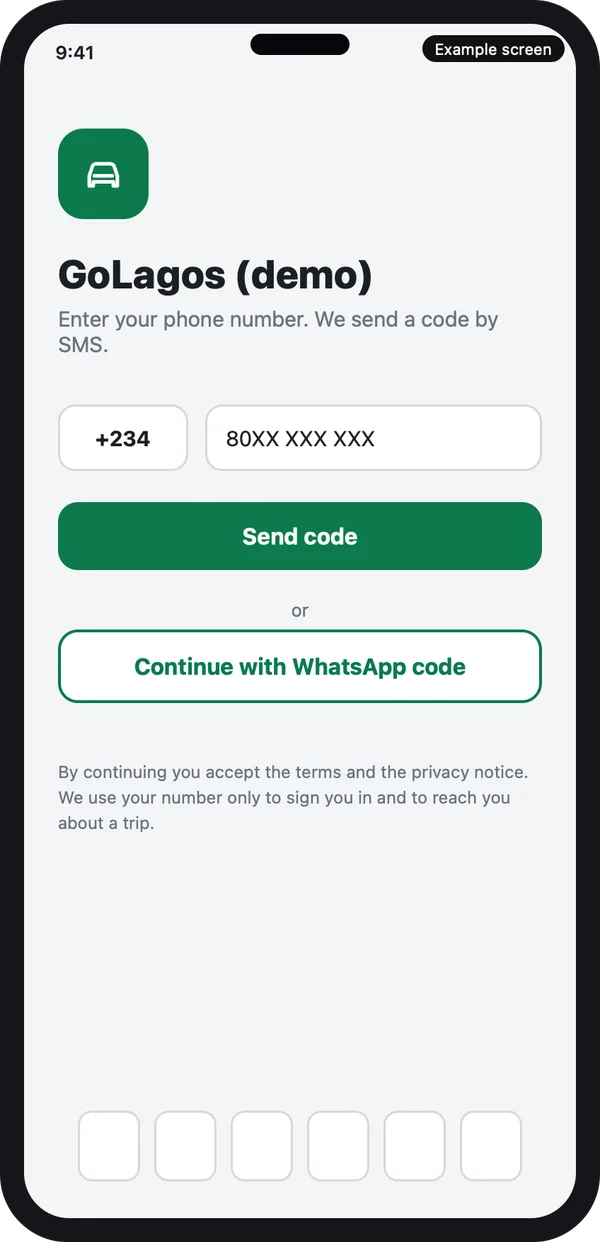
Sign in with a phone number
The rider enters a +234 number and gets a code. If the SMS is late, the app offers a code by WhatsApp or a voice call.
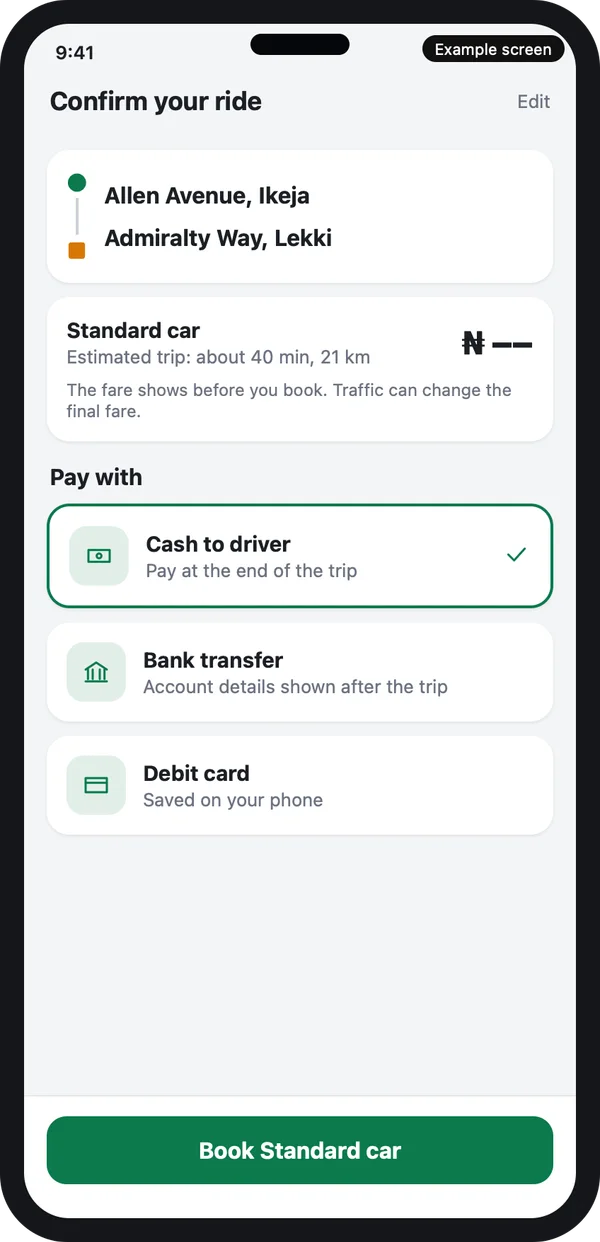
Fare first, then pay your way
The fare shows before the rider books. Cash, bank transfer and debit card sit side by side.
For card payments, the Central Bank of Nigeria sets the payment system rules. You use a licensed payment company to take cards. The app never stores full card numbers. Your developer connects the payment partner you choose.
Bank transfer needs care. The rider sends money and the driver needs proof. A good design shows the account details after the trip and marks the trip paid only when the payment partner confirms it.
Step four: handle cash trips properly
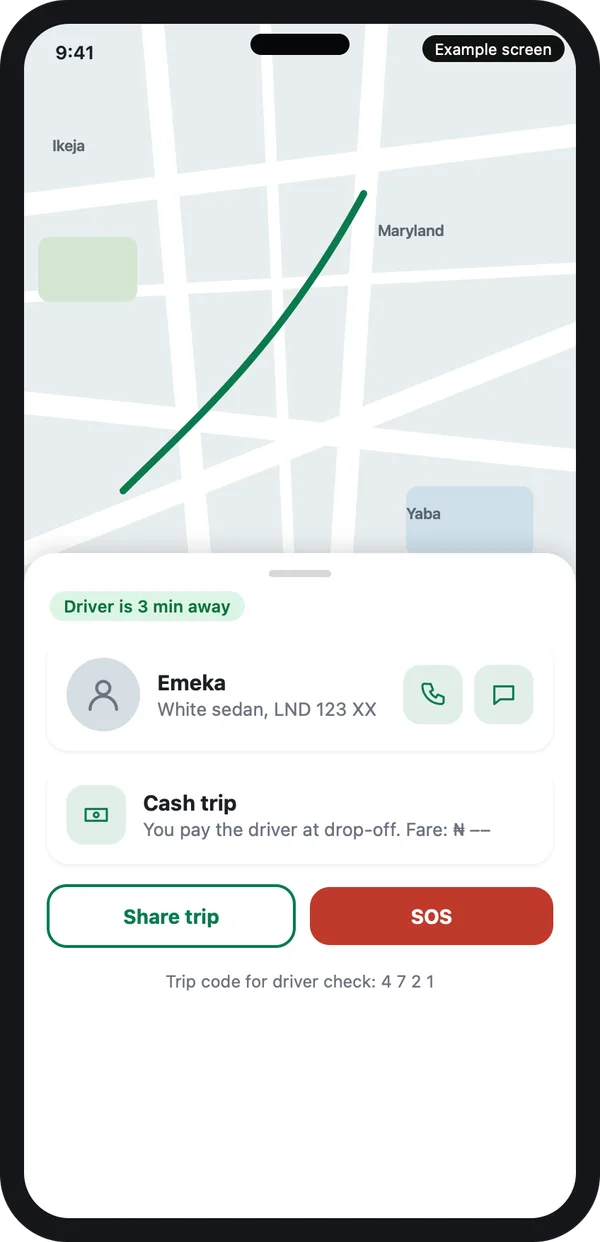
Cash is common, so plan for it from day one. In the app, a cash trip should work like any other trip. It has a driver, a route, a fare and a record. The difference is only who holds the money at the end.
What a cash trip needs
- A visible "Cash trip" label for the rider and the driver
- A trip code, so the right rider gets in the right car
- A share-trip button and an SOS button
- A record of the cash the driver collected, for your books
Our list of taxi booking app features covers the other basics, such as ratings and trip history.
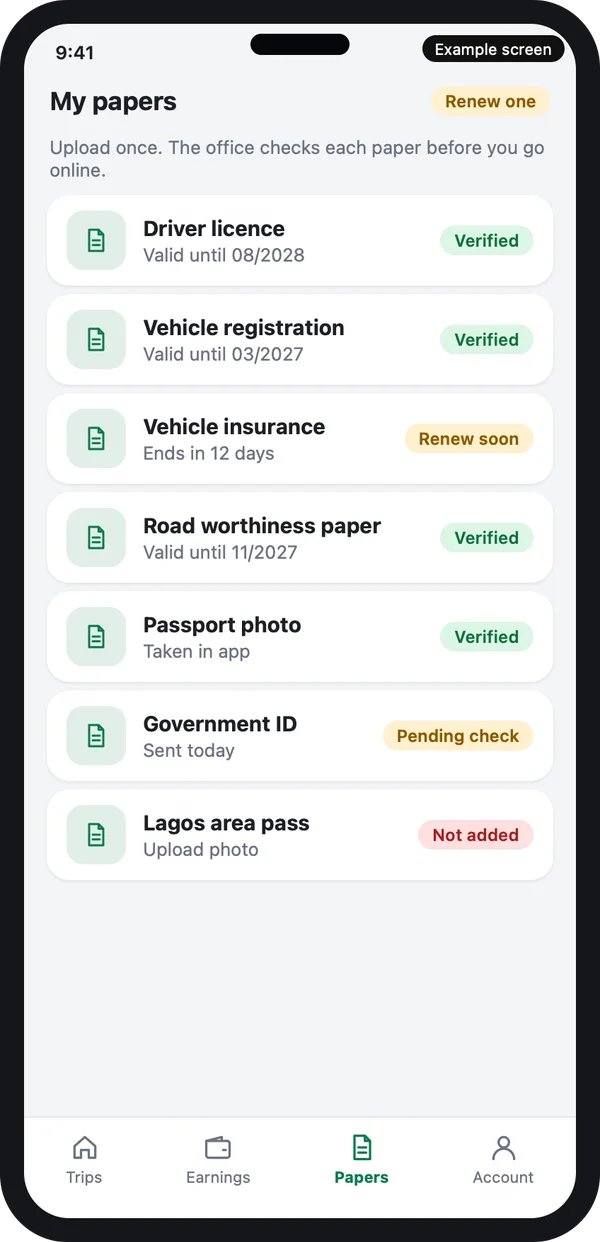
Step five: bring drivers on with a papers checklist
Drivers sign up in the driver app, upload their papers and wait for your check. Only checked drivers can go online. This protects riders and protects you.
Papers with dates and warnings
Each paper has a status: verified, pending or not added. The app shows a warning some days before a paper ends. A driver with an ended paper cannot take trips until the office checks the new one.
You can change the list when the state changes its rules. Our guide to white label taxi app development explains when a ready base saves time and when it limits you.
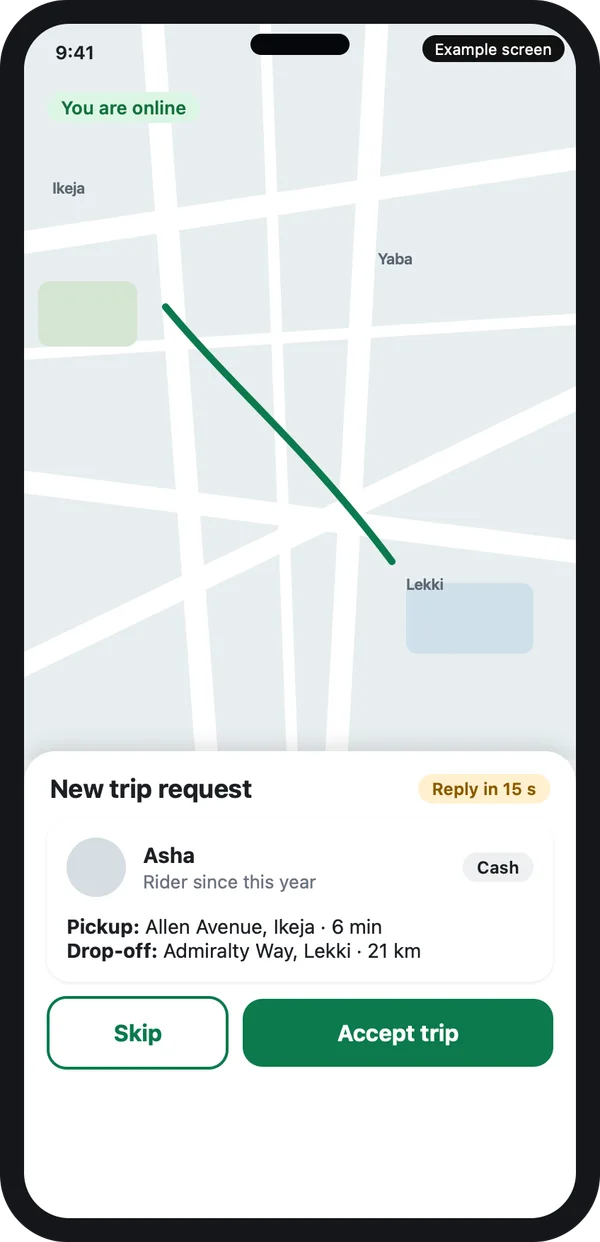
On the trip side, the driver sees the request, the pickup, the drop-off and the payment type before accepting.
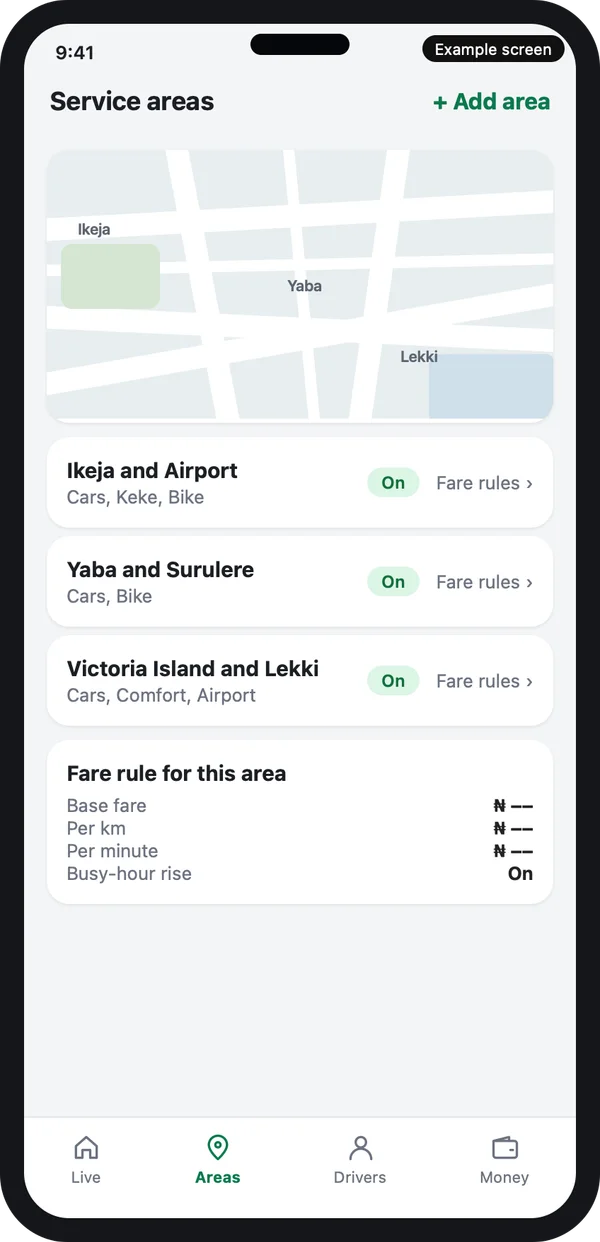
Step six: set areas and fare rules in the admin
The web admin is where you run the business. You draw service areas, choose which ride types work in each area, and set fare rules: base fare, per km, per minute and a busy-hour rise. When fuel cost moves, you change the rule once and every new trip follows it.
Also set in the admin
- Which drivers are online, on a live map
- Which papers end soon
- Cash collected per driver
- Complaints and refunds
For more admin ideas, see our guide to white-label taxi booking apps.
Step seven: launch in one area
Start with a small group of drivers in one area. Run the app for a few weeks. Watch cancelled trips, late arrivals and cash that does not match. Fix these, then add the next area. A slow start costs less than a big launch that fails.
Also plan how to bring in riders. A hotel, a school or a company that needs a regular car is a good first customer for a new service.
Data and privacy for your riders
A taxi app holds phone numbers, home addresses and trip history. The Nigeria Data Protection Act, 2023 covers this kind of personal data. The Nigeria Data Protection Commission publishes guidance and the registration steps for organisations that handle it. Ask a lawyer whether you must register.
In the app, we build the basics: a clear privacy notice, a way for a rider to ask for their data to be deleted, and limited access in the admin. Only staff who need phone numbers see them.
Your own app vs joining a big ride app
| Question | Join a big ride app as a driver | Your own taxi app |
|---|---|---|
| Whose brand do riders see? | The big app's brand | Your brand |
| Who holds the rider list? | The big app | You |
| Who sets fares and rules? | The big app | You |
| Cash and bank transfer choices | Fixed by the app | You decide with your payment partner |
| Local features, such as Keke or airport | Only if the app supports them | Built for your area |
| Source code | Not yours | Handed over to you |
| Time to start | Fast | Needs a build |
If you only own one car, joining is the quicker choice. If you plan to run many cars, a company ride service or an airport desk, your own app starts to make sense. Our guide to clone scripts vs custom development compares the two build routes.
Worked example: a Lagos fleet owner goes app-first
Take a fleet owner with a few cars working around Ikeja. Today, bookings come by phone. Here is how the move to an app could look.
- Write down the process. Who books, who dispatches, how cash comes back to the office.
- Choose the first area. Ikeja and the airport road, with Car and Airport ride types.
- Sign up the drivers. Each driver uploads papers. The office checks each one.
- Set fare rules. Base fare, per km, per minute, and the busy hours.
- Test with a few riders. Staff and friends book real trips for two weeks.
- Launch under your brand. Share the app link on WhatsApp and at the airport desk.
Our service
How we build your own taxi app
- We learn your process. One call about your city, ride types, payment choices and driver checks.
- You click through screens. Before any code, you see the rider, driver and admin screens for your business.
- We build. A mobile app for Android and iPhone and a web admin, made with Flutter for the apps.
- Your team tests it. Staff and a few drivers run real trips and tell us what to change.
- Launch under your brand. We help you publish on the app stores in your name.
- Support after launch. We fix issues and add features as you grow. See our build process.
We have built taxi apps like Ola and taxi admin panels. The screens in this guide are examples we designed for a Nigerian taxi business. They use demo data and are not a live product.
Taxi app development cost: what decides it
We do not print a price here, because the budget depends on your choices. These are the main factors.
- How many apps: rider only, rider and driver, or all three with the admin
- Ride types: car only, or car, Keke, bike and airport
- Payments: cash only, or cards and bank transfer through a payment partner
- Languages and cities
- Extras: scheduled rides, company accounts, parcel delivery
- Hosting and support after launch
| Point | Custom build | Monthly-plan taxi app |
|---|---|---|
| Payment | One build cost, then hosting | A monthly fee that continues |
| Source code | Yours | The vendor's |
| Local features | Built to your list | Limited to the plan |
| Change later | You choose when | Depends on the vendor |
Compare other options in our list of Ola alternatives if you are still choosing a model. For a written number, tell us your plan and we send a written quote after one call.
Whoever builds it, make sure it can
- Take cash, bank transfer and card trips in one app
- Offer a code by WhatsApp or voice if the SMS is late
- Keep the trip record safe when the network drops
- Hold driver papers with dates, warnings and an office check
- Let you change areas, ride types and fare rules without a new build
- Hand over the source code and your data
FAQ
How do I start a taxi business in Nigeria?
Choose one city and a few areas. Sort the papers with the state transport office. Sign up checked drivers. Then take bookings through an app or by phone. Many owners build their own app so they keep the brand and the rider list.
Do I need a licence to run a taxi or ride-hailing business?
Rules differ by state and change over time. Ask the state transport office, such as the one in Lagos, and a lawyer. We could not use an official rule text for this guide, so check the latest rules before you launch.
How long does it take to build a taxi app?
It depends on the number of apps and extras. After one call about your plan, we share a plan with dates for each part, starting with screens you can click through.
Will I own the app and its source code?
Yes. We build it under your brand and hand over the source code. Your rider and driver data stays with you.
Can the app take cash trips?
Yes. A cash trip works like any other trip, with a label, a trip code and a record of the cash the driver collected.
Can riders pay by card or bank transfer?
Yes, through a licensed payment partner that you choose. The app does not store full card numbers. We connect the partner you pick.
Will the app work when the network is weak?
We design the app to keep the trip record and retry when the network returns. No app can work with no network at all, so we test it on weak connections.
Is rider data safe?
It should be. The Nigeria Data Protection Act, 2023 covers personal data. We build a privacy notice, delete requests and limited access in the admin. Ask a lawyer whether you must register.
Which platforms do you build for?
Android, iPhone and a web admin. A web booking page can be added if you want one.
Can PRS India build a taxi app for my business in Nigeria?
Yes. We build custom taxi apps: rider app, driver app and web admin under your brand. Book a consultation and we will show you screens for your city.
Related guides
- Electric Cab Booking App: EV Taxi Business Guide
- Employee Transport Management Software: Office Cab App
- How Do Taxi Apps Make Money: Revenue Model Guide
- Ride Sharing App for Women: Safety Features to Build
- White Label Taxi App Development Company in India
- Mobile app development
- SaaS development
- Flutter app development
Written by
Prabhjot Kaur · Product Manager
Product Manager at PRS India. Turns what a client needs into a screen-by-screen plan for the app, and checks every release against that plan before it goes out.