Engineering
White-Label Taxi App Development — Open-Source Ride Booking
A complete taxi booking platform — customer and driver apps, live GPS tracking, fare calculation, payments and an admin panel — shipped as full source code you can rebrand and launch as your own.

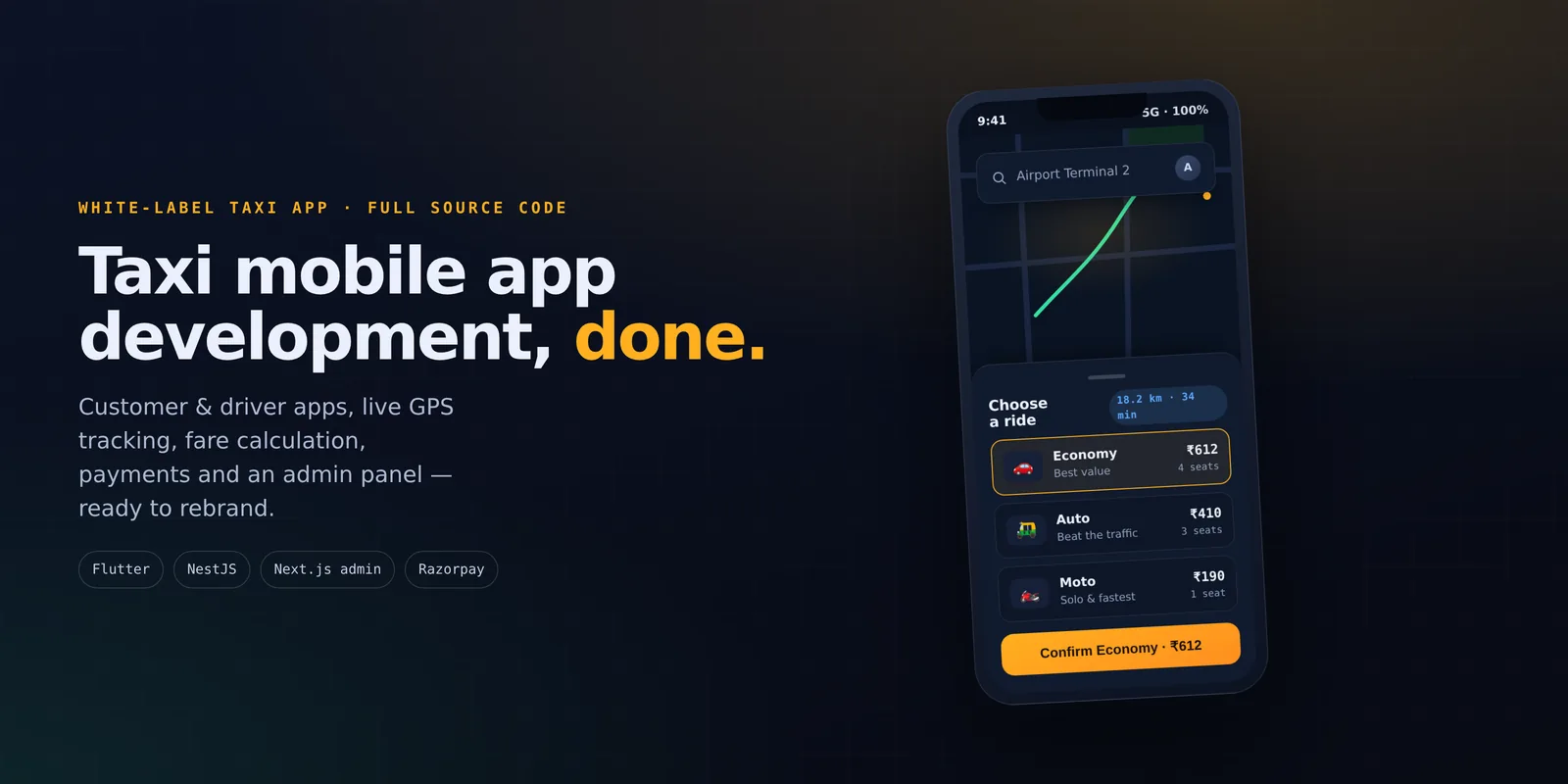
The fastest way to launch a taxi business in 2026 is not to build a ride booking mobile app from scratch — it is to start from a complete, open-source taxi app you can rebrand as your own.
Taxi mobile app development done the traditional way means twelve-plus months of engineering across two mobile apps, a real-time dispatch backend and an operations panel before you take a single ride.
Ridehail is an open-source ride booking app — an Uber-like app you buy as full source code, rebrand, and put on the road. It ships with a customer app, a driver mobile app, a web admin panel and a real-time backend, all sharing one dispatch, pricing and settlement engine. Below is a feature-by-feature tour of what you get, with real screens from each of the three apps.
What's included: three apps, one platform
A ride-hailing marketplace has three sides, and this taxi booking software covers all of them, plus the API that ties them together:
- Customer app (Flutter, iOS & Android) — book a ride or a parcel, track the driver live, and pay by cash, with the payment layer built so a wallet or a card gateway can be added for your market.
- Driver mobile app (Flutter, iOS & Android) — go online, accept nearby offers, navigate to riders, and track earnings and incentives.
- Admin panel (Next.js) — run the whole operation: live dispatch, driver onboarding, pricing, surge, promos, wallet and support.
- Backend API (NestJS + Prisma + MySQL) — real-time dispatch, fare calculation, geospatial matching, payments and safety, over REST and WebSockets.
The customer app — the rider experience
The customer app follows a booking flow riders already know from every major ride hailing app: set pickup and drop on a live map, choose a vehicle tier, and confirm at a price you can see up front.
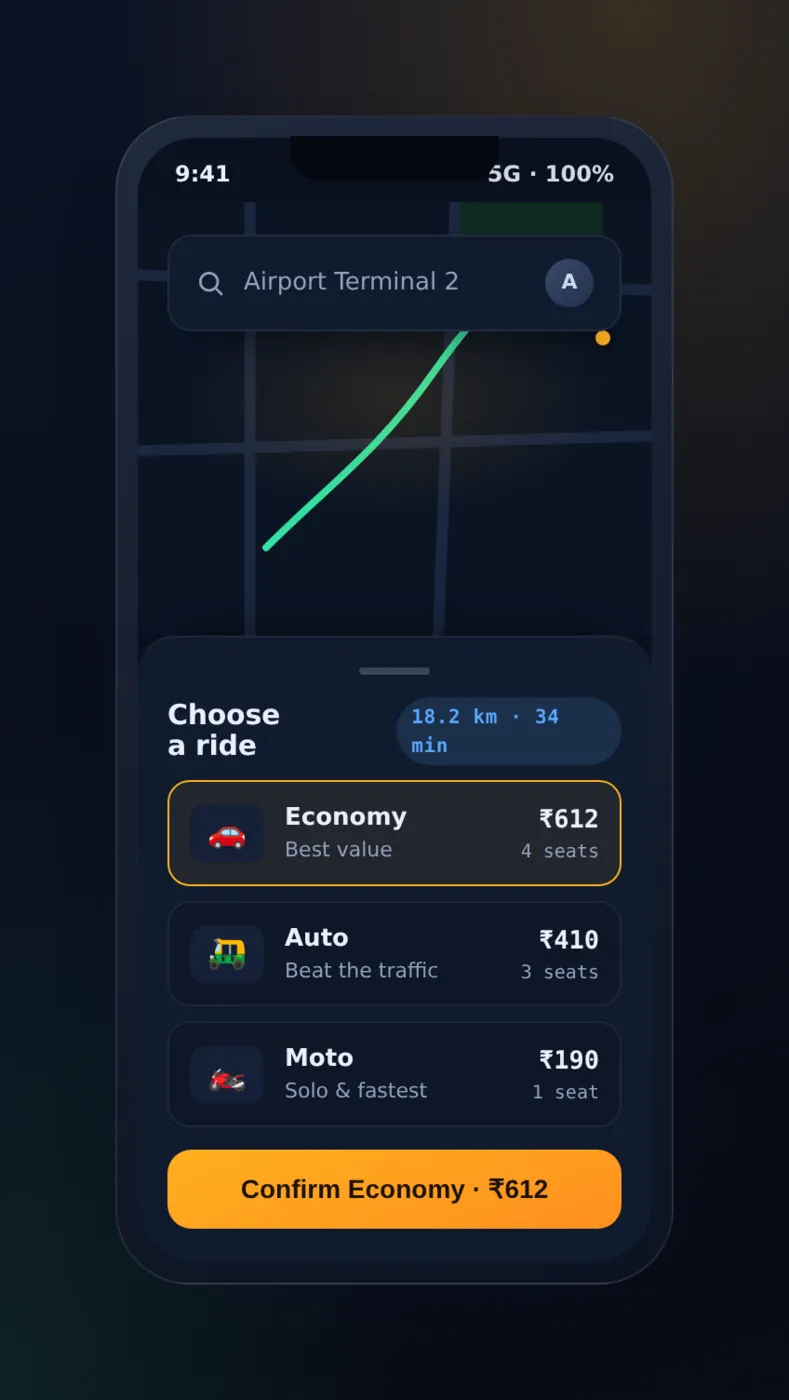
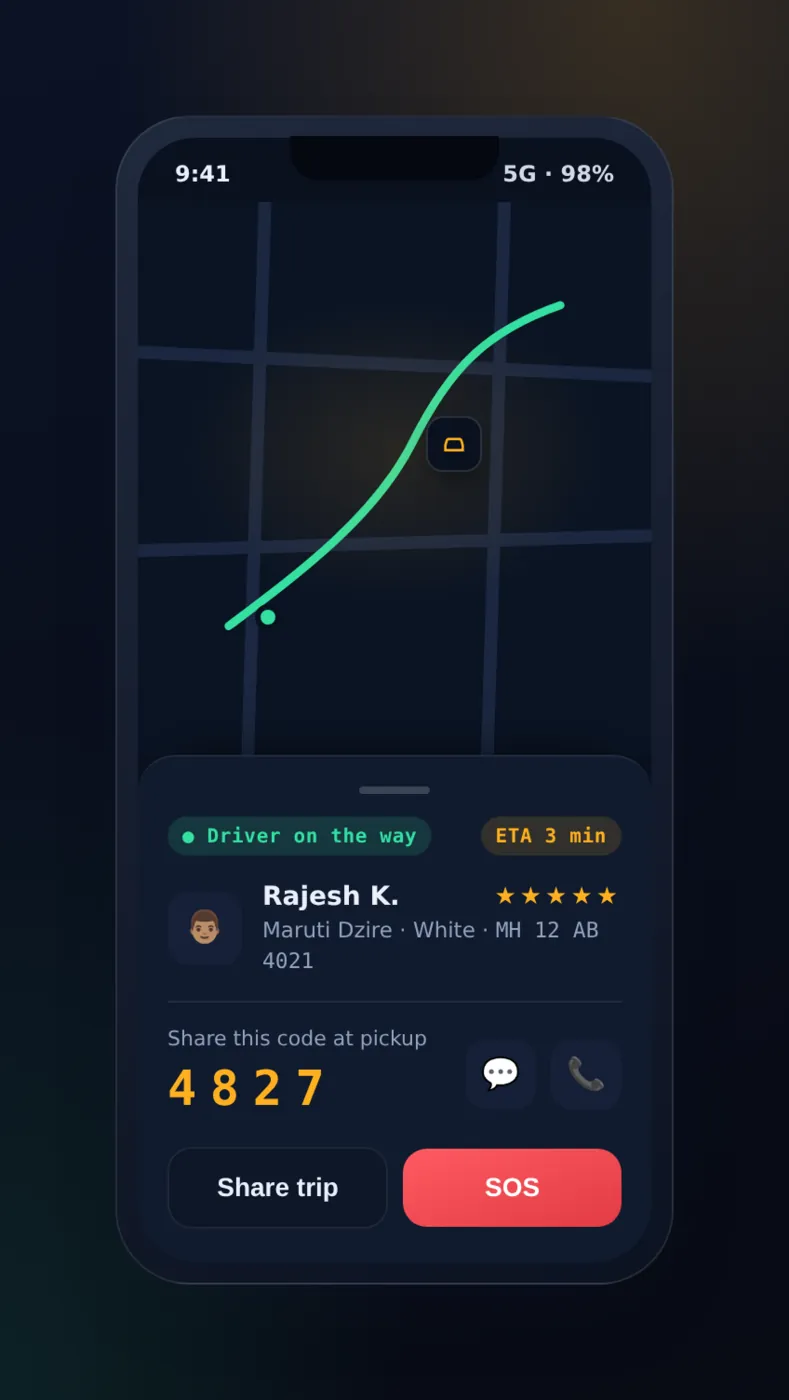
Booking and live GPS tracking:
- Vehicle tiers. Riders choose from configurable tiers — Economy, Comfort, XL, Moto or Auto — each with its own pricing and capacity, and get an upfront quote for every option.
- Live tracking. Once a driver accepts, the app streams the vehicle's real position over a WebSocket with a constantly-updating ETA, the driver and car details, one-tap calling and in-ride chat.
- Pickup OTP. A four-digit pickup OTP confirms the rider is boarding the car that was assigned to the trip, not whichever one pulled up first.
- Saved places, scheduled rides and promo codes are all one tap away.
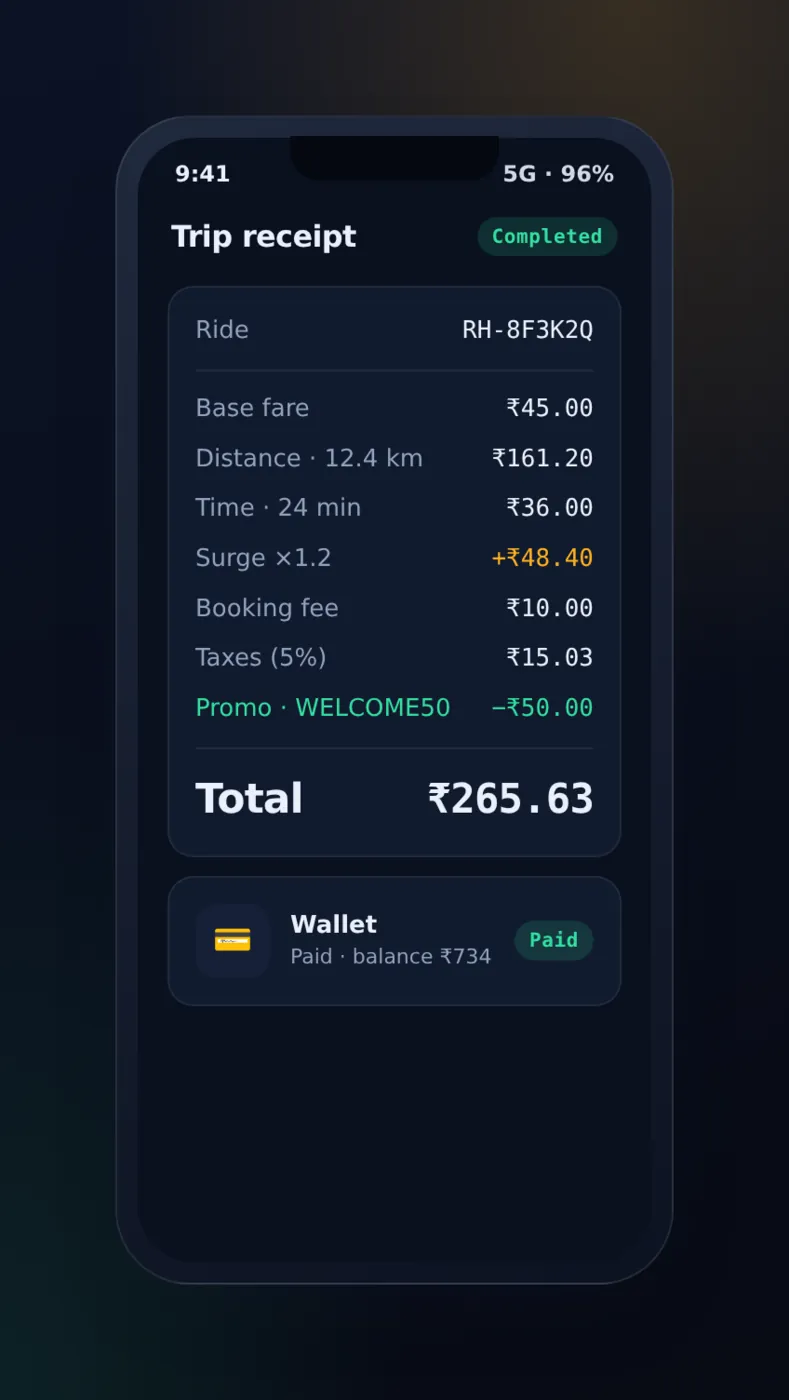
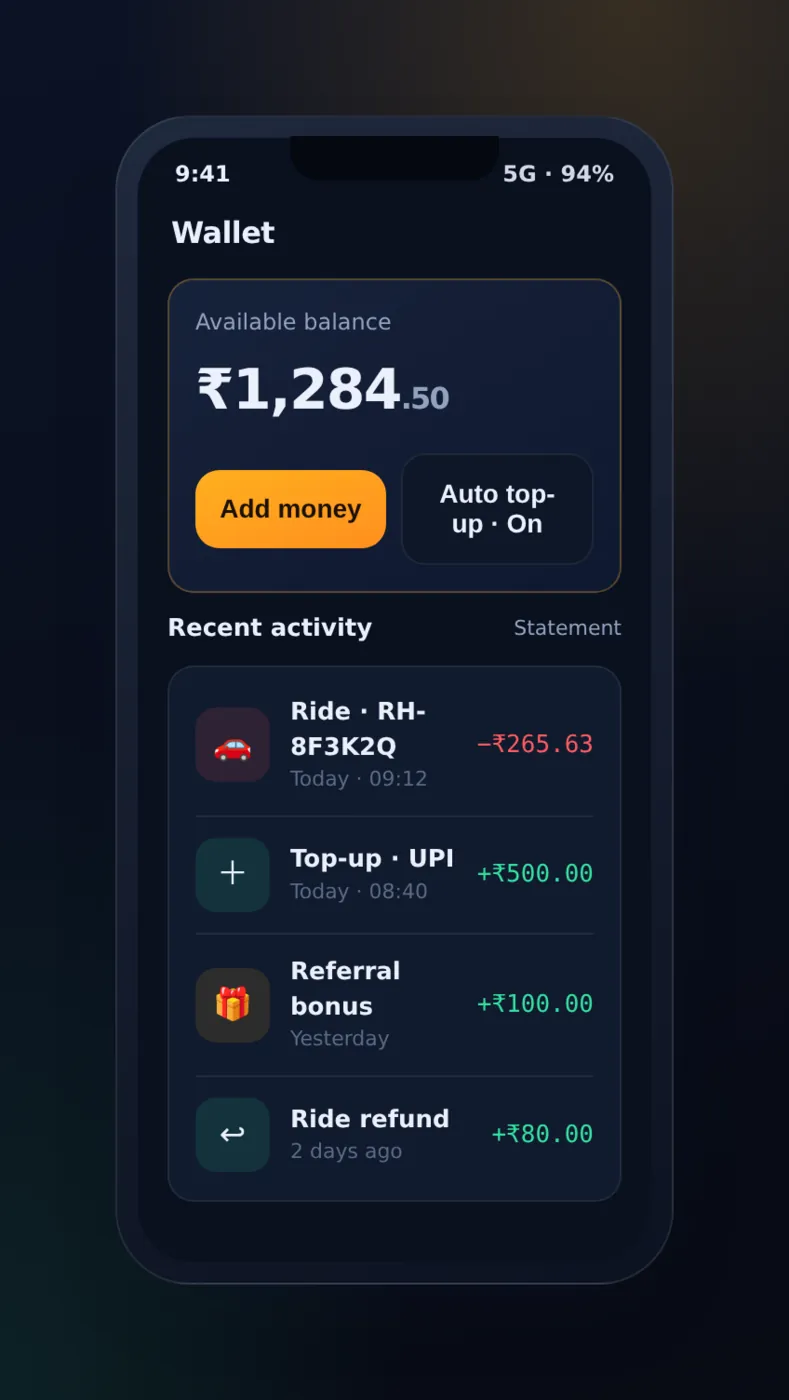
Upfront fares and flexible payments. A deterministic fare calculation engine quotes the price from a real route estimate before a driver even exists, then freezes each component — base, distance, time, surge, waiting, tolls, booking fee, tax, tips and discounts — so a mid-ride surge change can never silently reprice a trip.
Fares are collected in cash in the apps as shipped. Behind them the payment layer is complete — an append-only wallet ledger, and Razorpay order creation, signature verification, webhooks and refunds in the API — so card, UPI or wallet payment can be switched on for your market with your own gateway account, or swapped for Stripe or a local provider.
Itemising the fare is not cosmetic. The quote comes from a predicted route, and the trip that actually happens rarely matches it — traffic, a changed drop point, a driver who takes the long way round. When a rider disputes the total, the only useful answer is the line that produced it, which is why the components are stored with the ride instead of being recomputed later against whatever the rate card says by then.
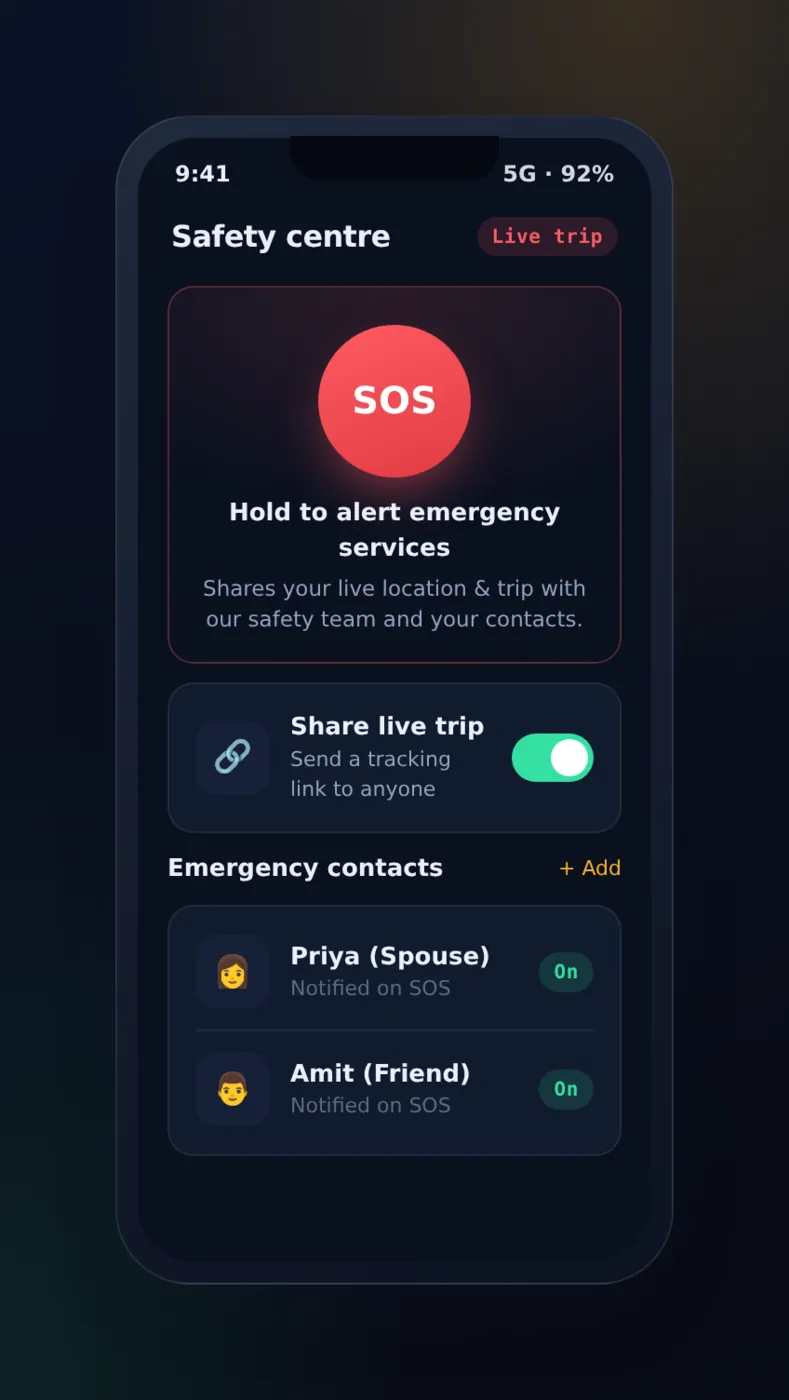
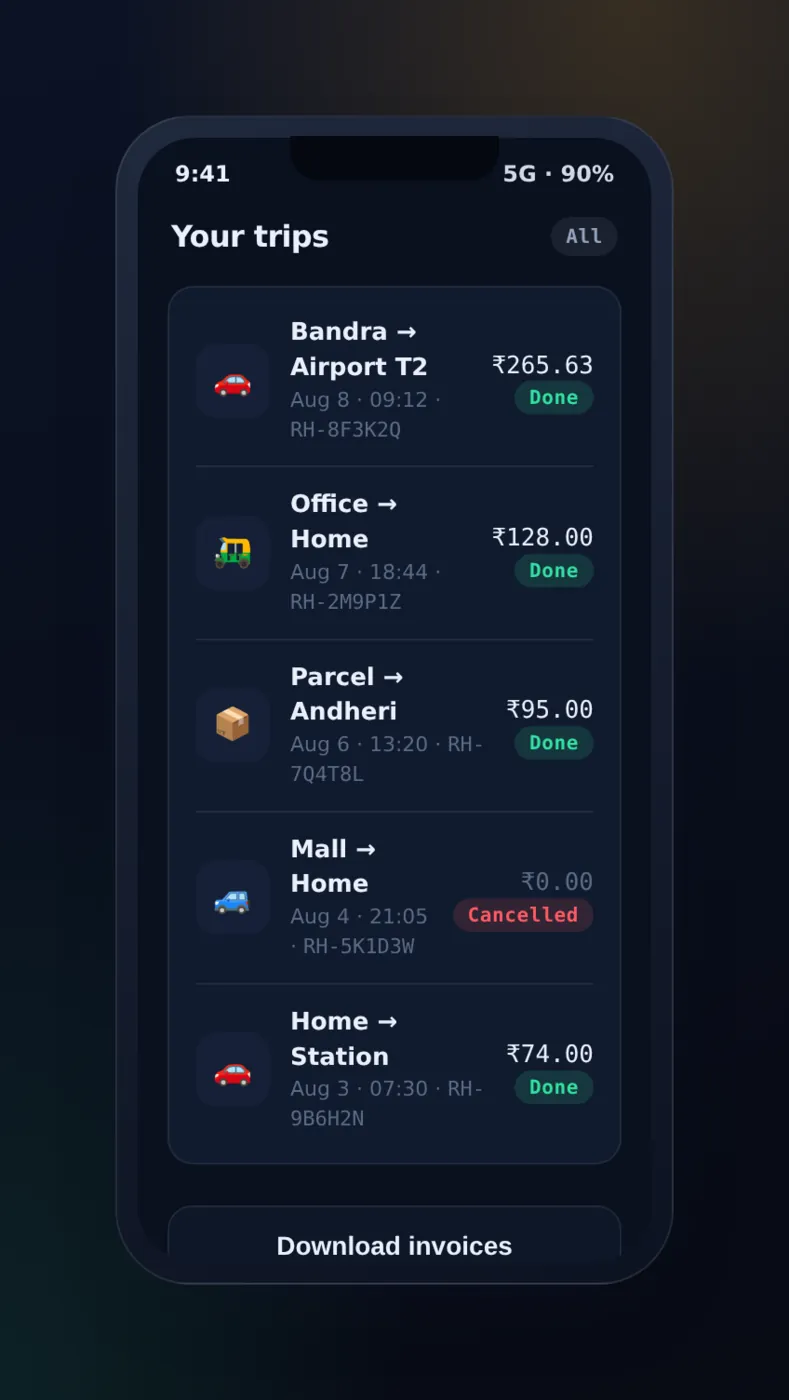
Safety and trip history. A prominent SOS raises an alert with the rider's live location to the admin safety queue, and is built to text the rider's emergency contacts at the same time; a shareable live-tracking link lets anyone follow the trip on the web with no app.
Texting those contacts depends on an SMS gateway you configure: the account and the per-message cost are yours, and wiring one up is part of deployment. Until it is, an SOS reaches your operators and goes no further — which is the assumption to check before you tell riders what the button does.
Every ride and parcel is stored in a searchable history with its human-readable code, route, itemised fare and status — ready to re-book, rate, invoice or dispute.
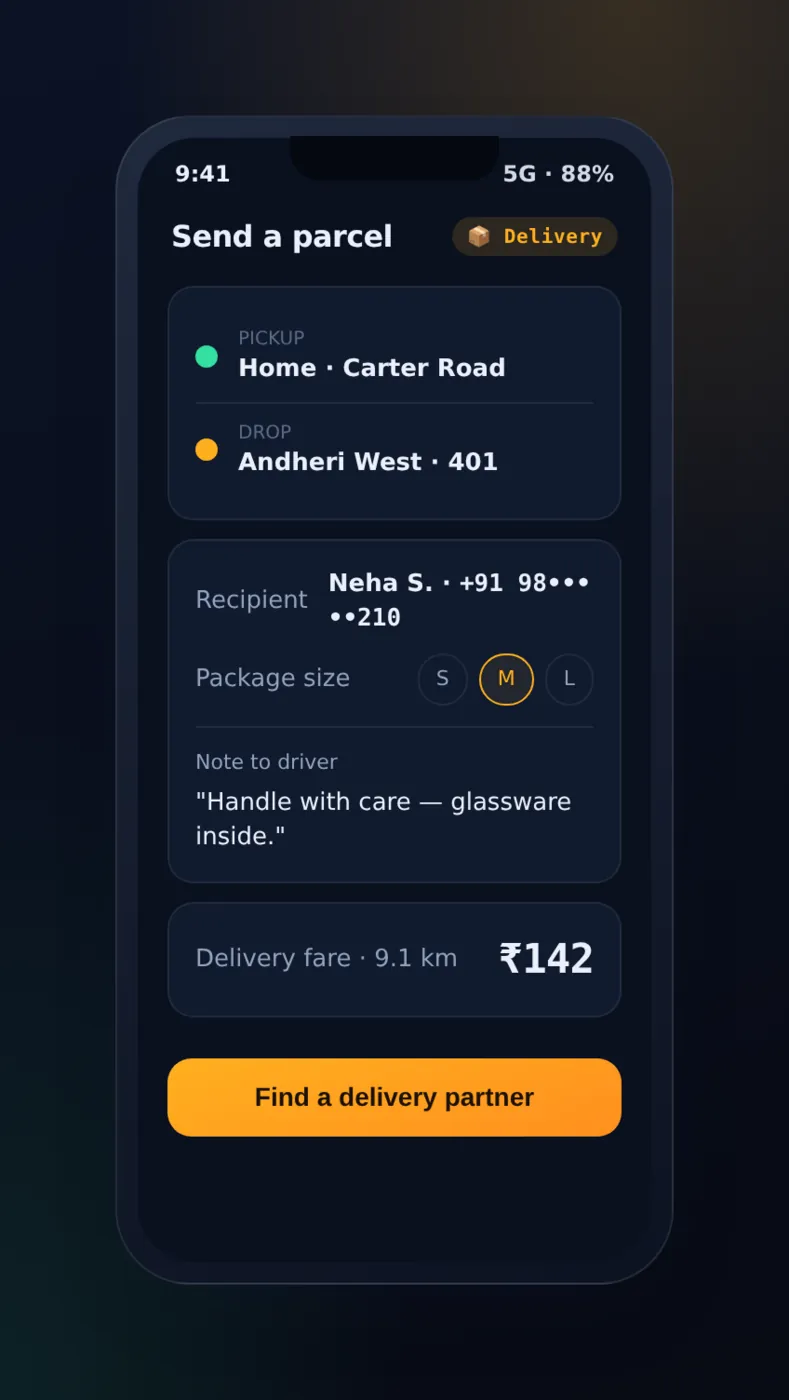
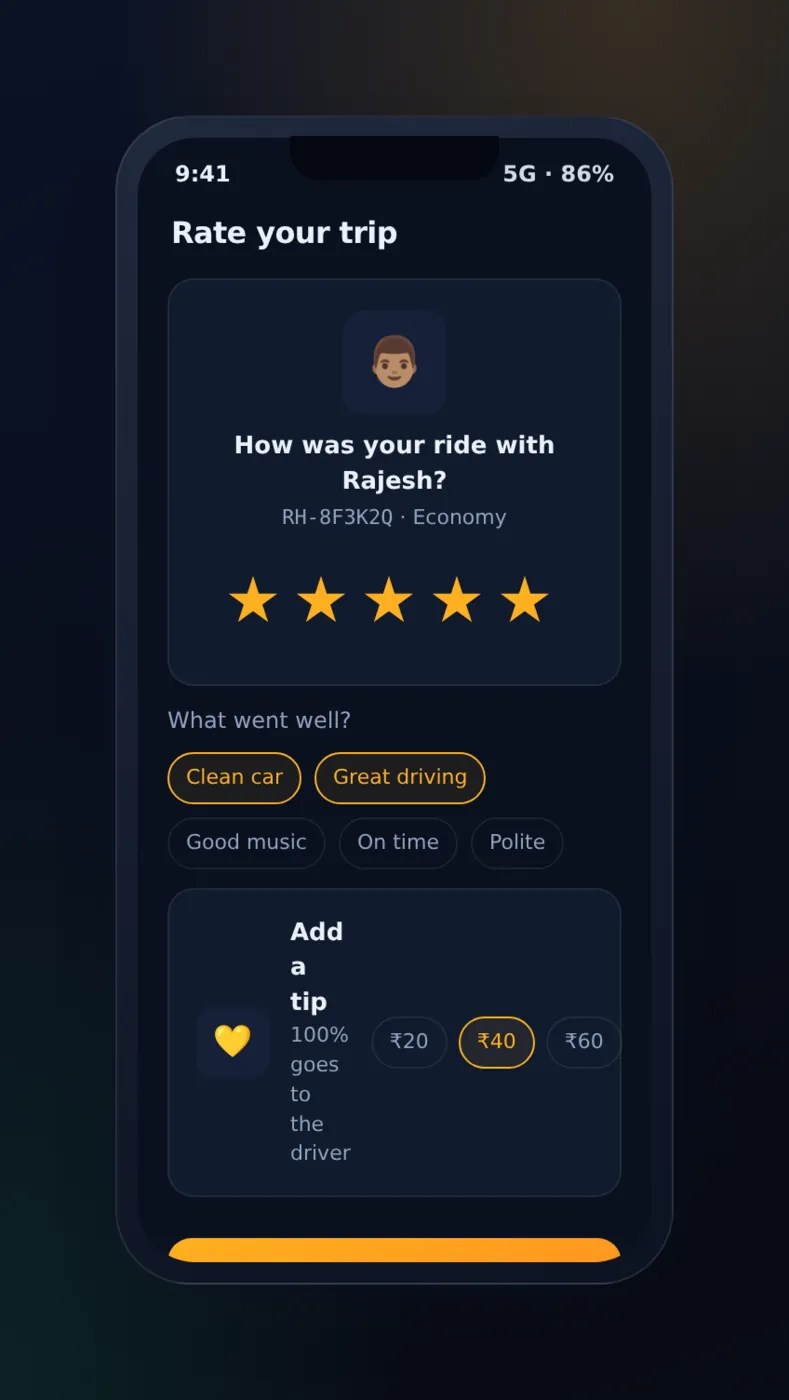
Parcel delivery and ratings. The same platform moves packages: a parcel booking carries recipient details, a package size and a note, and runs through the exact same dispatch, tracking and settlement flow as a ride — a second revenue stream with no second app to operate.
After every trip, riders and drivers rate each other with quick tags, comments and optional tips.
The driver app — an earning machine
The taxi driver app is built around one job: help drivers earn. One toggle takes them from off-duty to online, and from there everything is about the next ride and the money it makes.
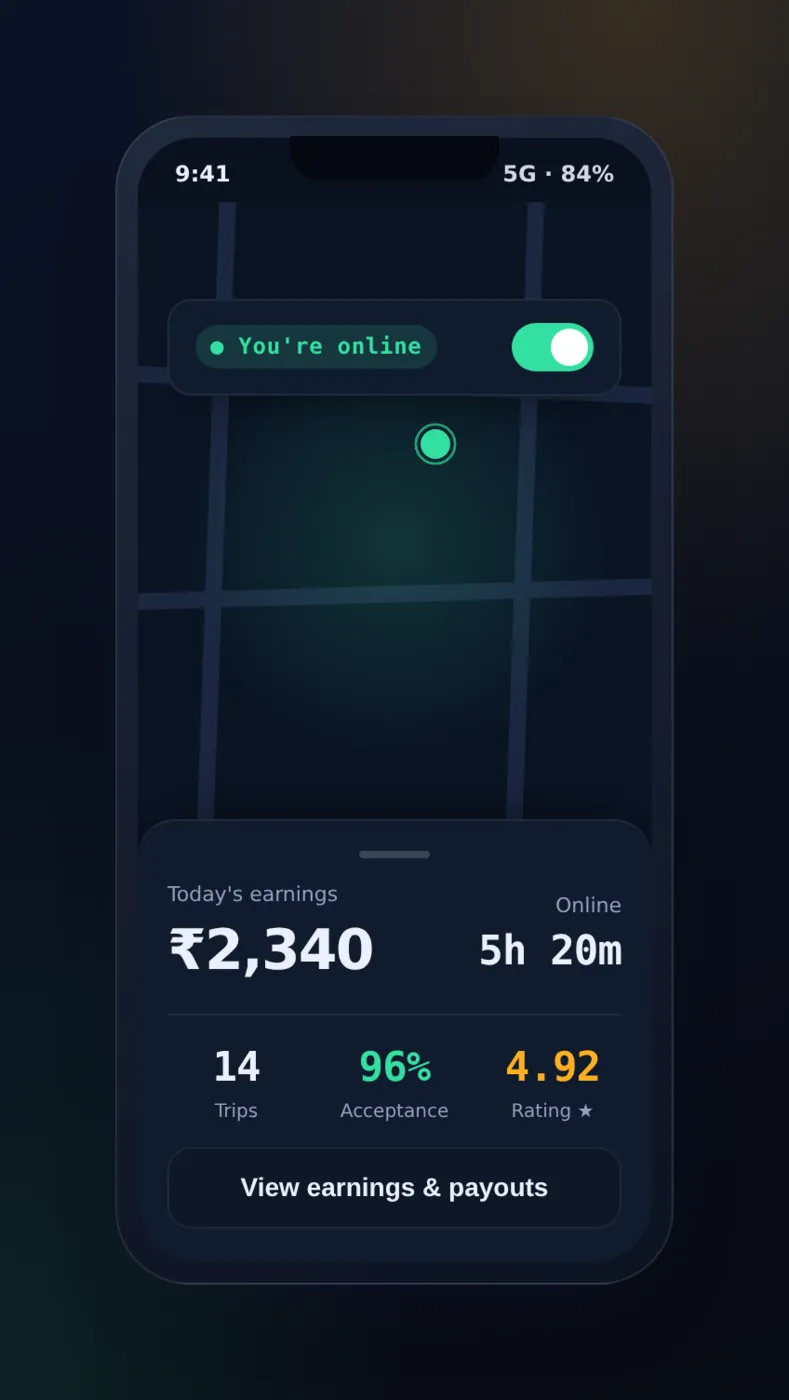
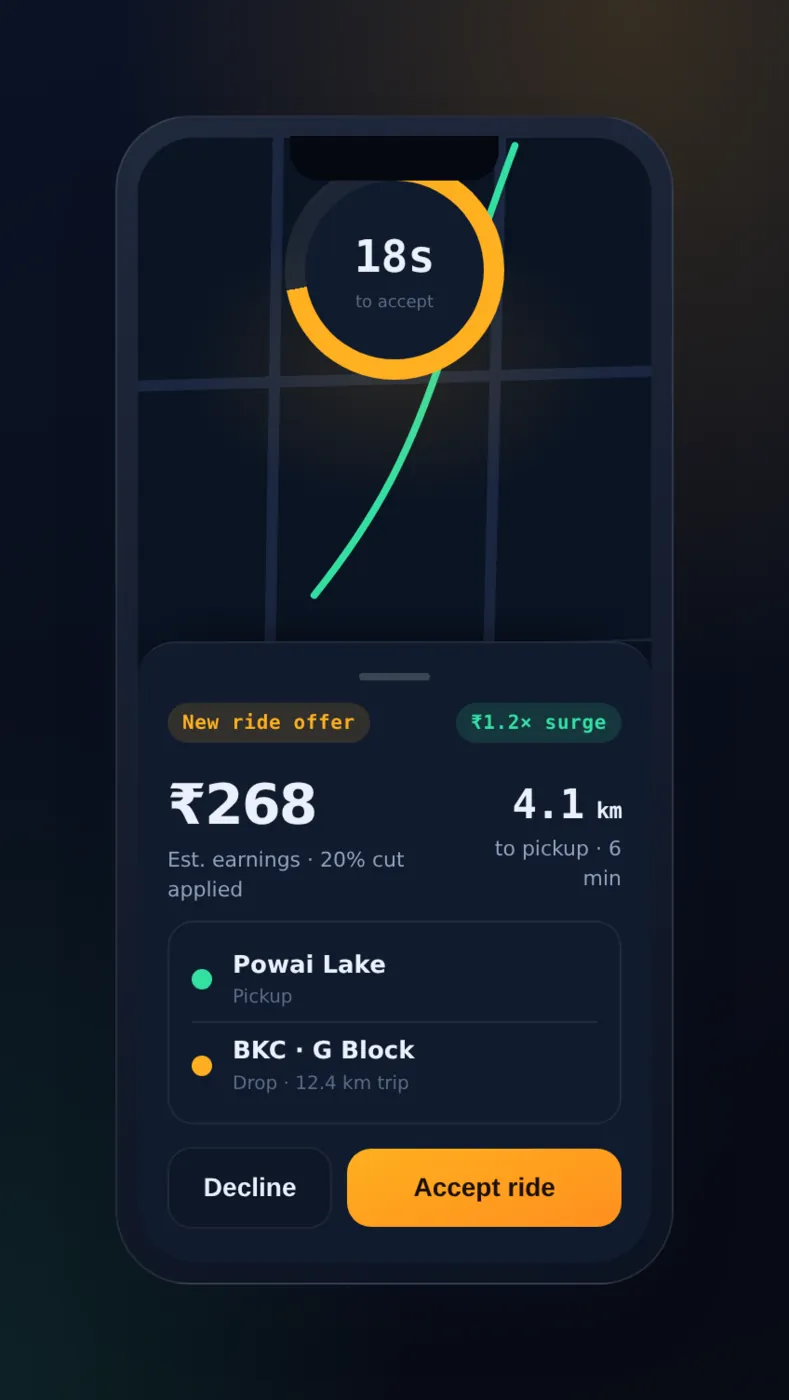
Go online and accept rides. Drivers flip online to start a shift and immediately see demand, live earnings, trip count, acceptance rate and rating.
The dispatch engine finds the nearest eligible drivers — online, approved, and in the tier the rider picked — with a geospatial query, then offers each ride round by round, widening the radius until someone accepts. It is race-safe, so two cars never get sent to one pickup.
Each offer shows the fare, pickup distance, ETA and full trip before a countdown.
Two settings carry most of the dispatch trade-off: the radius and the countdown. The radius is how far the first round reaches. The countdown is how long a driver has to answer. Reach too far and the nearest car may be minutes from the pickup. Reach too narrowly and the request cycles through empty rounds while the rider watches a spinner. The countdown is the same argument in miniature: long enough for a driver to judge the offer, short enough that a declined ride is re-offered before the rider gives up.
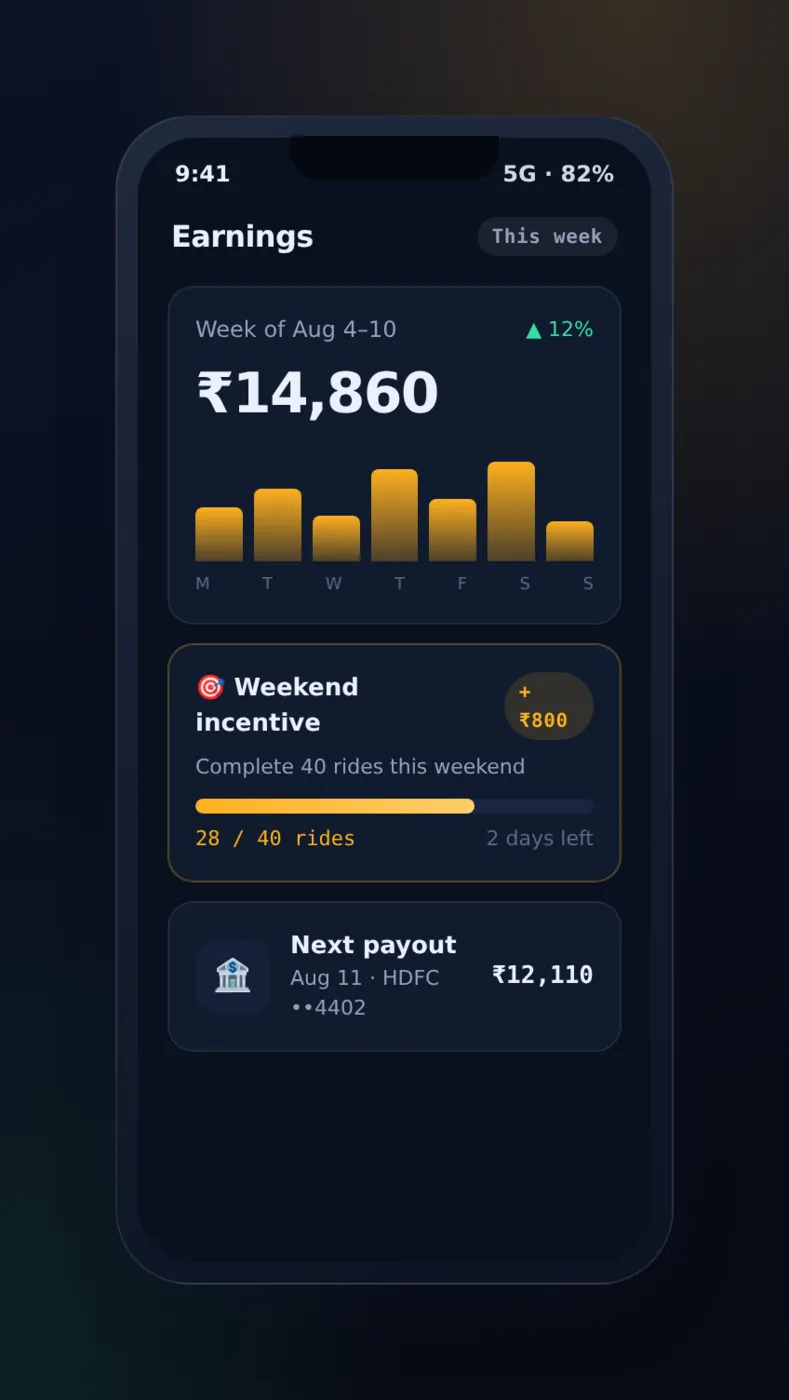
Earnings and incentives. Every completed ride splits automatically into platform commission and driver earnings.
Drivers see daily and weekly totals and a per-ride breakdown, while admin-created incentive campaigns — "complete N rides this weekend for a bonus" — track progress live and credit the bonus the moment the target is hit.
The admin panel — taxi dispatch & management software
The Next.js admin panel is the operations cockpit: a real-time view of the whole city and the controls to run it. It doubles as your taxi dispatch software and your taxi management software, with every privileged action written to an immutable audit log.
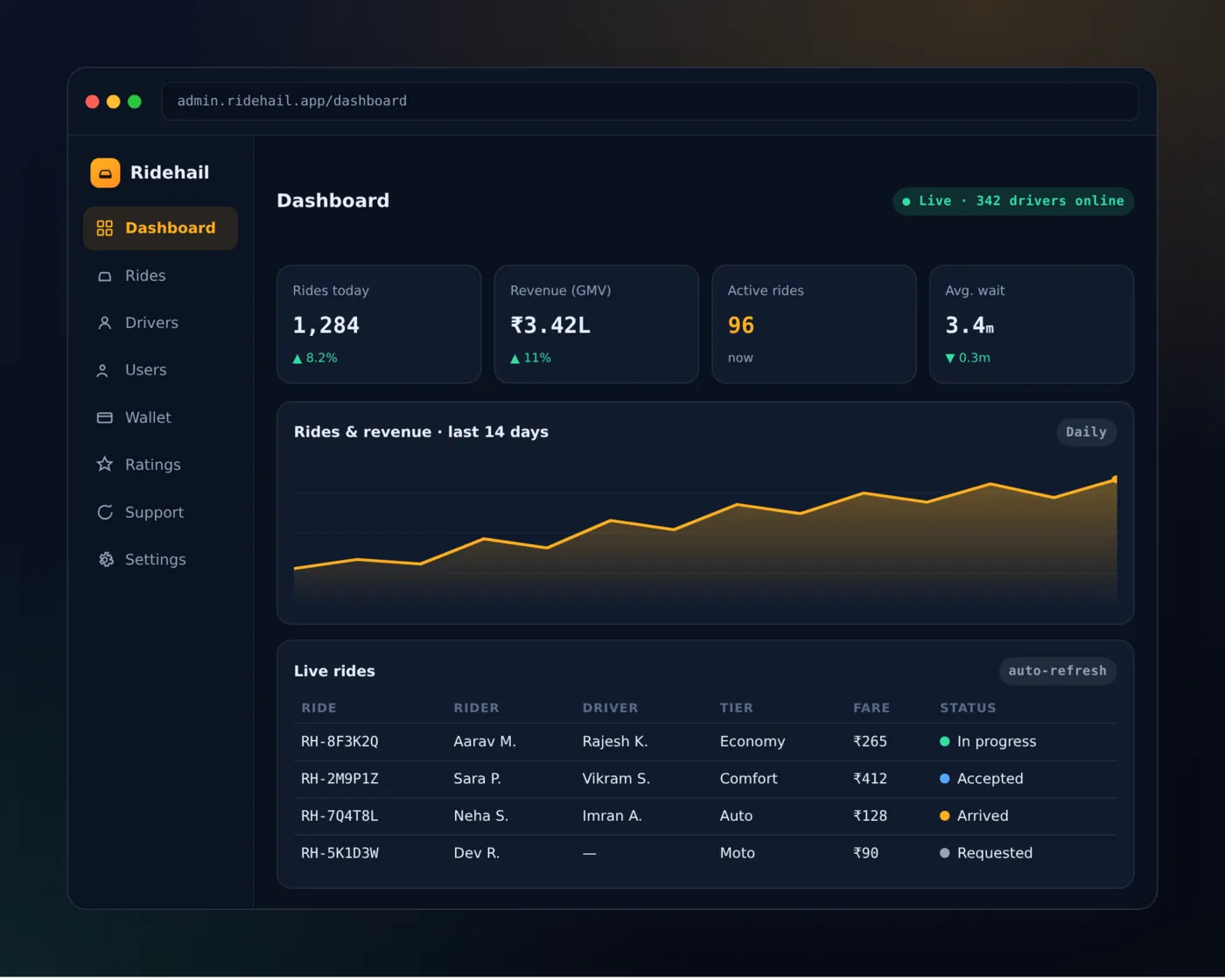
Real-time dashboard. Rides today, revenue, active trips, average wait and drivers online update live, alongside charts for rides and revenue over time and a table of every in-flight trip — so operations always know the state of the marketplace at a glance.
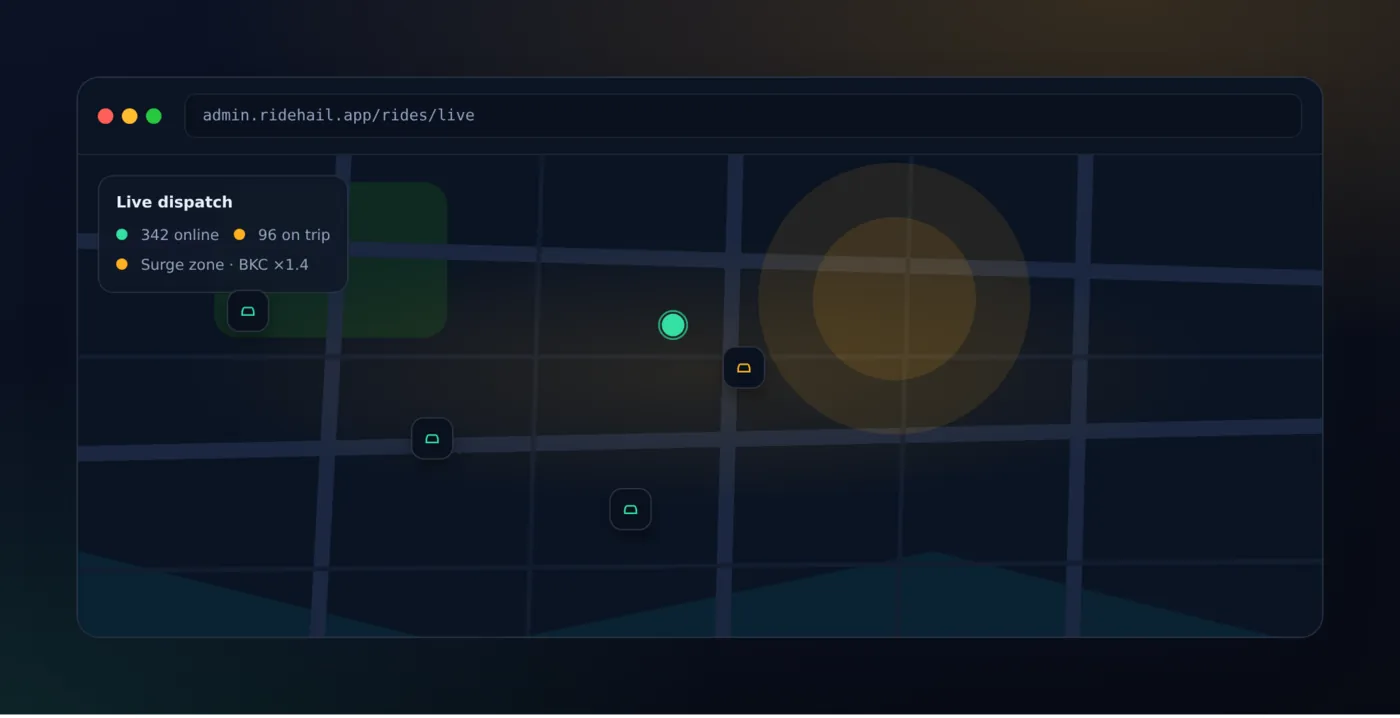
Live dispatch and surge. A live map plots every online driver, active ride and surge zone over WebSockets. Operators can watch demand build, draw surge zones with a multiplier and time window, reassign or cancel a ride, and replay a trip's GPS breadcrumb trail to resolve a dispute.
On a surge zone the time window matters as much as the multiplier: one left switched on after demand has dropped keeps quoting a premium nobody is willing to pay, and the frozen quote above is what keeps an already-booked ride out of it. The breadcrumb trail earns its keep the same way — a route or distance dispute is unanswerable without the track the car actually drove.
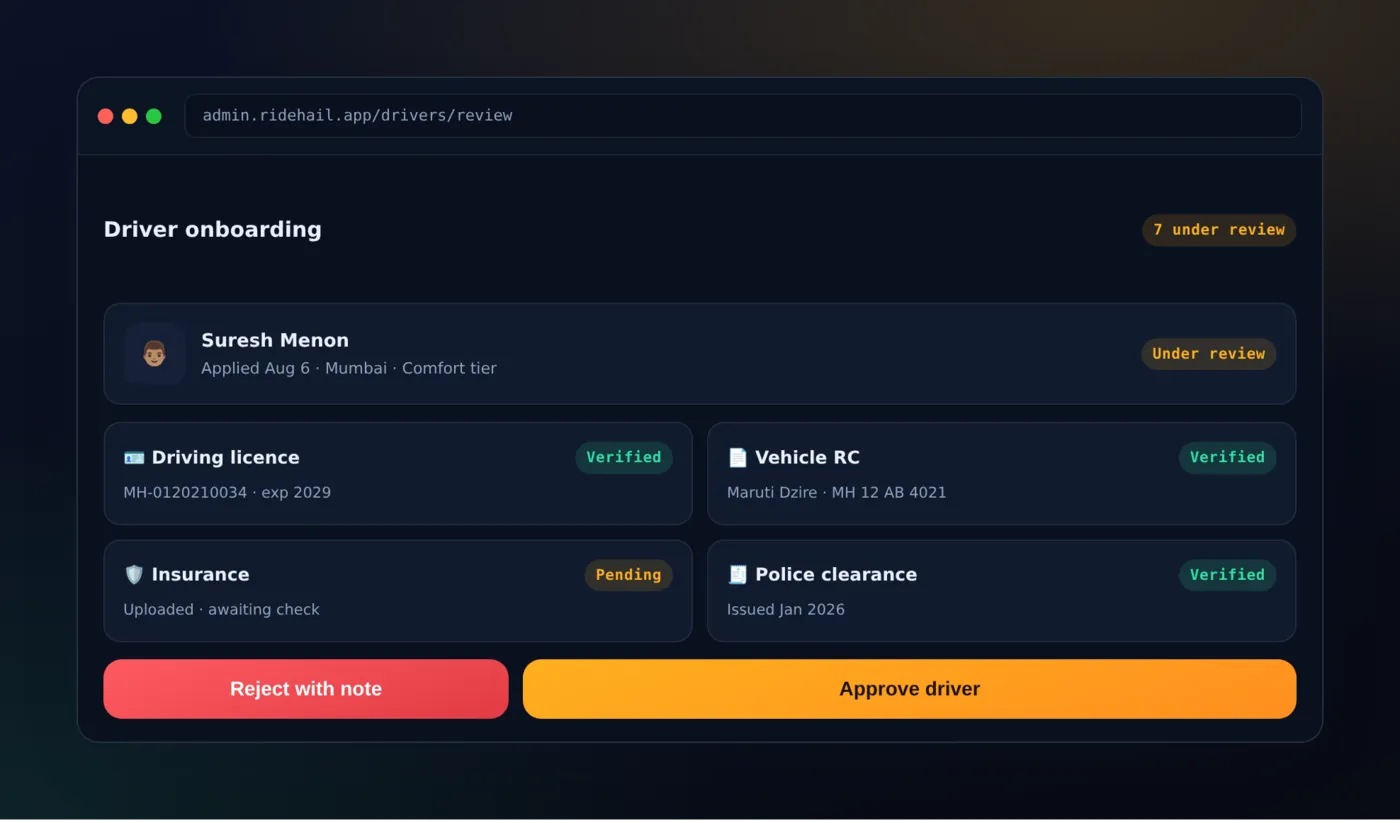
Driver onboarding and trust. Drivers sign up, add vehicles and upload documents — licence, registration, insurance, ID and police clearance — and admins review each one before approving, rejecting with a note, or suspending. Documents carry expiry dates, vehicles are verified before they can take rides, and every change is audit-logged.
Built on a modern, open stack
The codebase is written in TypeScript and Dart, and comes with documentation:
- Mobile: Flutter & Dart — one codebase, two apps (customer + driver), iOS & Android.
- Backend: NestJS & TypeScript, Prisma ORM, MySQL 8, WebSocket gateways for real-time.
- Admin: Next.js & React with live updates.
- Integrations: Razorpay payments, OSRM routing, FCM push, JWT + phone-OTP auth.
The engines that make it a real product — geospatial dispatch, a deterministic fare calculator, and the wallet and payments layer described earlier — are all included and configurable from the admin panel without a redeploy.
White-label and ready to launch
Ridehail is designed to become your brand. Swap the colours, logo, app name, currency and language, and deploy — it is built for multi-city, multi-currency operation, so you can start in one city and expand. Because you get the complete source code, there are no monthly SaaS fees, no per-ride commission to anyone, and no vendor lock-in.
The complete source license — customer app, driver app, admin panel and backend — is a one-time $599, with documentation and support to get you to production. If you would like it customised, integrated with a local payment gateway, or launched for you, that is exactly the kind of work we do.
Talk to our engineers about your taxi app, or see how we build mobile products.
Written by
PRS Admin
Building software at PRS India.