Engineering
Top Ola alternatives in india in 2026
Explore the best Ola alternatives in India in 2026, including Uber, Rapido, Namma Yatri, inDrive, BluSmart and Meru Cabs, with a comparison of features, pricing models, services, and benefits.

Written from production. Our articles draw on products we run live and the client work behind them, and are revised as the systems they describe evolve.
Ride-hailing in India isn’t one-size-fits-all. Fares, driver availability, and wait times swing wildly between Mumbai, Bengaluru, and a Tier-2 city — sometimes within the same week.
That’s why most riders keep two or three apps installed instead of betting on one. Ola remains a household name, but it’s far from the only serious option out there.
This guide breaks down six real Ola alternatives available across Indian cities today — what each is genuinely good at, how pricing works, and where it fits best — so you can pick the right app for the right trip.
One caveat before the list: coverage, vehicle types and fares differ from city to city, and any platform can change what it offers in a given market. Read the notes below as what each app is built around, then check the app itself for what is actually available at your pickup point.
1. Uber
Uber is the most globally recognized ride-hailing brand operating in India, with a wide vehicle mix — Uber Go, Premier, XL, Auto, and moto in select cities.
Its standout feature is consistency: predictable app behavior, in-app safety tools like RideCheck and live trip sharing, and coverage across most major Indian metros and many smaller towns.
Pricing runs on dynamic, demand-based surge — fares can climb sharply during peak hours or bad weather.
Best for riders who prioritize brand trust, app polish, and consistent availability over chasing the lowest possible fare.
- Vehicle range: Go, Premier, XL, Auto, and moto in select cities.
- Safety tools: RideCheck, live trip sharing, and an in-app emergency button.
- Coverage: Most major metros, plus a growing list of smaller towns.
2. Rapido
Rapido built its business on bike taxis long before expanding into autos and cabs, and two-wheeler rides remain its core strength across Indian metros.
Its standout feature is speed through traffic — a bike weaves past jams a cab simply can’t, making it the fastest option for short solo commutes.
Pricing is typically the lowest of any app on this list for short trips, since bike fares scale well below four-wheeler rates.
Best for solo riders beating rush-hour traffic on a tight budget, especially for last-mile and short-distance hops.
- Vehicle range: Bike taxis, autos, and Rapido Cabs in select cities.
- Standout use case: Weaving through congested traffic when a cab would sit stuck in a jam.
- Coverage: Strong in dense metros where two-wheelers genuinely save time.
3. Namma Yatri
Namma Yatri started in Bengaluru on the ONDC open network and built its entire pitch around fairness to drivers, not just convenience for riders.
Its standout feature is a zero-commission model — drivers keep 100% of the fare, and the app charges a flat subscription instead of cutting into every ride.
Fares are shown upfront before booking, calculated on standard meter rates rather than a hidden surge algorithm.
Best for riders who want transparent, driver-friendly pricing — currently strongest on autos, with cabs expanding in more cities.
- Model: Built on the ONDC open network rather than a single closed platform.
- Driver economics: No per-ride commission, just a flat subscription fee.
- Coverage: Started in Bengaluru, now expanding to other Indian cities.
4. inDrive
inDrive flips the usual ride-hailing script: instead of the app setting your fare, you propose a price and nearby drivers accept, decline, or counter it.
Its standout feature is that negotiation layer — real back-and-forth pricing, not a fixed algorithm deciding what you pay before you’ve even seen a driver.
Pricing depends entirely on what you and a driver agree to, so outcomes vary from trip to trip.
Best for price-conscious riders who don’t mind a bit of back-and-forth to land a fare they’re happy with.
- Model: Rider names a price, nearby drivers choose whether to accept it.
- Origin: Operates in India as part of a larger global ride-hailing network.
- Best trips: Longer routes where negotiating room actually matters.
5. BluSmart
BluSmart runs an all-electric fleet it owns and operates directly, rather than aggregating rides from independent driver-partners the way most competitors do.
Its standout feature is consistency born from that owned-fleet model — no surge pricing, fewer last-minute cancellations, and an all-electric ride.
Pricing is fixed and shown before booking, with no demand-based spikes to worry about.
Best for airport transfers and riders who want a predictable, eco-conscious trip in cities like Delhi-NCR and Bengaluru.
- Fleet: 100% electric vehicles, owned and maintained by BluSmart directly.
- Experience: No surge, no negotiation with drivers over routes or AC.
- Coverage: Focused on select metros rather than a nationwide rollout.
6. Meru Cabs
Meru Cabs is one of India’s longest-running radio cab operators, built originally for corporate travel, airport runs, and reliable outstation trips.
Its standout feature is rental and outstation strength — hourly packages, multi-day hires, and a GPS-tracked, safety-audited fleet suited to longer journeys, not just city hops.
Pricing is typically package-based for rentals and outstation travel, with standard metered fares available for city rides too.
Best for business travel, outstation trips, and riders who value a vetted, professionally managed fleet over a peer-to-peer marketplace.
- Trip types: City rides, hourly rentals, multi-day hires, and outstation packages.
- Fleet standard: GPS-tracked vehicles with regular safety audits.
- Typical rider: Business travelers and families planning a longer road trip.
Comparison at a Glance
| App | Best For | Standout Feature | Pricing Model |
|---|---|---|---|
| Uber | Brand trust, wide vehicle choice | RideCheck safety tools, broad city coverage | Dynamic, demand-based surge |
| Rapido | Fast, cheap solo commutes | Bike-taxi network | Low, fixed-distance bike fares |
| Namma Yatri | Transparent, driver-friendly pricing | Zero-commission for drivers | Flat driver subscription, meter fare |
| inDrive | Negotiable fares | Rider-proposed pricing | Negotiated per-ride price |
| BluSmart | Airport transfers, eco-conscious riders | 100% electric, company-owned fleet | Fixed, no-surge pricing |
| Meru Cabs | Outstation and corporate travel | Rental and outstation packages | Package-based and metered fares |
No single app wins on every metric. The right pick depends on whether price, safety, sustainability, or trip length matters most for that particular ride.
Read the pricing column twice. Each model on it answers a different question. A demand-based fare tells you what a trip costs right now. A meter or fixed fare tells you roughly what it will cost every time. A negotiated fare tells you what someone is willing to drive it for today. Working out which of those answers you actually want is most of the choice.
Thinking About Building Your Own Ride-Hailing App Instead?
Comparing these apps is useful if you’re booking a ride. But if you’re reading this as an entrepreneur, the real opportunity isn’t choosing between them — it’s building the next one.
India’s ride-hailing market still has room for regional and niche players, as Namma Yatri and BluSmart have both proven. You don’t need Uber’s budget to enter it.
Riders also keep several apps and pick one for each trip. That habit gives a well-built regional app a way in, even without national scale.
PRS India builds Ridehail, a ready-made, white-label ride-hailing platform you can launch under your own brand — without writing a single line of code from scratch.
It fits fleet owners, local transport operators, and entrepreneurs eyeing Tier-2 and Tier-3 cities that the bigger national platforms haven’t fully saturated yet.
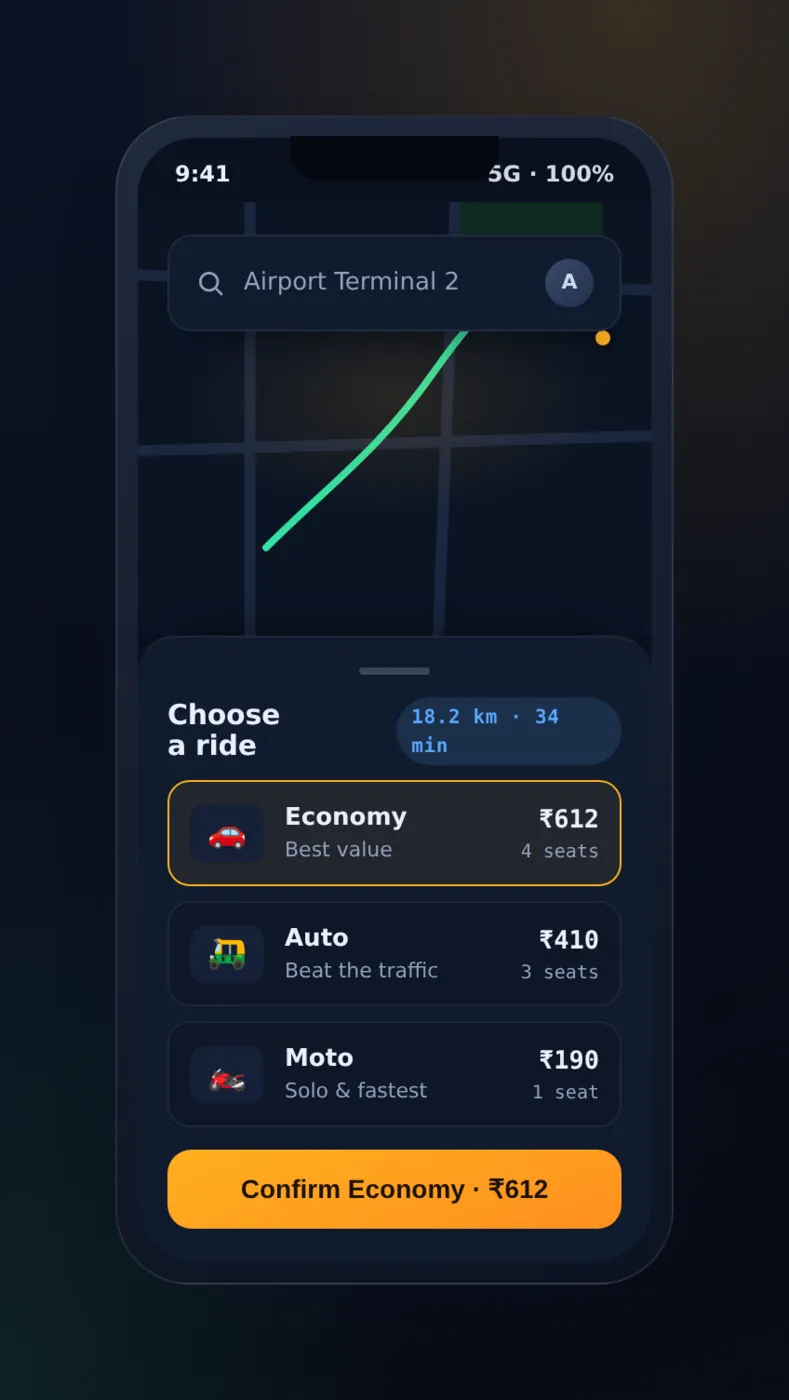
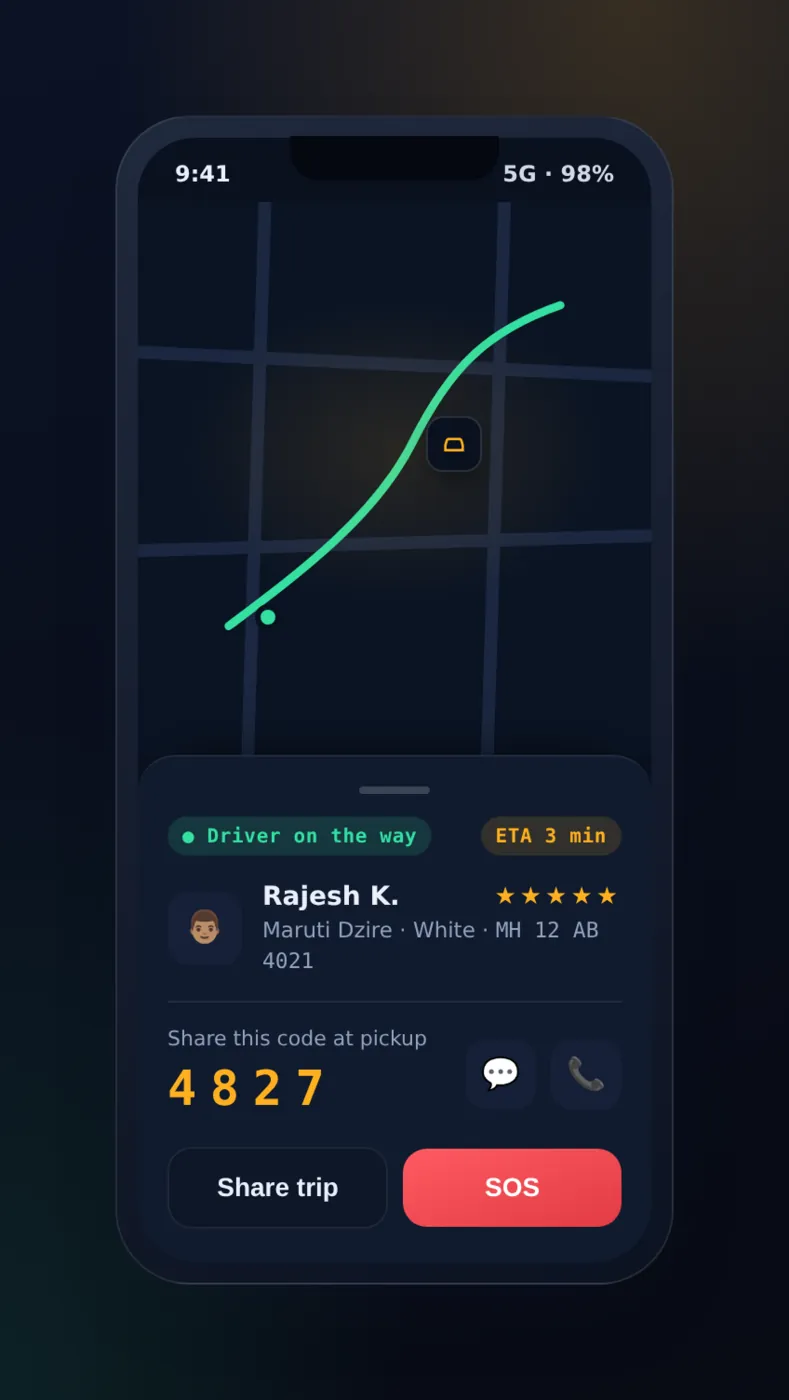
- Customer app: ride booking, live GPS tracking, upfront fare estimation, cash fare collection with an in-app wallet balance and ledger behind it, ride history, and driver ratings.
- Driver app: incoming trip requests, an earnings dashboard, turn-by-turn navigation, and an online/offline availability toggle.
- Admin panel: fleet and driver management, a live operations dashboard, fare rule configuration, and payout tracking.
Unlike aggregator-model apps that take a cut of every ride, Ridehail is sold as a one-time purchase — around $599 — with no per-ride commission to PRS, ever.
You own the source code outright. That means full customization — your branding, your pricing rules, your city rollout plan.
Founders weighing a custom build against ready-made source code should compare the real trade-offs:
- Time to launch: Weeks with tested source code versus 6-12 months hiring and briefing a development team from scratch.
- Cost predictability: One upfront price instead of an open-ended development budget that grows with every change request.
- Proven structure: Booking, tracking, and admin controls already built and working, not designed from a blank page.
- Ongoing economics: No per-ride commission owed to PRS, so your margin depends on your own operations, not a licensing cut.
- Support: Deployment guidance and technical support to help you get your first city live.
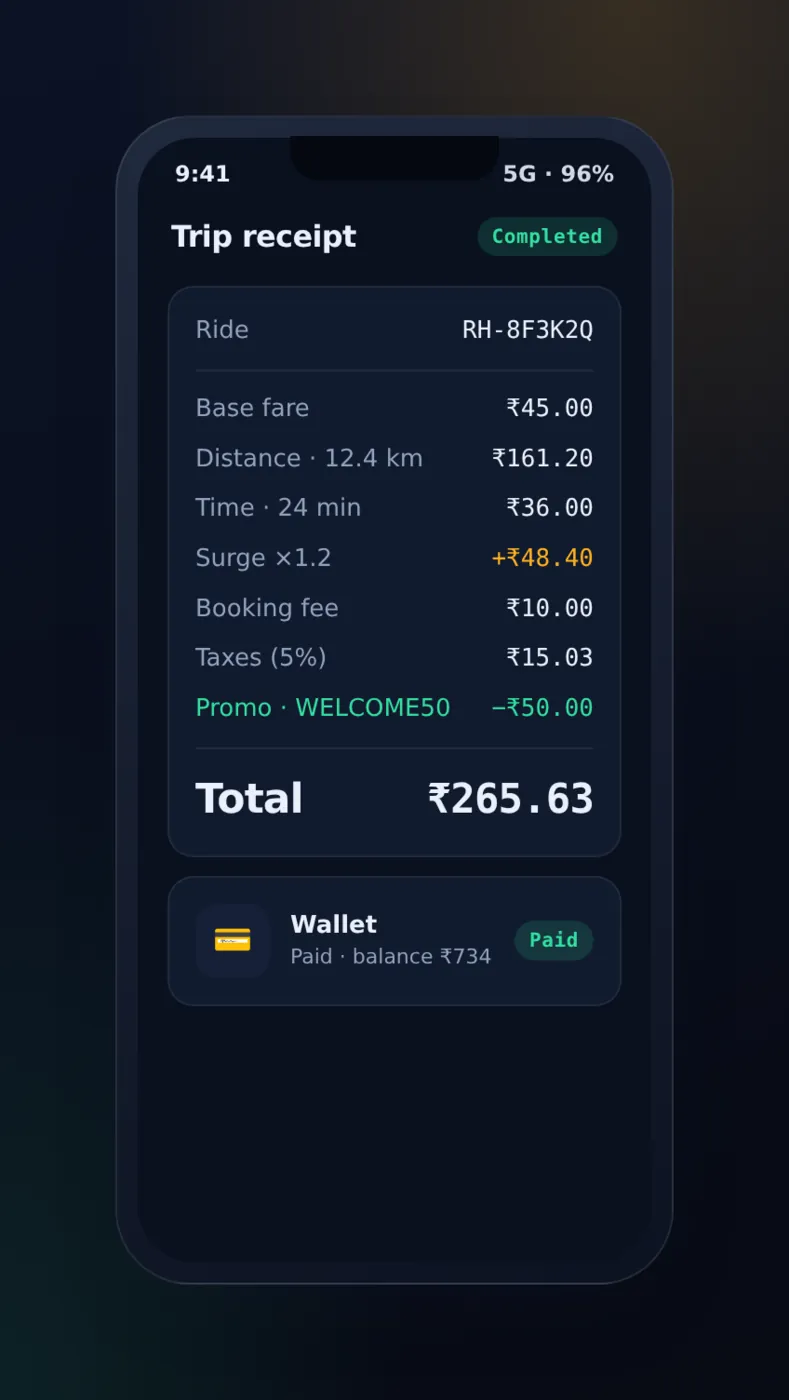
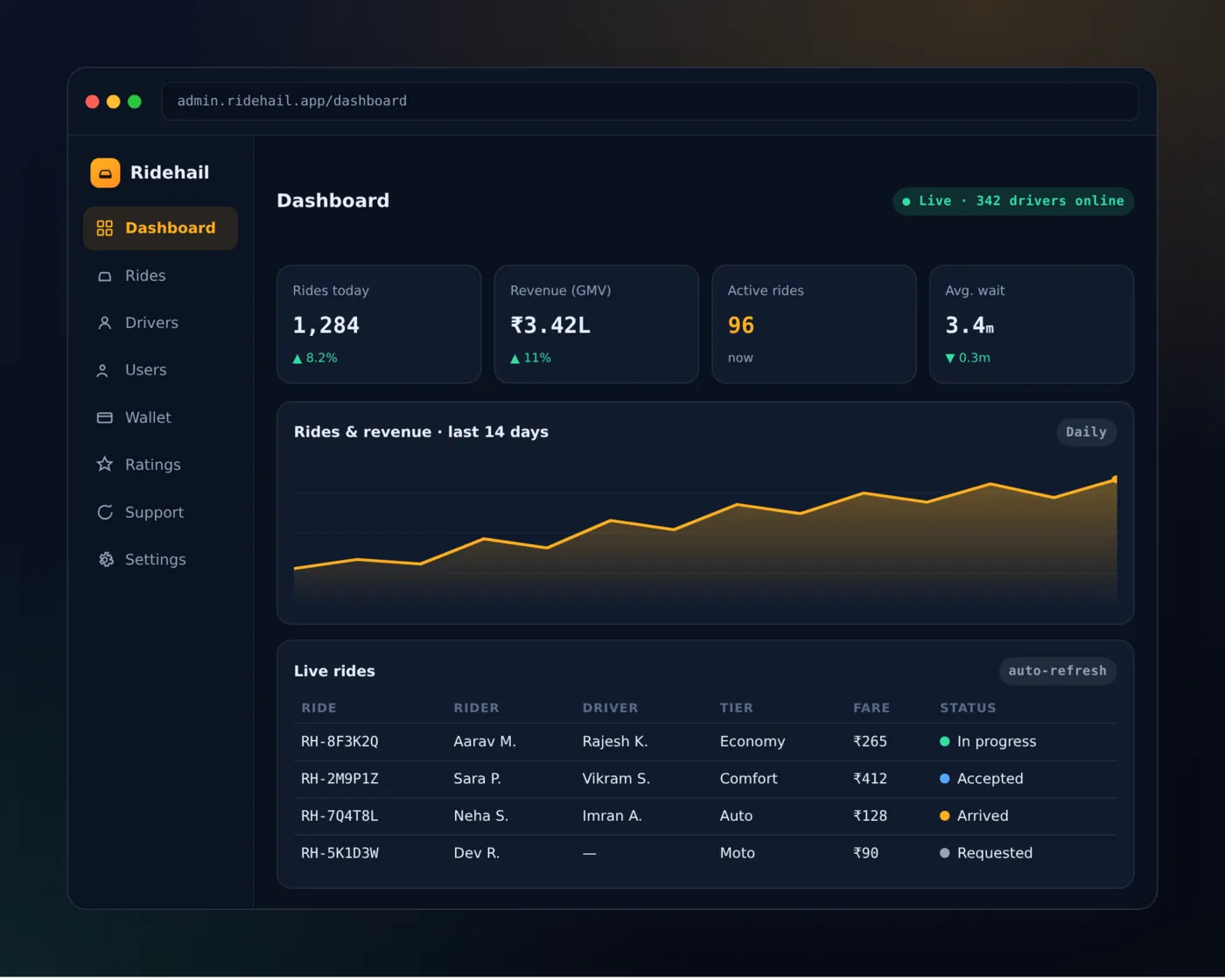
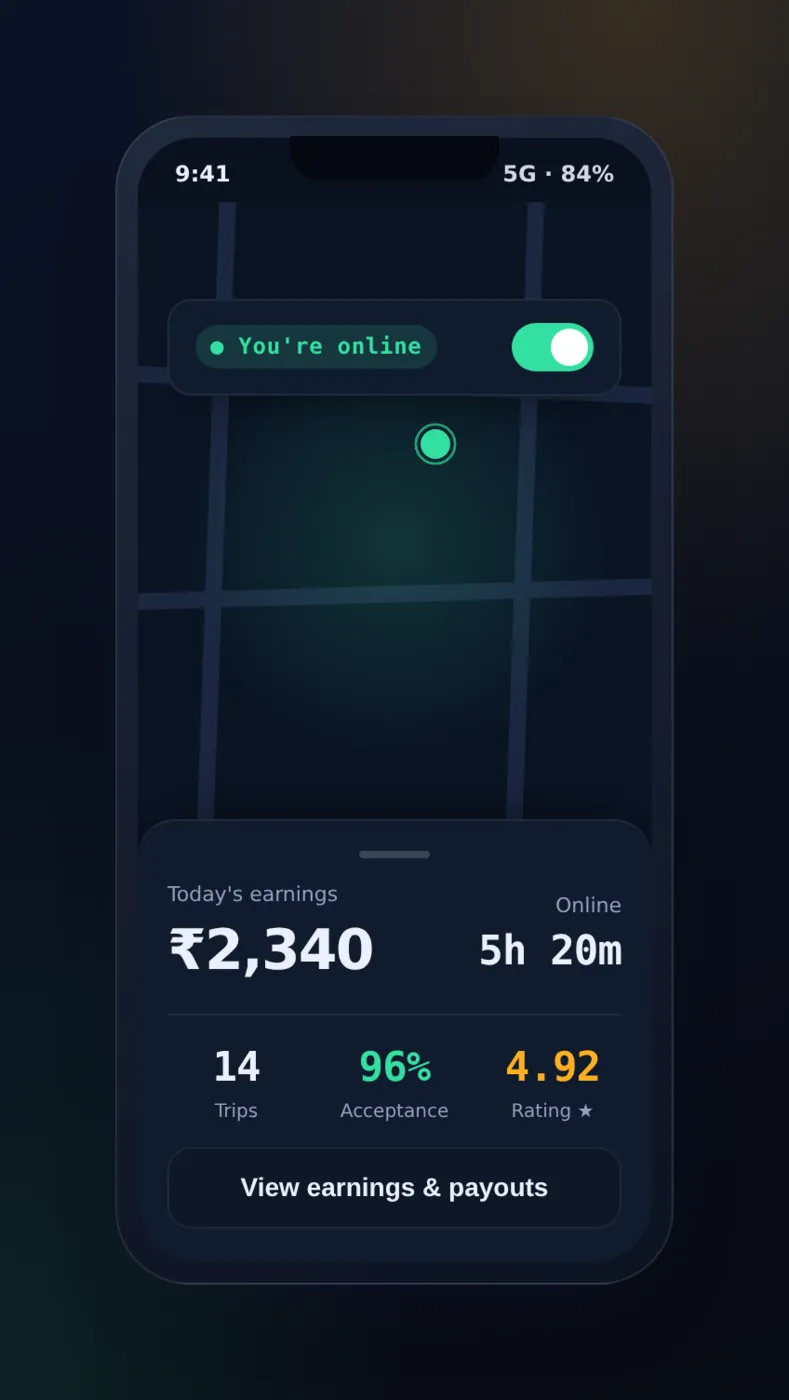
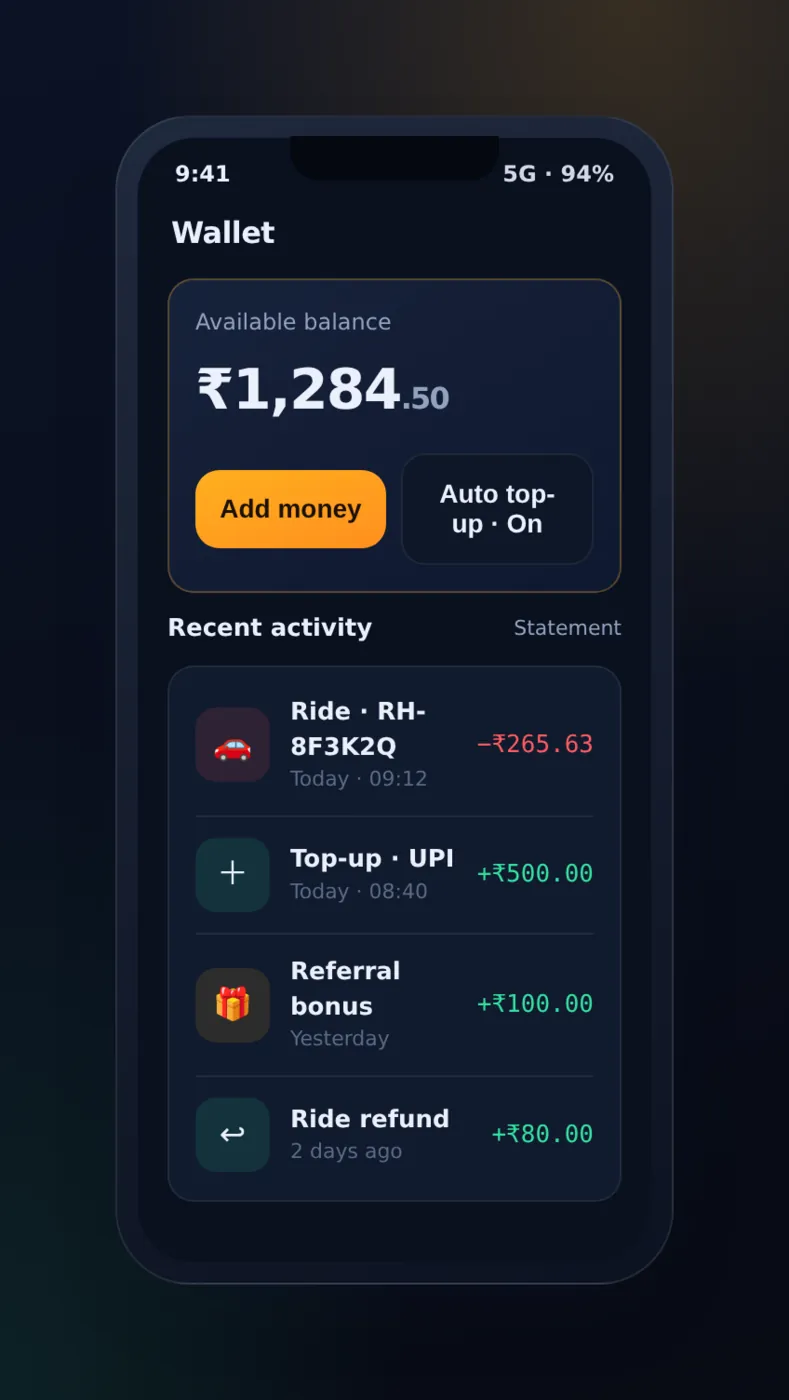
Ridehail is also built to scale past a single city — add new service areas, vehicle categories, or a parcel-delivery mode as your operation grows, without a second ground-up build.
Because it’s pre-built and tested, the distance from a signed agreement to a live app is measured in weeks rather than months. See our breakdown of what a real taxi mobile app development timeline actually looks like.
Not sure which features you need for launch? Our guide to the 20 must-have features for a taxi booking app covers exactly what riders and drivers expect on day one.
Ready to see Ridehail in action? Get in touch with our team for a walkthrough of the customer app, driver app, and admin panel — and a straight answer on cost and timeline for your city.
Frequently Asked Questions
Which Ola alternative is the cheapest?
For short solo trips, Rapido’s bike taxis are usually the cheapest option, since two-wheeler fares scale well below any car-based ride.
For four-wheeler trips, Namma Yatri and inDrive tend to run lower than surge-priced apps, since one uses fixed meter fares and the other lets you negotiate directly.
If you’re comparing per-kilometer rates specifically, Namma Yatri’s meter-based fares are usually the most predictable of the group, since there’s no surge multiplier to plan around.
Which app is best for outstation or rental trips?
Meru Cabs is the strongest fit for outstation travel and multi-hour rentals, with package-based pricing and a fleet built around longer journeys rather than quick city hops.
Uber also offers outstation and rental options in many cities, though exact availability depends on your specific route and location, so check the app for your route.
Is there a bike-taxi alternative to Ola?
Yes — Rapido is the best-known bike-taxi platform in India, built specifically around two-wheeler rides for fast, budget-friendly solo commutes through city traffic.
It has since expanded into autos and cabs too, but two-wheeler rides remain where it has the strongest driver network and the quickest pickup times.
How do these apps compare on driver earnings and commission?
Namma Yatri stands out here, with a zero-commission model where drivers keep the full fare and pay a flat subscription instead.
Most other apps, including Ola and Uber, take a percentage-based commission per ride, which is one of the biggest reasons driver earnings vary so much between platforms.
That gap is also why zero-commission and negotiation-based apps are gaining traction with drivers specifically — not just with riders chasing a cheaper fare.
Written by
Tarun
Building software at PRS India.