Motor Vehicle Aggregator Guidelines 2025 India: State-Wise Rules
The 2025 cab aggregator rules from the central government, what each state adds, the licence and documents you need, and what your taxi app must do.

Written by Prabhjot Kaur, Product Manager
Reviewed by the PRS India software & mobile app development team
18 min read
Written from production. Our articles draw on products we run live and the client work behind them, and are revised as the systems they describe evolve.
On 1 July 2025 the Ministry of Road Transport and Highways (MoRTH) issued new rules for ride apps. They are the Motor Vehicle Aggregator Guidelines 2025, or MVAG 2025. They set the central rules for cab, auto and bike taxi apps. But each state or union territory issues the licence, and each can add its own rules.
This guide puts the central text and all 36 states and UTs in one place. It covers licence steps, official fees and the app settings each rule needs. We build taxi apps, so the last part shows how a ready-made taxi app can follow these rules. This guide is not legal advice.
Key takeaways
- The state issues the aggregator licence. The central 2025 guidelines are advice a state "may follow".
- The central text allows surge up to two times the base fare. Several states set a lower cap or no surge.
- We found 17 states and UTs with their own rules or policy and 1 that adopted the central text. Three have drafts and 15 have none.
- Build state rules as settings, not code. A new notice then means a new setting, not a new app.
The central text
What are the Motor Vehicle Aggregator Guidelines 2025 (MVAG 2025)?
A central rule book for ride apps that each state can adopt, change or add to.
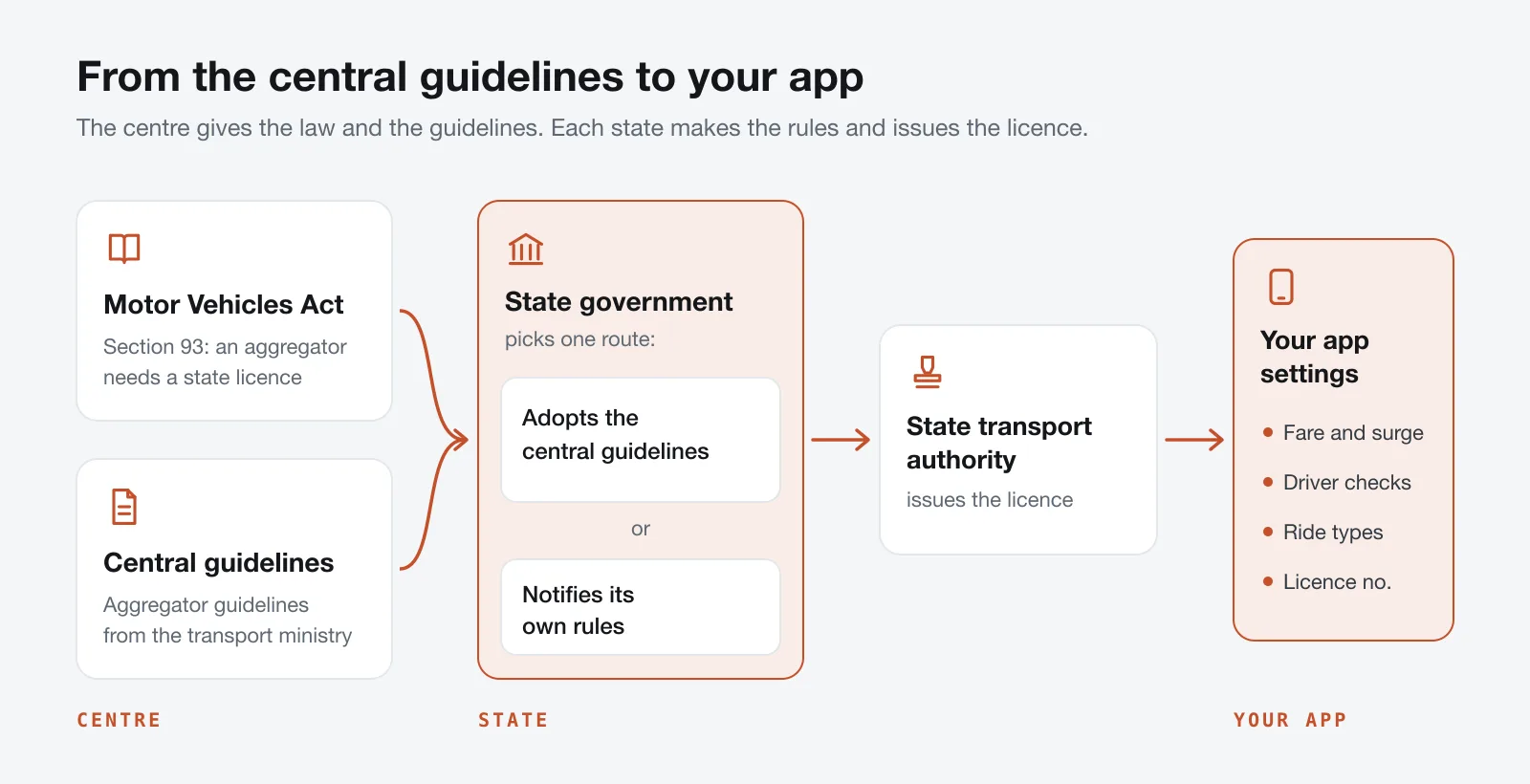
MoRTH issued the guidelines under Section 93 of the Motor Vehicles Act, 1988. They replace the 2020 guidelines. The preamble says states may adopt them within three months and may add rules of their own. Source: Motor Vehicle Aggregator Guidelines 2025, MoRTH (PDF).
Who is a motor vehicle aggregator?
Section 2(1A) of the Act, added in 2019, says an aggregator is "a digital intermediary or market place for a passenger to connect with a driver for the purpose of transportation". So every cab, auto or bike taxi app is one. This guide is not about payment aggregators or account aggregators. Source: Motor Vehicles (Amendment) Act, 2019.
Central guidelines vs state rules: how they fit
Section 93 says nobody may work as an aggregator without a state licence. It also says the state "may follow" central guidelines. So a state can adopt the central text, write its own rules, or do nothing yet. Under Section 193, running without a licence carries a fine of ₹25,000 to ₹1,00,000. Source: Sections 93 and 193 as amended in 2019.
MVAG 2025 vs the 2020 guidelines: what changed
| Topic | 2020 guidelines | 2025 guidelines |
|---|---|---|
| Highest surge | 1.5 times base fare | 2 times base fare |
| Lowest fare | 50% below base fare | 50% below base fare |
| Driver share | At least 80% | At least 80% (own vehicle), 60% (aggregator's vehicle) |
| Induction training | 30 hours | At least 40 hours |
| Renewal fee | ₹2,500 | ₹25,000 |
| Security deposit | ₹1 lakh to ₹5 lakh | ₹10 lakh to ₹50 lakh |
| Trip data | Servers in India, 3 to 24 months | As the law says, including the DPDP Act, 2023 |
| Private vehicles | Pooling of private vehicles | State may allow private motorcycles |
| Vehicle age | No such clause found | Up to 8 years from first registration |
| Electric vehicles | States to help the move | Targets set by the state |
| Tips | Not covered | After the trip only, all to the driver |
Source: MVAG 2020, copy on Chhattisgarh Transport; MVAG 2025 clauses 5, 6, 10, 13, 14, 17, 22 and 23; MoRTH tipping letter, 11 August 2026.
Where to find the MVAG 2025 PDF
The file is on the Parivahan website of MoRTH, linked above. It has the English text, then the Hindi text, with the licence forms at the end. Also read the copy your state uses, because a state can change any clause.
The baseline
Key rules in the 2025 guidelines
The central baseline that states copy or change.
Fare and surge pricing cap
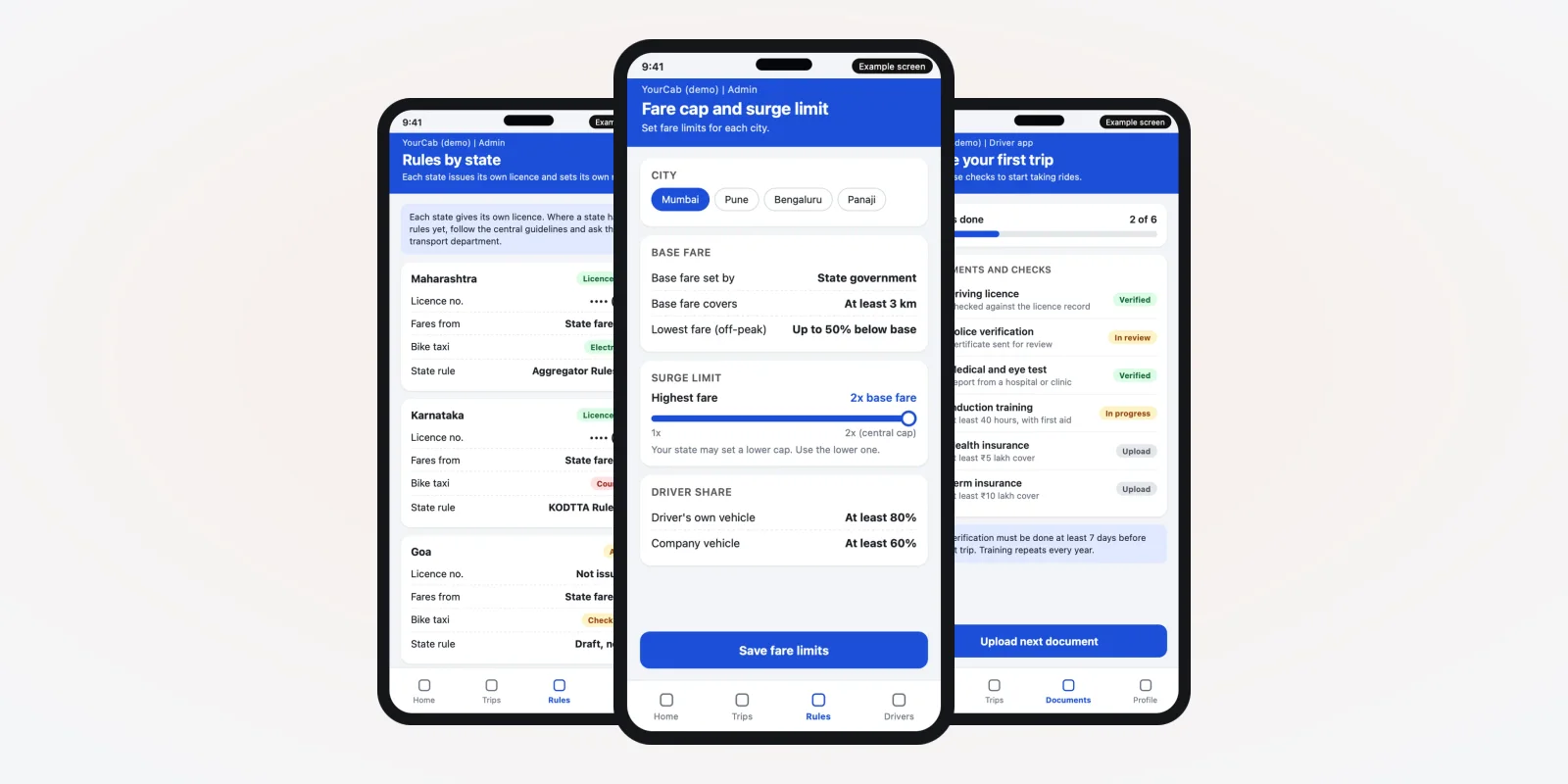
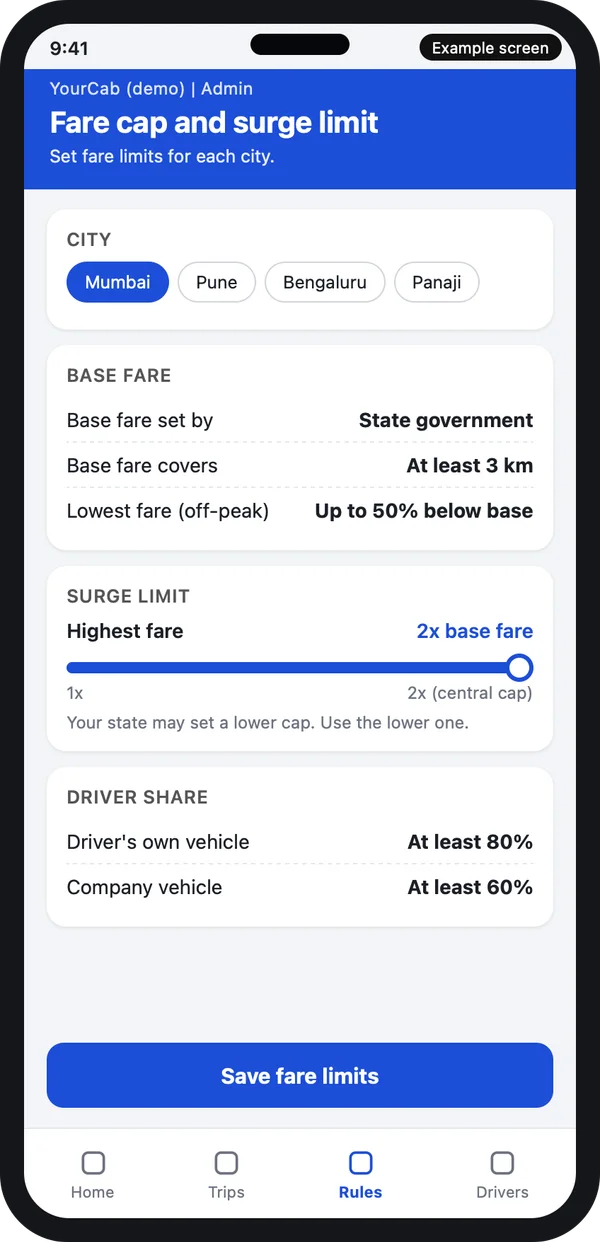
The fare the state notifies is the base fare, charged for at least 3 km. The app may go down to 50% below it and up to two times it. The driver gets at least 80% of the fare with an own vehicle, and at least 60% with the aggregator's vehicle. Source: clause 17 of the MVAG 2025.
States often set a lower cap. Maharashtra allows 25% below to 1.5 times. Jammu and Kashmir and Assam cap surge at 1.5 times. Uttarakhand allows 25% above or below. For how the driver share shapes income, read how taxi apps make money.
Cancellation fee
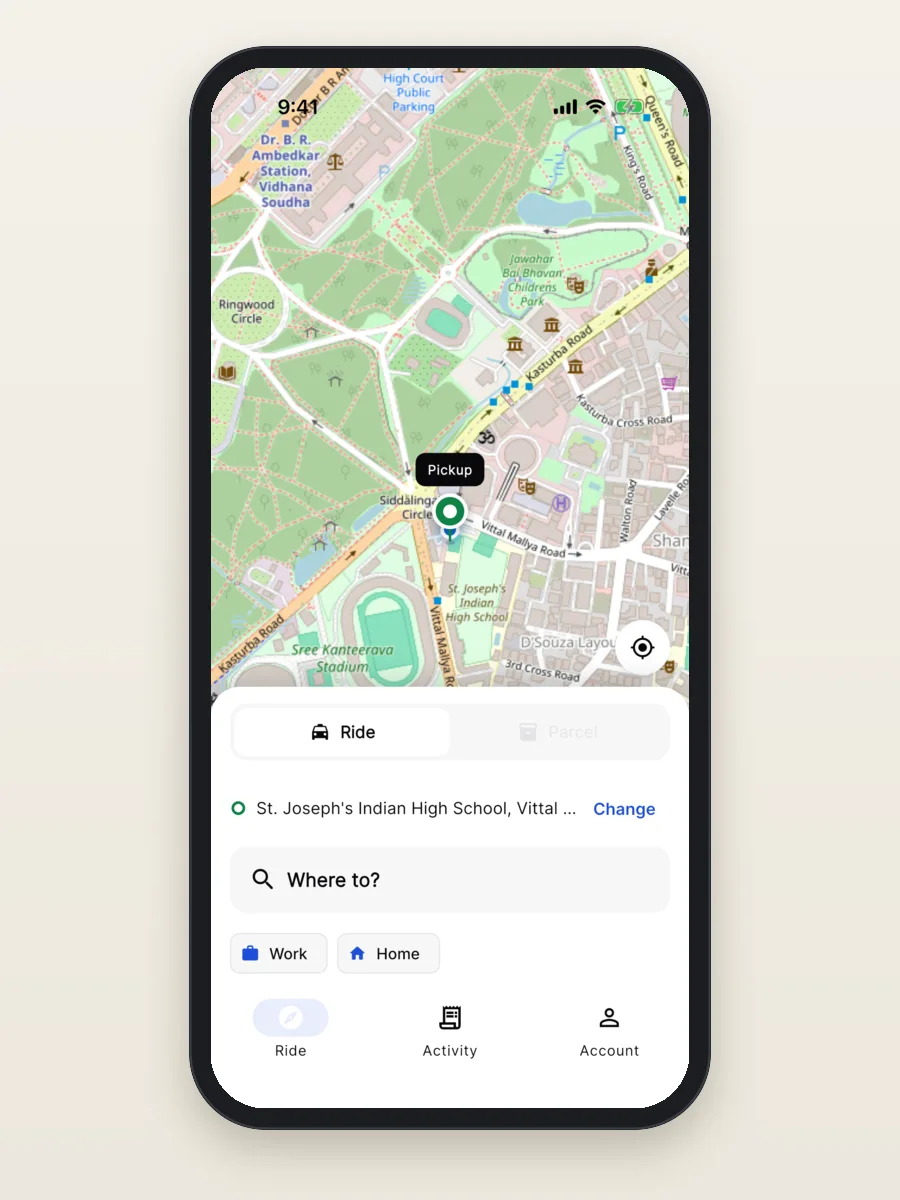
A driver or rider who cancels without a valid reason pays 10% of the fare, up to ₹100. The app must list the valid reasons. Uttarakhand caps it at ₹200. Maharashtra charges five times the penalty if a driver cancels a trip to an airport, station or hospital. Source: MVAG 2025 clause 18, Uttarakhand 2024 amendment, Maharashtra rules, 2026.
Driver checks, training and insurance
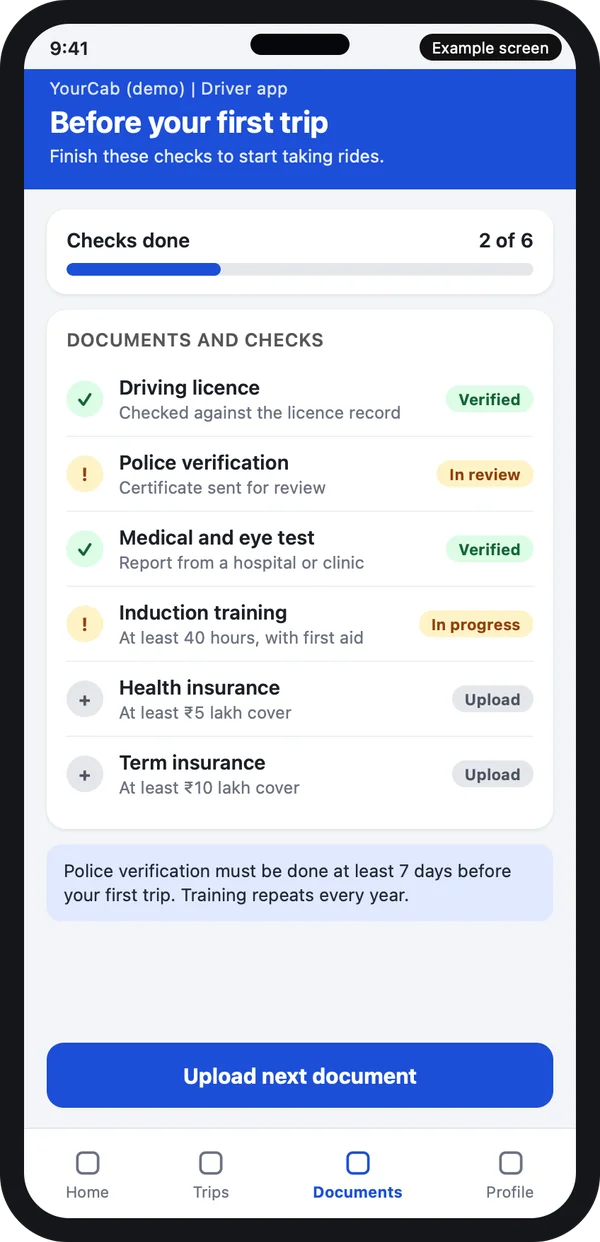
Before a driver joins, the aggregator checks:
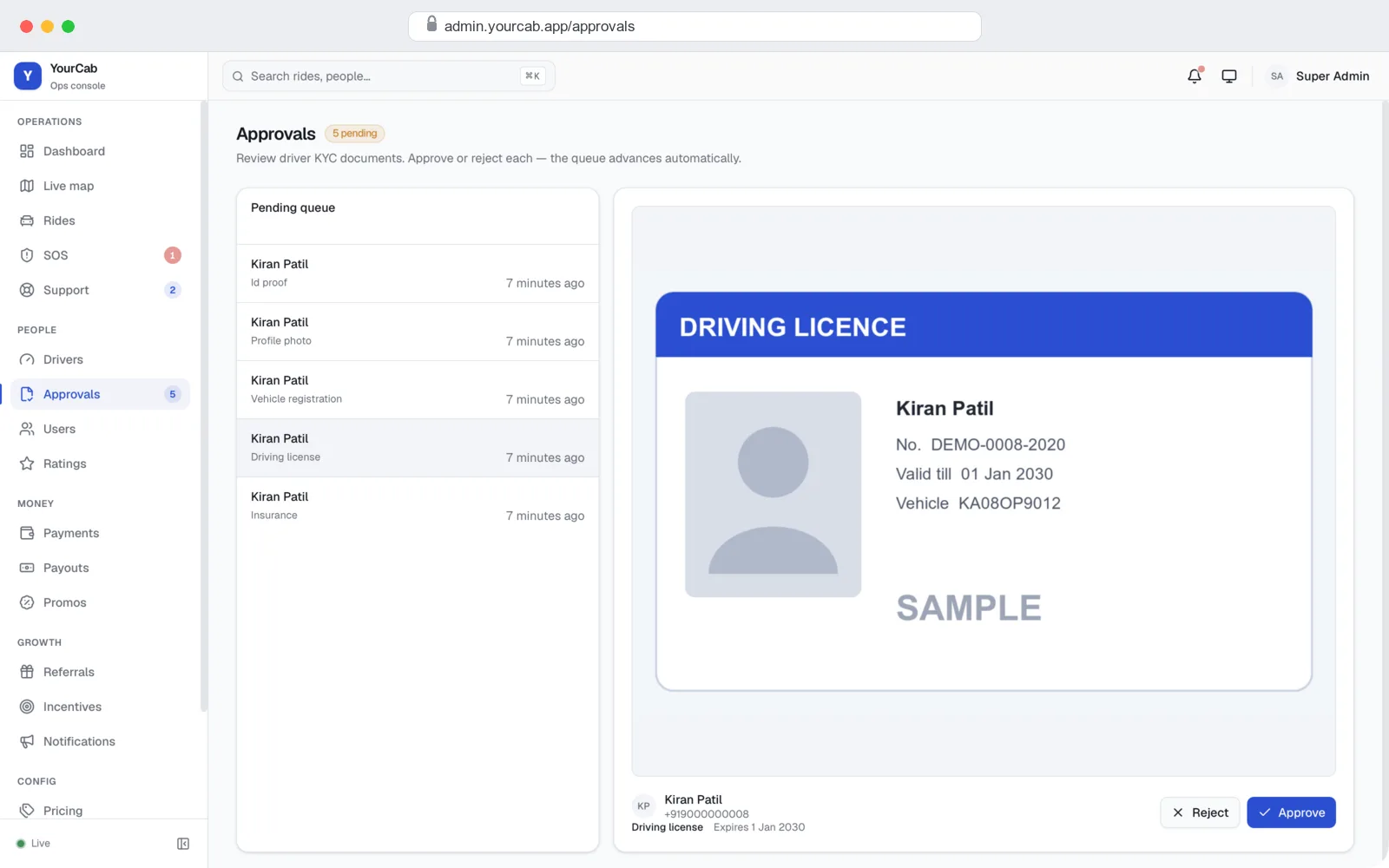
- ID proof and a valid driving licence
- A bank account in the driver's name
- No conviction in three years for drunk driving or serious crimes
- Medical, eye and psychological checks
- Police verification at least seven days before joining
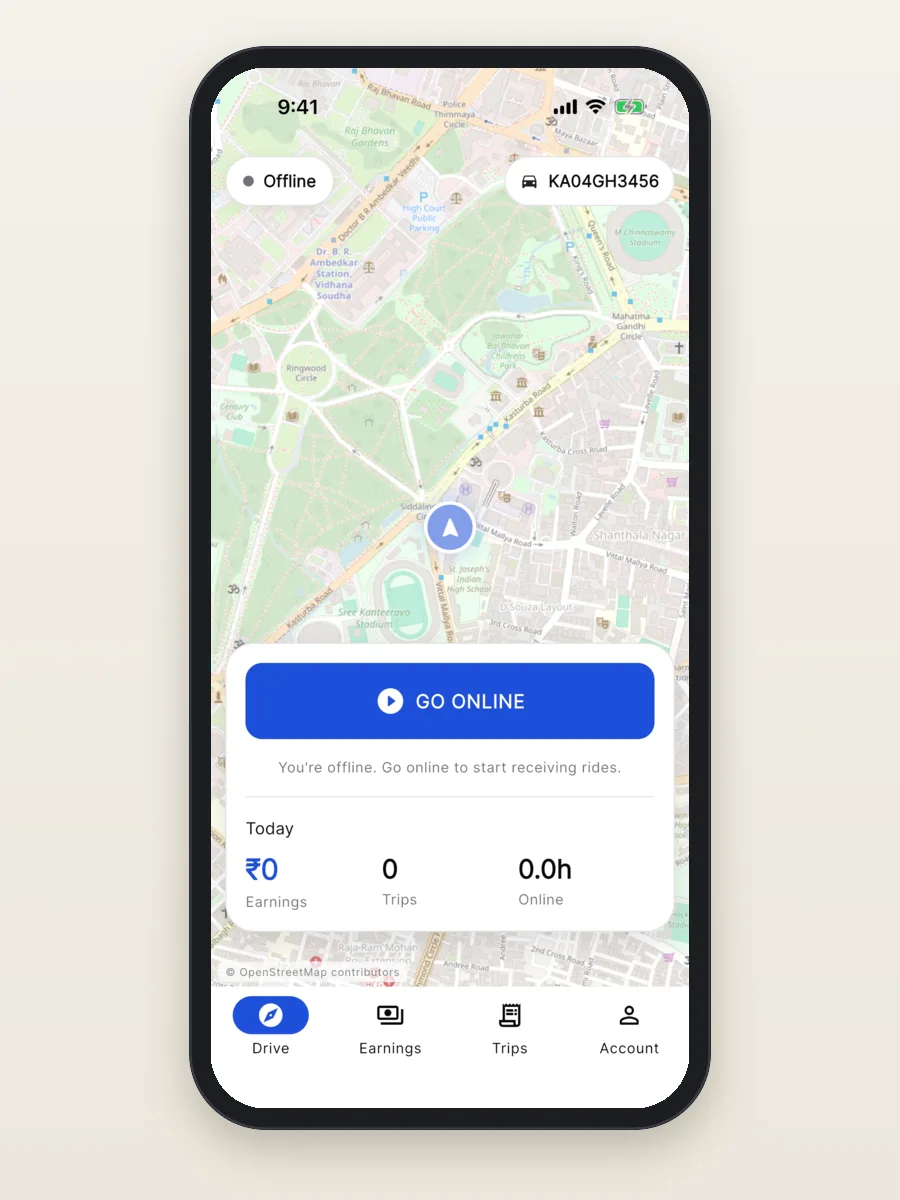
Training is at least 40 hours, with 6 hours of first aid on the road. Drivers need health cover of at least ₹5 lakh and term cover of at least ₹10 lakh. Each passenger needs cover of at least ₹5 lakh. Source: MVAG 2025 clauses 9.5, 10 and 11.
Rider safety: panic button, tracking and complaints
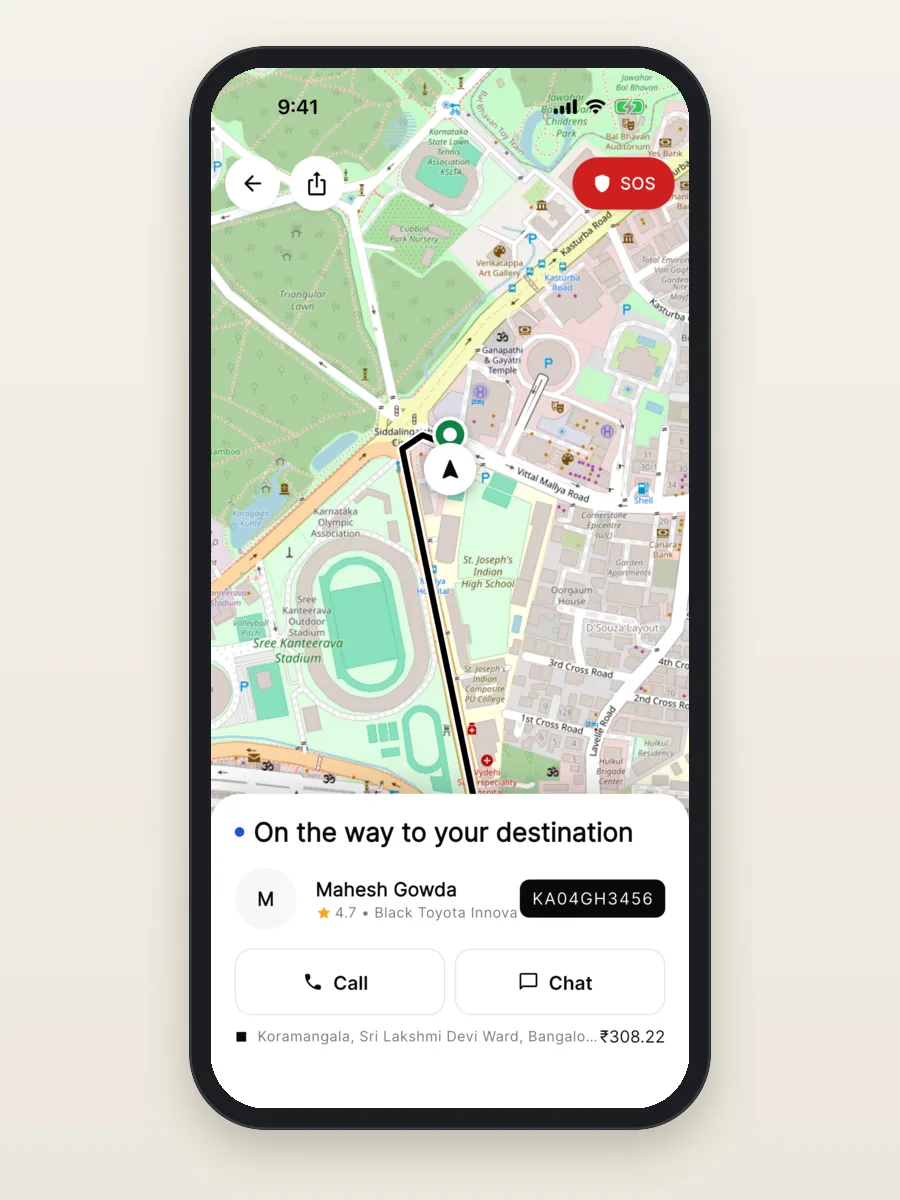
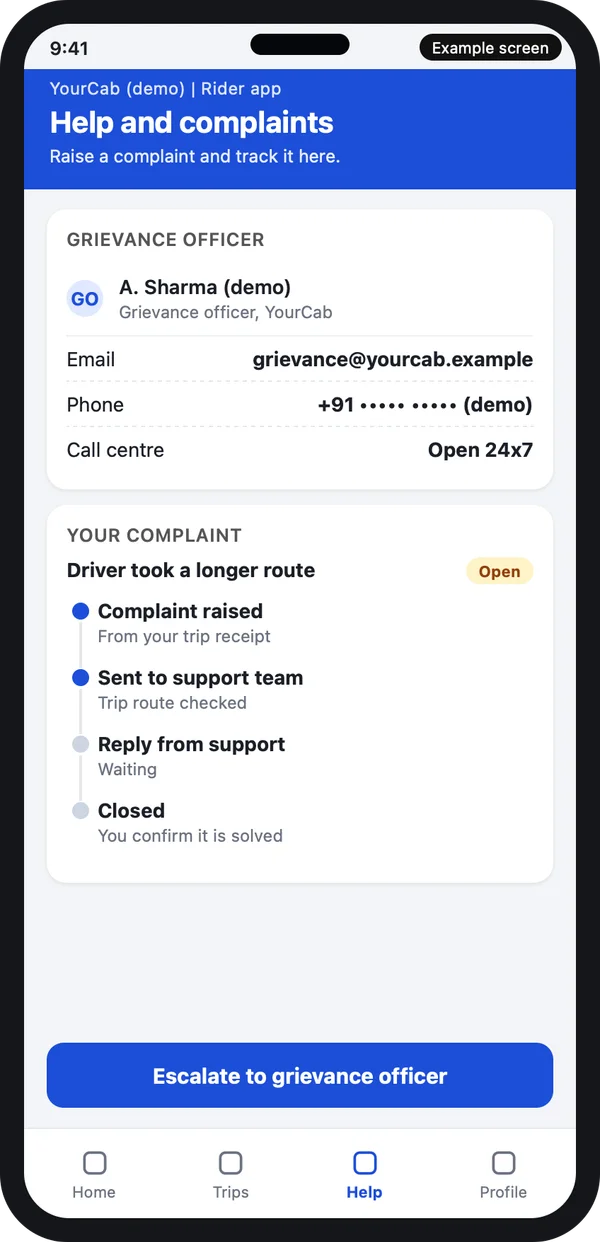
Each vehicle needs an AIS-140 tracker with a panic button, linked to a 24x7 control room. Riders must be able to share live location. The app shows the driver's photo. If the driver leaves the route, the control room gets an alert. A named grievance officer and a 24x7 call centre handle complaints. Source: MVAG 2025 clauses 9.10, 13 to 15. See also safety features for women riders.
Tips for drivers
A MoRTH letter of 11 August 2026 says a tip option may show only after the trip ends. The full tip goes to the driver. Prompts like "add a tip to get a ride faster" are not allowed. Source: MoRTH letter on Clause 14.15.
Private bikes as bike taxis (Clause 23)
Clause 23 lets a state allow private motorcycles to carry riders through an app. The state may sell daily, weekly or fortnightly passes for them. It is each state's choice. See the bike taxi table. Pooling in private cars is a different product: see carpool app development.
Before you launch
Cab aggregator licence in India: steps, fees and documents
The same pattern in most states, with different forms and amounts.
The licence is one part of the work. Our guide on how to start a taxi business covers vehicles, permits and staff.
How to apply for a cab aggregator licence
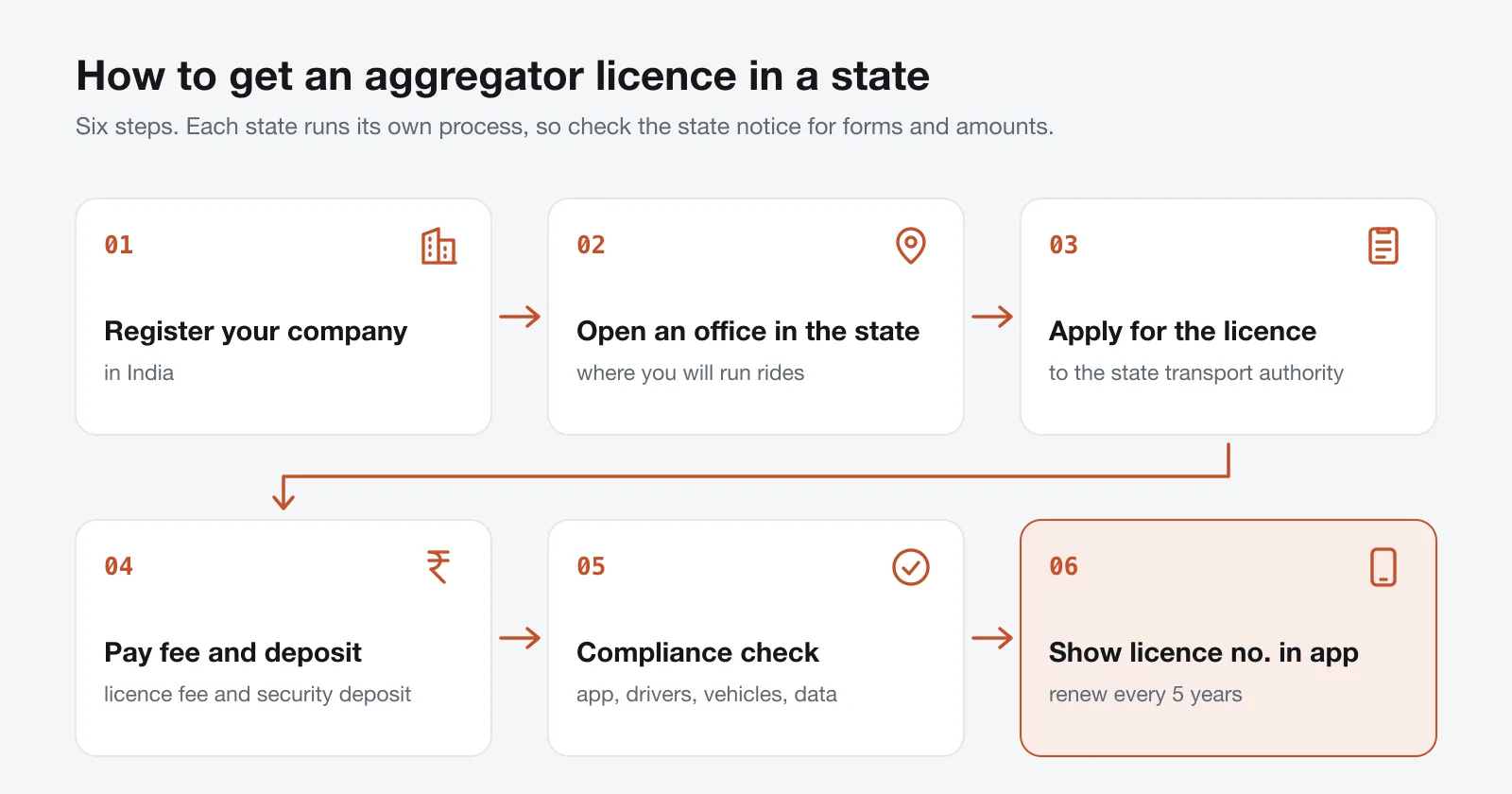
- Register. A company, an LLP or a co-operative of drivers or owners.
- Open an office in the state. Many states ask for one.
- Apply in Form I. To the State or Regional Transport Authority, or the state portal.
- Pay when asked. The central text says the decision comes within 90 days, then payment within 30 days.
- Get the licence. Within 15 days of payment, valid five years.
- Show the licence number in the app and on the website. Renew before expiry.
Licence fee and security deposit by state
Only amounts we read in an official text are shown. For other states the fee is not published in an official text we could open.
| Where | Licence fee | Security deposit | Source |
|---|---|---|---|
| Central MVAG 2025 | ₹5,00,000; renewal ₹25,000 | ₹10 lakh to ₹50 lakh by fleet size | Source: clauses 5, 6 |
| Maharashtra | ₹10,00,000 state; ₹2,00,000 one district | ₹10 lakh to ₹50 lakh | Source: rules 5, 6 |
| Uttarakhand | ₹2,500 to ₹5,00,000 by fleet size | Same as the fee | Source: rule 18 |
| Jammu and Kashmir | ₹5,00,000; renewal ₹2,500 | ₹1,00,000 to ₹5,00,000 | Source: S.O. 453 |
| Assam | ₹5,00,000; renewal ₹2,500 | ₹1,00,000 to ₹2,50,000 | Source: rules 23, 24 |
| Meghalaya | Taxis ₹45,000 to ₹1,35,000; bikes ₹13,500 to ₹40,500 | ₹10 lakh taxis; ₹5 lakh bikes | Source: Schedule I, rule 10 |
Documents you need
Form I in the central text asks for:
- Company registration and memorandum of association
- Head office and branch addresses
- Key managers and the signing person
- List of vehicles with permit details
- GPS tracking set-up and server location
- Financial statements for three years
- Proof of fee and security deposit
Driver records are checked on the SARATHI portal and vehicle records on VAHAN. Source: MVAG 2025 clauses 11.3 and 13.3.
36 states and UTs
State-wise motor vehicle aggregator rules
Status as we found it on 14 November 2026.
"Reported" means news only; we could not open the official text. Fares appear only where an official text gave them. The 15 states and UTs with no rules are in a short table further down.
| State or UT | Status | Rule and year | Fare and surge | Bike taxi | App setting | Source |
|---|---|---|---|---|---|---|
| A. Own rules or policy in force (17) | ||||||
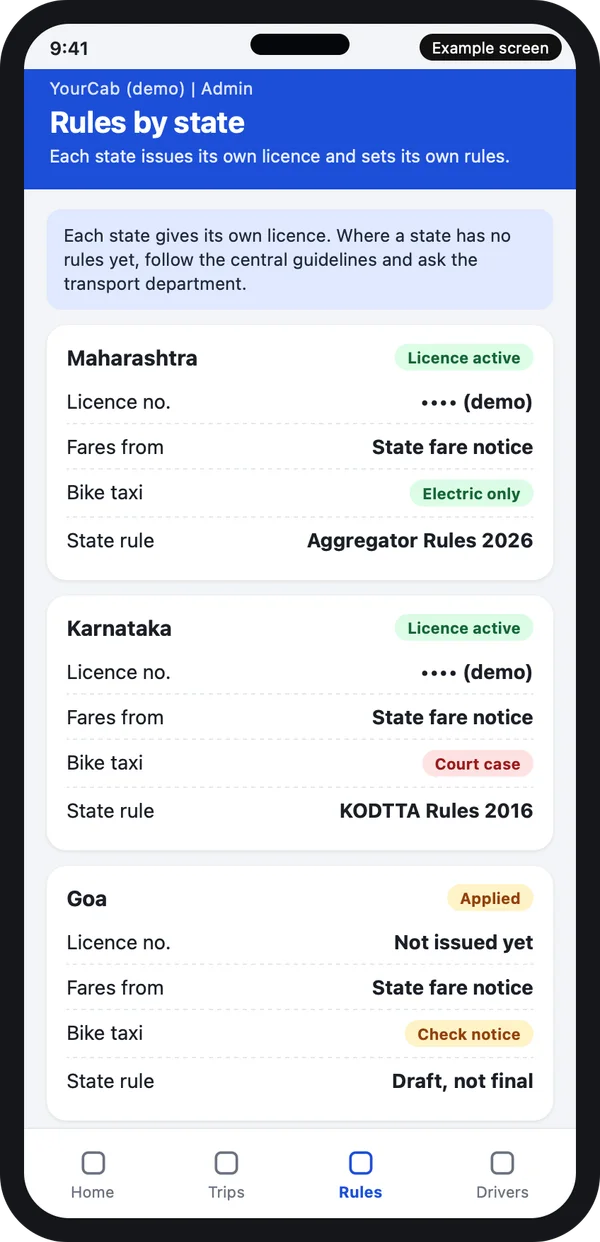
| Maharashtra | In force | Aggregator Rules, 2026 | 25% below to 1.5 times | Electric only | Licence ID, Marathi | Gazette |
| Karnataka | In force | Aggregators Rules, 2016 | State fares | Court case | Kannada | Department |
| Delhi | In force | Aggregator Scheme, 2023 | State fares | Electric only (reported) | Fleet reports | Department |
| Haryana | Reported | Amendment Rules, 2026 | Not confirmed | Unclear | Fuel check, NCR | Not online |
| Chandigarh | Reported | Aggregators Rules, 2025 | Not confirmed | Transport bikes | UT fare table | Not online |
| Kerala | Reported | Aggregator Policy, 2024 | Not confirmed | Needs permit | Cancel reasons | Not online |
| West Bengal | Reported | ODTTA notification, 2022 | Not confirmed | Commercial bikes | Data in state | Not online |
| Odisha | Reported | ODTTA Guidelines, 2023 | State fares | Transport bikes | Odia | Not online |
| Rajasthan | Reported | Aggregator Scheme Rules, 2025 | State fares | Permit bikes | Payout check | Not online |
| Uttar Pradesh | Reported | Aggregator and Delivery Rules, 2026 | Not confirmed | Under licence | Late-arrival credit | Not online |
| Uttarakhand | In force | Contract Carriage Rules, 2020, amended 2024 | 25% above or below | Permit bikes | 2% surcharge line | 2024 rules |
| Madhya Pradesh | Reported | Aggregator Rules, 2017 | State fares | City action | Licence per city | Not online |
| Bihar | Reported | Aggregator Policy, 2019 | Not confirmed | Some cities | Show night charges | Not online |
| Jammu and Kashmir | In force | Aggregator Rules, 2023 | 50% below to 1.5 times | No licence found | Local language | S.O. 453 |
| Assam | In force | Aggregator Rules, 2022 | 50% below to 1.5 times | Allowed, plus pooling | Assamese | Rules |
| Meghalaya | In force | Aggregator Rules, 2020 | State fares, no surge clause | With permit | Fare estimator | Gazette |
| Nagaland | Reported | Aggregation Rules, 2023 | District rates | Unclear | District fares | Not online |
| B. Adopted the central MVAG 2025 (1) | ||||||
| Dadra and Nagar Haveli and Daman and Diu | Reported | Adoption notice, October 2026 | Central baseline | Not found | Central checklist | Not online |
| C. Draft only (3) | ||||||
| Goa | Draft | Aggregator Guidelines, 2025 | Government fare | Local motorcycle taxis | Driver payout | Assembly reply |
| Punjab | Draft (reported) | Aggregator Rules, 2023 | Not found | Not found | Central baseline | Not online |
| Tamil Nadu | Draft (reported) | Aggregator Rules, 2025 | Awaiting state fares | Not permitted (reported) | Block parcels | Not online |
Maharashtra Motor Vehicle Aggregator Rules 2026
Maharashtra wrote its own rules, printed in the gazette on 15 July 2026. The licence number must show in the app, and the app must work in Marathi, Hindi and English.
Karnataka aggregator rules and the bike taxi case
Karnataka uses its own 2016 rules, which the High Court upheld in part. Bike taxis are before the Supreme Court.
Goa taxi aggregator guidelines
Goa's draft of 20 May 2025 is not in force. On 9 March 2026 the Transport Minister told the Assembly it got 3,802 objections and suggestions. It will go to the State Transport Authority. Source: Assembly reply.
Delhi aggregator and delivery service provider scheme 2023
Delhi's scheme covers ride apps and delivery fleets, with a state portal for licences. News reports say fleets must move to electric vehicles and bike taxis must be electric. Source: Delhi Transport Department. See our electric cab app guide.
Haryana aggregator rules 2026
News reports say Haryana notified new rules in May 2026, replacing rule 86A. Reports add that new aggregator cars in the NCR must run on clean fuel. We could not open the gazette copy.
Chandigarh aggregator rules 2025
Chandigarh notified its own rules in 2025 (reported). In 2026 it suspended the licences of large ride apps for gaps in insurance, training and fares, news reports say. The state checks rules after launch, not only at licence time.
Rajasthan, Uttar Pradesh and Uttarakhand
Rajasthan notified scheme rules in December 2025 (reported). Uttar Pradesh notified rules in May 2026 that also cover delivery apps, with an online licence portal (reported). Uttarakhand asks for fare logic tested by an approved body, a 2% surcharge and apps in Hindi and English. Source: Uttarakhand rules, 2020 and the 2024 amendment.
Tamil Nadu, Kerala and West Bengal
Tamil Nadu will bring its draft rules after it fixes fares (reported). Kerala has a 2024 policy based on the 2020 text, with an office in the state (reported). West Bengal has a 2022 notification. Reports say trip data must stay inside the state.
Assam, Meghalaya and the North East
Assam asks for apps in English, Assamese and Hindi. Data stays on servers in India for 3 to 24 months. Source: Assam rules, 2022. Meghalaya asks for a fare estimator and complaints closed within 15 days. Source: Meghalaya gazette, 2020. Nagaland has 2023 rules (reported).
States and UTs with no aggregator rules found
Here the central guidelines are the reference. Ask the transport department before you launch.
| State or UT | What we found | Contact |
|---|---|---|
| Andhra Pradesh | No rules | Transport department |
| Arunachal Pradesh | No rules | Transport department |
| Chhattisgarh | No rules; hosts the 2020 central text | CG Transport |
| Gujarat | No state rules; 2020 central text used (reported) | Transport department |
| Himachal Pradesh | No rules | Transport department |
| Jharkhand | No rules | Transport department |
| Ladakh | No rules; district permits | Ladakh Transport |
| Lakshadweep | No rules | UT administration |
| Manipur | No rules | Transport department |
| Mizoram | No rules; government taxi app in Aizawl | Mizoram Transport |
| Puducherry | No rules; contract carriage permits | Permit page |
| Sikkim | No rules; state booking app | Transport department |
| Telangana | No rules | Telangana Transport |
| Tripura | No rules; committee on airport cabs | Tripura Transport |
| Andaman and Nicobar Islands | No rules | UT administration |
Bike taxi rules by state
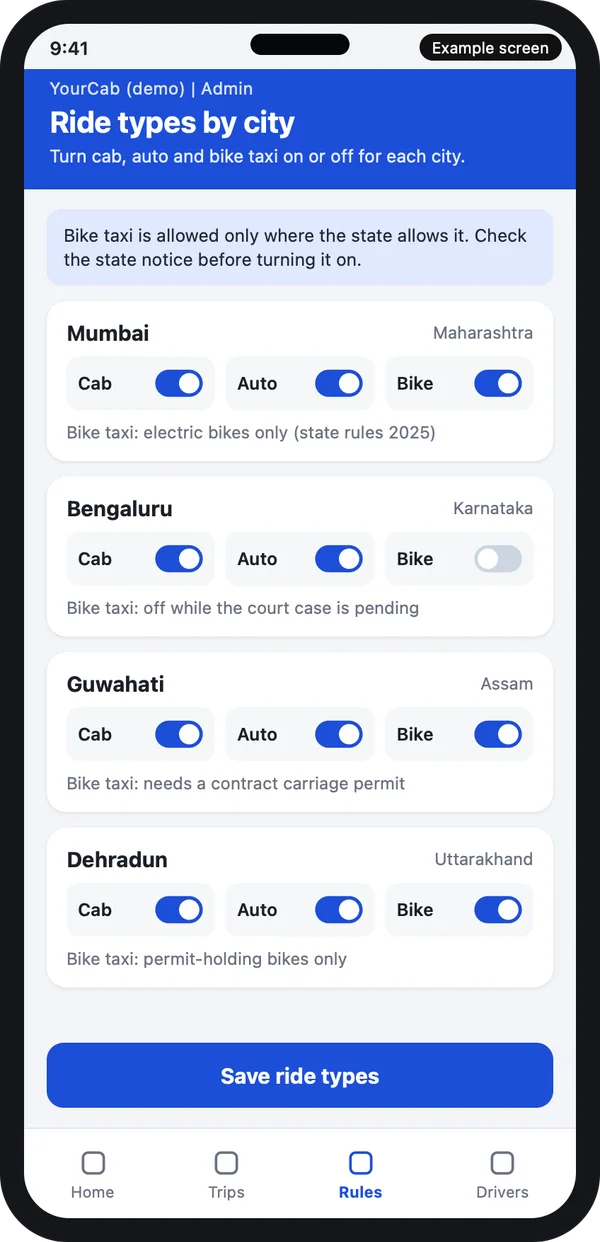
A private bike needs state permission to carry paying riders. Clause 23 lets a state give it, but few have. Maharashtra allows only electric bike taxis, with a separate licence. Source: Maharashtra Bike-Taxi Rules, 2025.
In the app, keep bike taxi as an on or off switch for each city.
| Status | States and UTs | App setting |
|---|---|---|
| Electric only | Maharashtra; Delhi (reported) | Electric bikes only |
| Court case | Karnataka; Tamil Nadu | Off until the case ends |
| Permit bikes only | Chandigarh, West Bengal, Odisha, Uttarakhand, Rajasthan, Meghalaya, Assam, Kerala | Check the permit for each bike |
| Private bike pooling | Assam | Count trips per bike |
| Not open to apps | Goa, Jammu and Kashmir | Off |
| Allowed under licence (reported) | Uttar Pradesh | On, with licence checks |
| Running, no rule | Bihar, Andhra Pradesh, Telangana | Ask the department |
For app builders
What your taxi app must do to follow the rules
Each rule maps to a setting, a screen or a record.
Booking basics are in our list of must-have taxi app features. The parts below are what aggregator rules add.
Keep rules as settings for each state
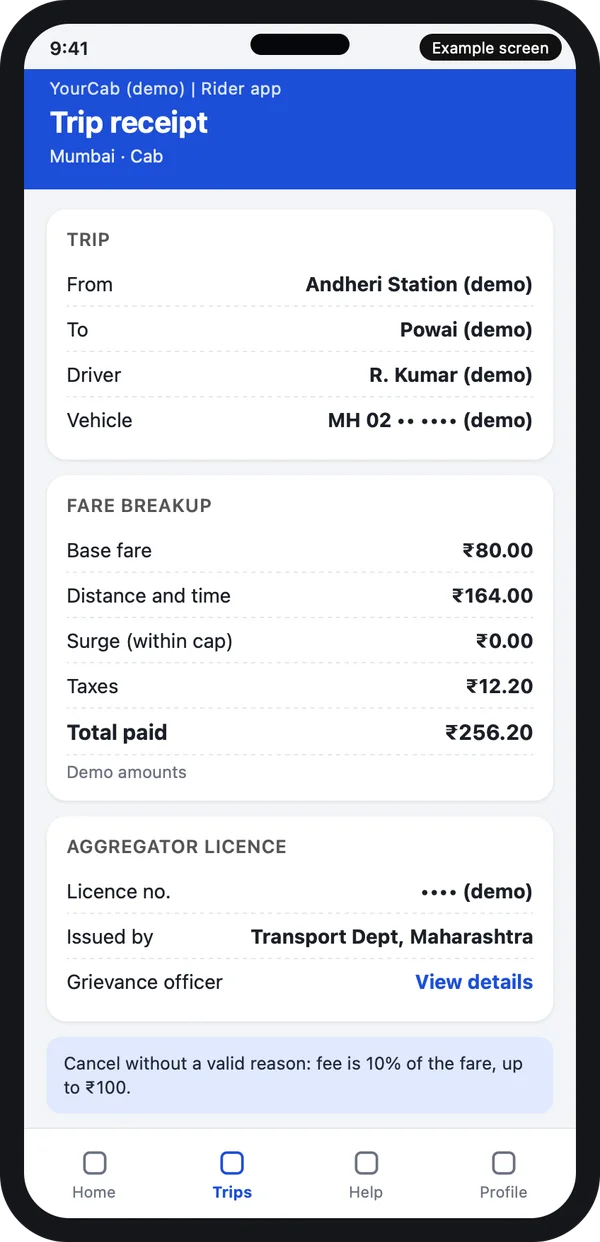
Each state gets one settings page: licence number, fare notice, surge cap, bike taxi on or off, cancellation amounts and languages. When a rule changes, the office edits the page, with no new app release. We build this into the admin panel for your licence team.
Fare engine with caps and driver share
The fare engine takes the base fare from the state notice and applies that state's floor and cap. It handles:
- Fare tiers by engine size, as in Maharashtra
- Surge off where fares are fixed
- A 3 km or 5 km minimum, by state
- Extra lines such as a state surcharge
- A payout report that proves the driver share
Driver onboarding, training and hours
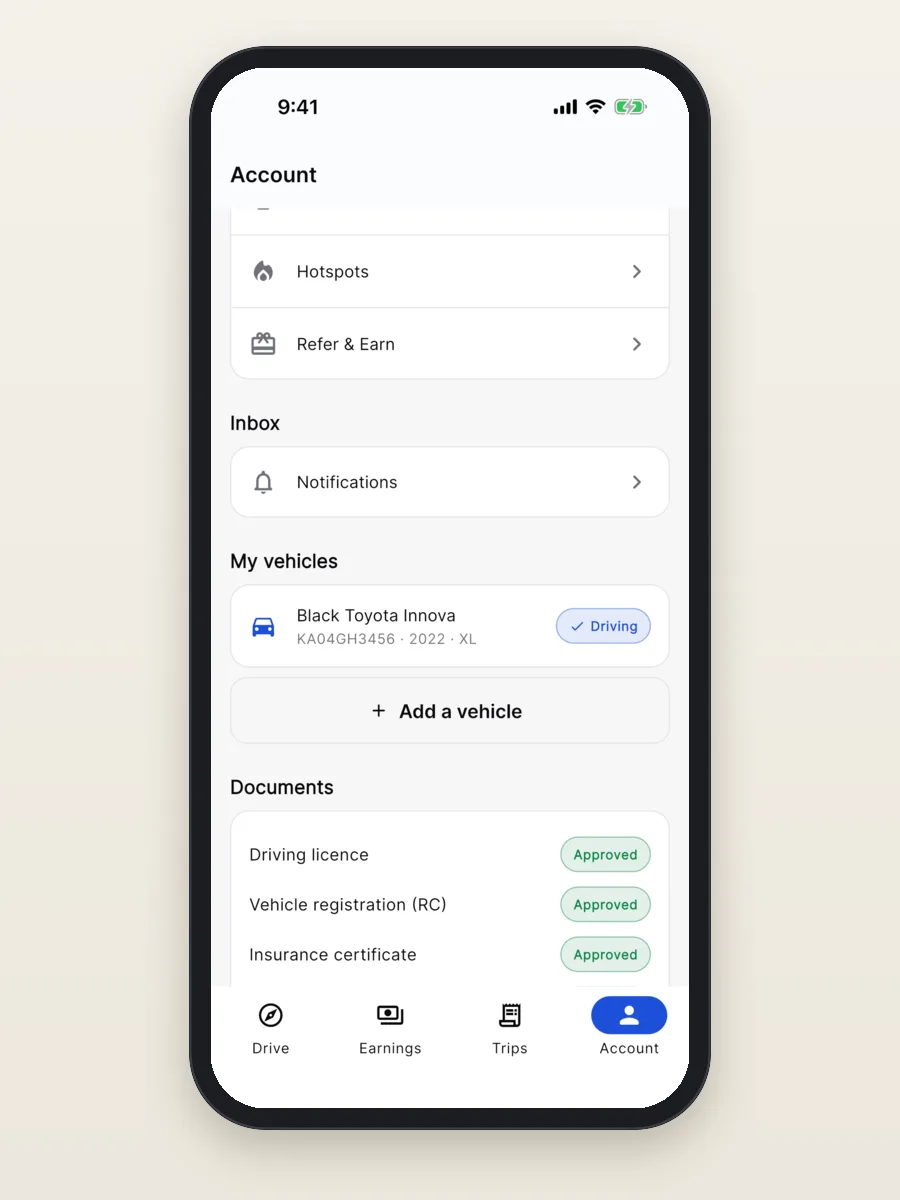
Each driver has a document vault with expiry dates. The app blocks onboarding until seven days after police verification. A tracker records training hours. Maharashtra, Jammu and Kashmir and Assam cap login time. There the app stops the driver after 12 hours and starts a 10-hour break.
Safety, control room and complaints
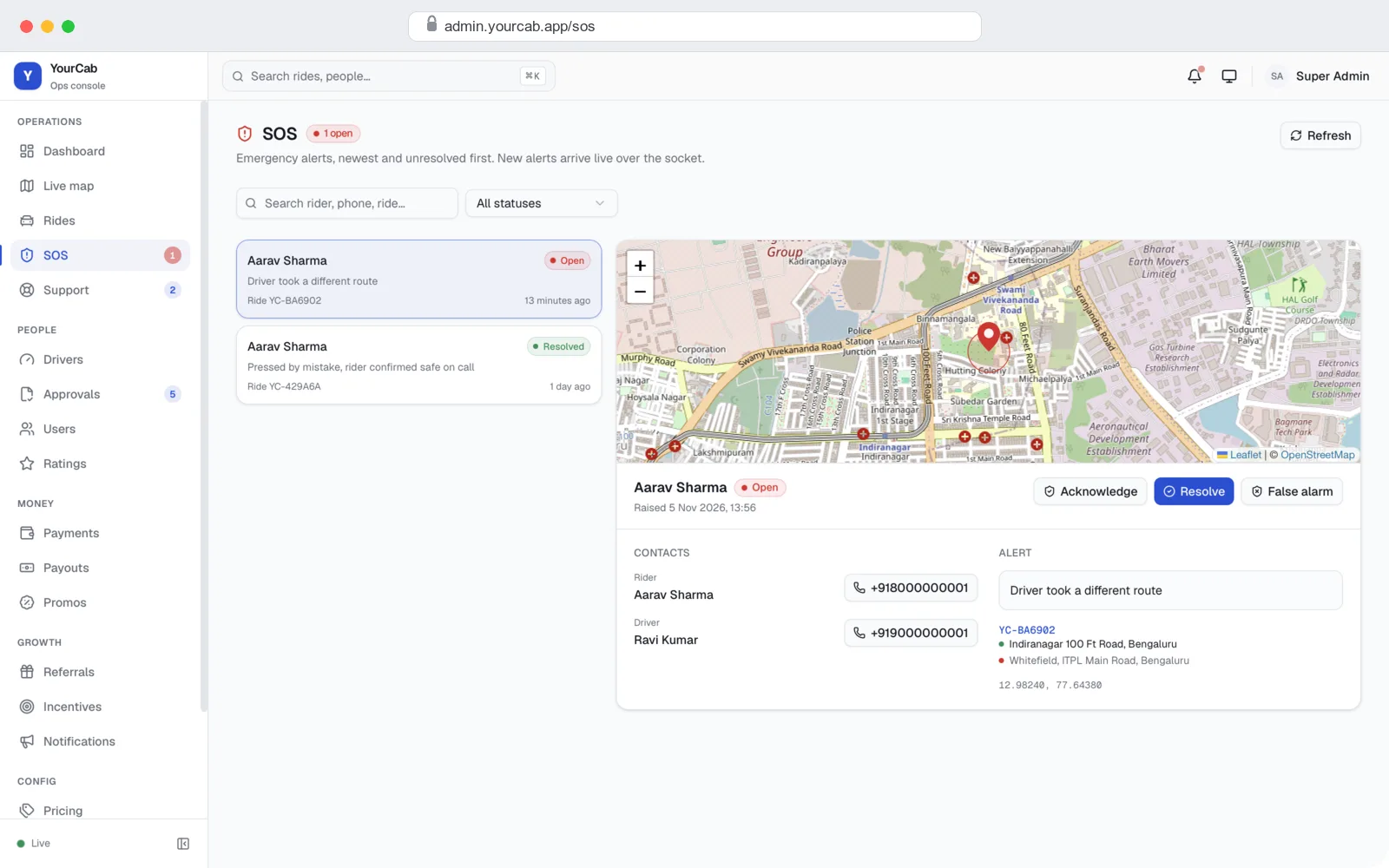
The control room sees every car on a live map. An SOS reaches it at once with the trip and location. A route alert fires when a car leaves its path. The grievance officer works a queue with time limits.
Data, language and security audit
The 2025 text says data is stored as the law says, including the DPDP Act, 2023. Some states, such as Jammu and Kashmir and Assam, ask for servers in India. The app needs consent screens, a CERT-In empanelled security audit, and English, Hindi and the state language. We set up hosting with data stored in India. Source: DPDP Act, 2023 (MeitY).
Reports for the transport office
- Driver and vehicle lists in the state's format
- Complaint register with outcomes
- Training records per driver
- Fare and payout summary
- A read-only login for officers where rules ask for one
Worked example: one cab company in three states
A made-up cab firm runs one app in Pune, Gurugram and Bengaluru, with three state profiles.
- Pune. Surge from 25% below to 1.5 times, fare tiers by engine size, Marathi on.
- Gurugram. Fuel-type check when a car joins. Central baseline for the rest.
- Bengaluru. Surge off, state fares, Kannada on, bike taxi off.
- One control room. All three cities on one live map, with reports per state.
Our service
How we build your taxi app around your state's rules
Your state notice becomes settings, screens and records.
- Read your state notice with you. See how we work, step by step.
- Show screens. You click through rider, driver and admin screens before we build.
- Build. Rider and driver mobile apps built in Flutter for Android and iPhone, on a Node.js backend.
- Test with your team. Your drivers run real trips in one city.
- Launch under your brand. Your name in the stores, your licence number in the app.
- Update when rules change. We change settings and screens with you.
Whoever builds your app, make sure it can:
- Hold a rule profile for each state
- Cap fares and surge from settings
- Track driver papers and training
- Send SOS and route alerts to a control room
- Show the licence number and grievance officer
- Hand you the source code and your data
What decides the cost of a rule-ready taxi app
Each rule set you carry adds work. The main factors:
- States. Each adds a rule profile, forms and reports.
- Vehicle types. Cabs, autos and bikes each need fares and checks.
- Links. Trackers, SARATHI, VAHAN and state portals.
- Languages and audit. Each language adds text; the security audit adds fixes.
| Monthly taxi software plan | App built for your states | |
|---|---|---|
| New state notice | Wait for the vendor | We change it with you |
| Payment | Every month, often per trip | One build cost, support if you want it |
| Data and source code | With the vendor | Yours |
We send a written quote after one call. Talk to us about your state.
FAQ
What are the Motor Vehicle Aggregator Guidelines 2025?
They are central guidelines for ride apps, issued by MoRTH on 1 July 2025 under Section 93 of the Motor Vehicles Act. They replace the 2020 guidelines.
Do all states have to follow the 2025 guidelines?
No. Section 93 says the state issues the licence and "may follow" central guidelines. A state can adopt them, write its own rules or keep older ones.
Which states have their own cab aggregator rules?
We found 17 states and UTs with their own rules or policy. They include Maharashtra, Karnataka, Delhi, Uttarakhand, Jammu and Kashmir, Assam and Meghalaya. Goa, Punjab and Tamil Nadu have drafts.
How do I apply for a cab aggregator licence in India?
Register a company, LLP or co-operative, open an office in the state and apply in Form I to the transport authority. Pay the fee and deposit when asked.
How much does an aggregator licence cost?
Under the central 2025 guidelines the fee is ₹5,00,000 and the deposit is ₹10 lakh to ₹50 lakh by fleet size. States set their own amounts. Source: MVAG 2025 clauses 5 and 6.
What is the surge pricing cap for cab apps in India?
The central guidelines allow up to two times the base fare. Maharashtra, Jammu and Kashmir and Assam cap it at 1.5 times.
Is bike taxi legal in India and in my city?
It depends on your state. Some allow only electric or permit bikes, some have court cases. See the bike taxi table above.
What documents does a driver need to join a cab app?
ID proof, a driving licence, a bank account, medical and eye checks, and police verification. The vehicle needs registration, fitness, insurance, a pollution certificate and a permit.
What changed from the 2020 guidelines to the 2025 guidelines?
The surge cap rose from 1.5 to 2 times. Training went from 30 to 40 hours. Deposits went up, and states may now allow private bikes.
Can PRS India build a taxi app that follows my state's rules, and will I own the code?
Yes. We build the rider app, driver app and admin panel with your state's rules as settings. You get your brand, the full source code, and data in your own cloud account.
Related guides
- Car Rental App Development: Self Drive Business Guide
- How to Start Taxi Business: Build Your Own Taxi App
- ONDC Taxi App: How to Build and Launch Yours
- How to Start a Taxi Business in Nigeria With Your Own App
- Electric Cab Booking App: EV Taxi Business Guide
- Employee Transport Management Software: Office Cab App
- How to start a taxi business
- White label taxi app development company in India
- ONDC taxi app: how to build and launch yours
Written by
Prabhjot Kaur · Product Manager
Product Manager at PRS India. Turns what a client needs into a screen-by-screen plan for the app, and checks every release against that plan before it goes out.