Business of Software
White Label Taxi App Development Company in India
How to choose a white label taxi app company in India, what you should own at handover, and how we build your branded rider, driver and admin apps.

Written from production. Our articles draw on products we run live and the client work behind them, and are revised as the systems they describe evolve.
You run cabs, a travel desk or a fleet. Your customers still book on phone calls and WhatsApp. You want an app with your own name on it, but building one from a blank page takes long. A white label taxi app is the middle path. A development company starts from a taxi app it has already built. Then it changes that app to your brand and rules.
This guide is for owners who are choosing a taxi app development company in India. It explains what white label really means and what you should get at handover. It also lists the questions to ask before you sign. It also shows how PRS India builds your own branded taxi app on web, Android and iPhone.
Key takeaways
- White label means a working base app, changed to your brand, your fares and your city. It should not mean a rented app that only carries your logo.
- Ask who owns the source code, the server and the store accounts. All three should be in your name.
- A full taxi setup has three parts: a rider app, a driver app and a web admin panel.
- Check how the company handles driver documents, fare rules and safety, not only how the app looks.
- Ask to see a working demo of the rider and driver apps before you sign anything.
What white label means for a taxi app
White label is a word from shops. A factory makes a product, and the shop sells it under its own label. In software, it works the same way. A company builds a taxi app once. Then it makes a copy for you, with your name, logo, colours and rules.
The base app already books rides, finds a nearby driver, tracks the car and takes payment. So you do not pay for that work from zero. You pay for the changes your business needs. So many operators ask a mobile app development company for a white label start, not a fresh build.
But the word is used in two very different ways. Some sellers rent you their app every month and only change the logo. Others hand over a copy that becomes yours. Before you compare prices or features, find out which one you are being offered. Our longer guide to the white label taxi booking app covers the parts of the app in more detail.
The three apps in a white label taxi setup
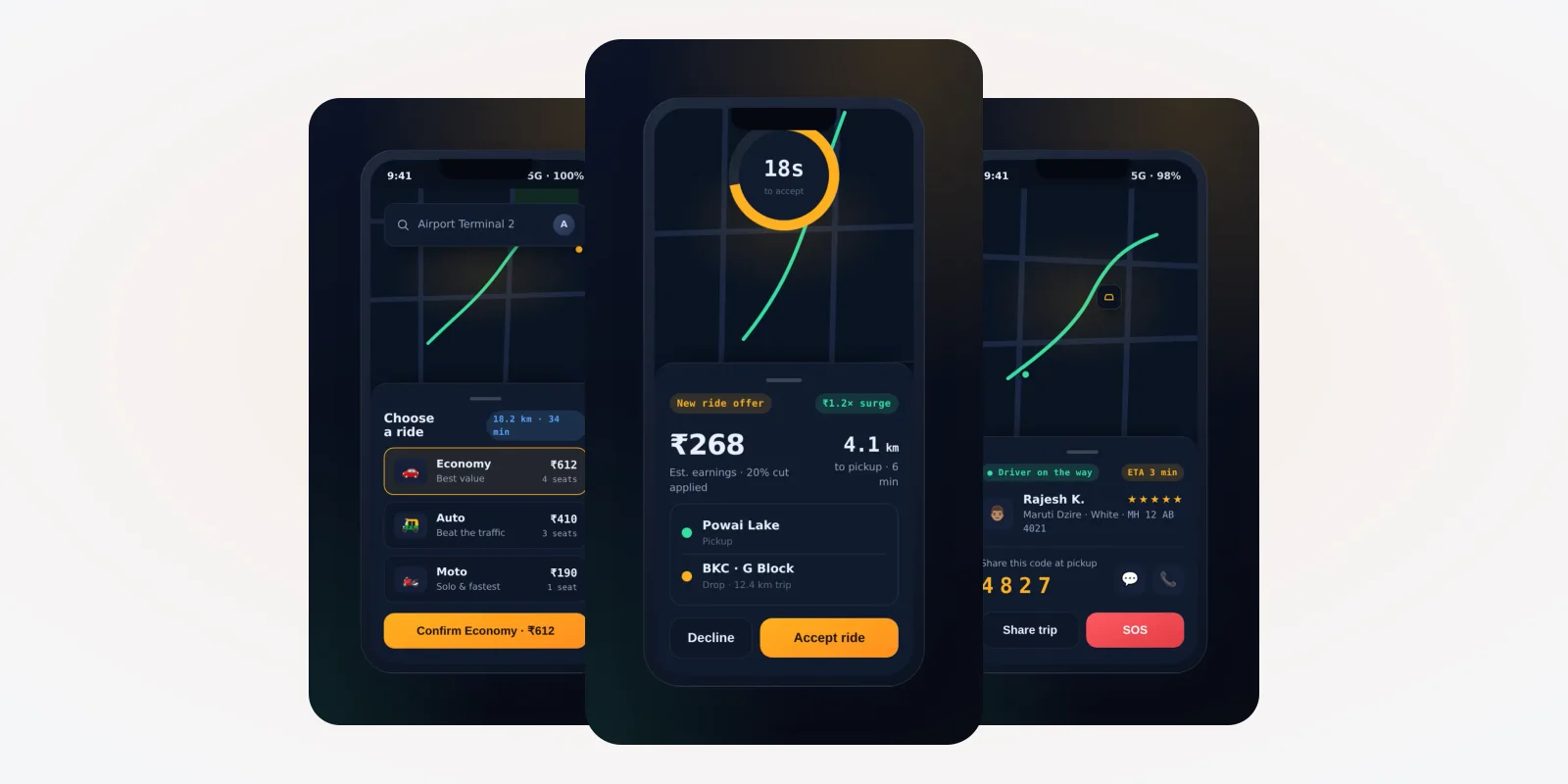
A taxi business has three groups of users. Each one needs its own app or panel. A white label package should include all three, under your brand. The screens below are from a taxi app we built, filled with demo data.
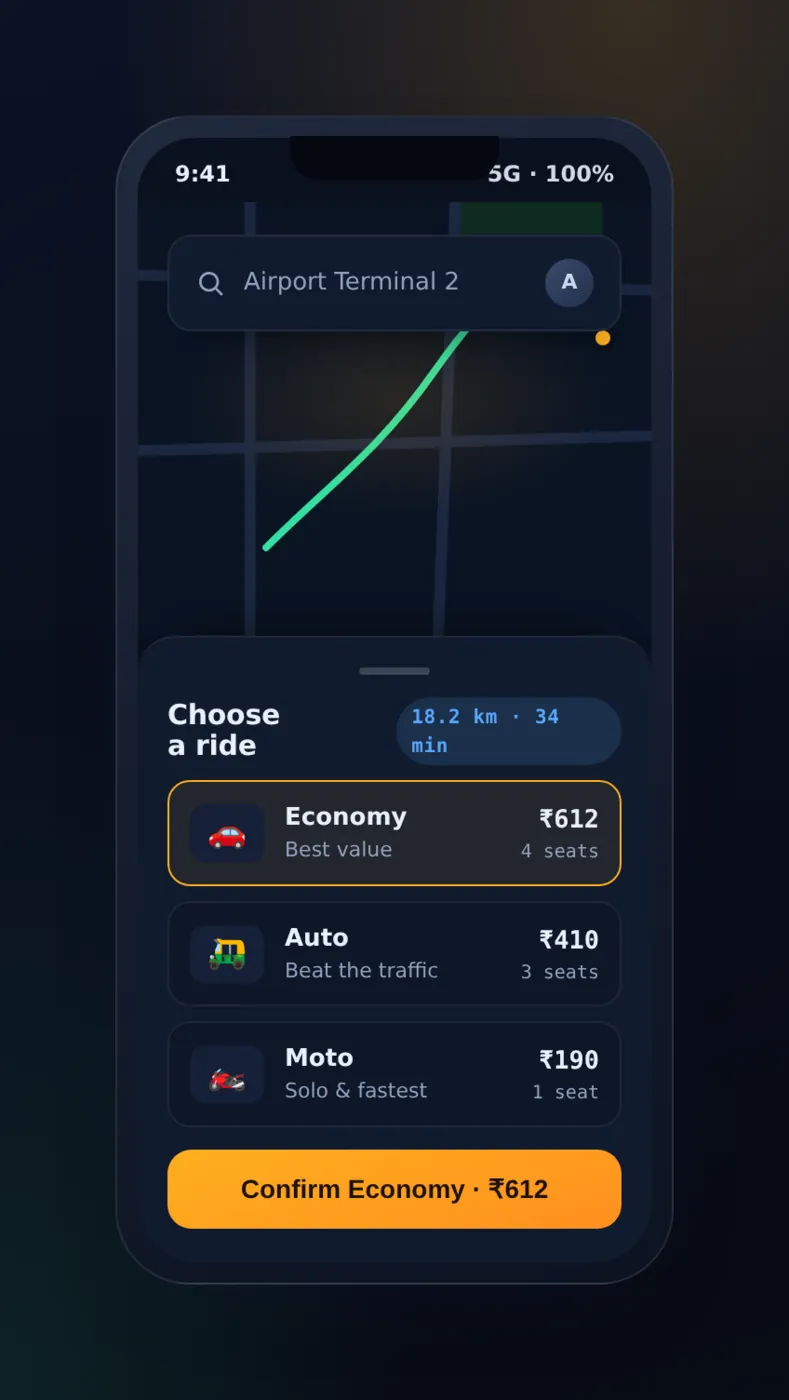
Rider app
The customer picks a drop point, sees ride types and fares, and confirms the booking.
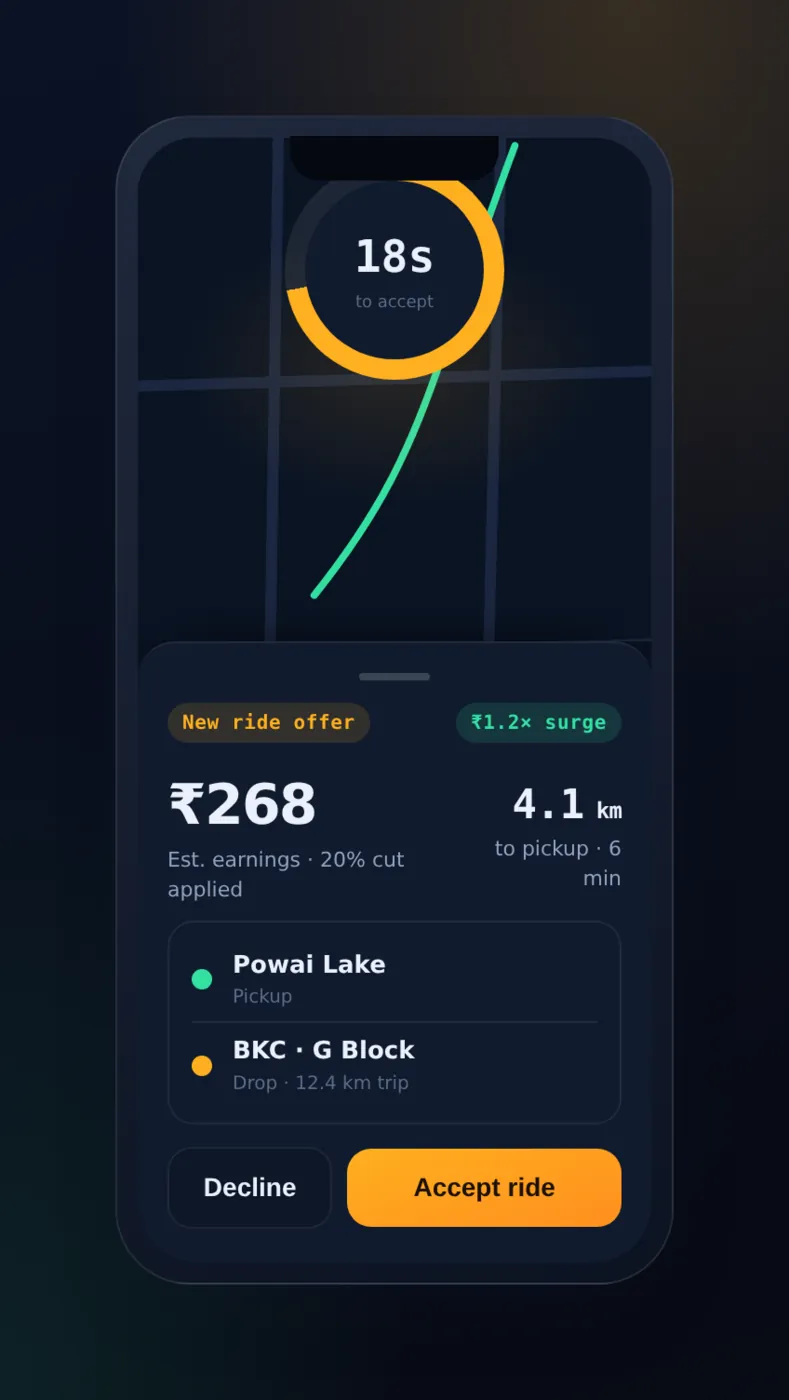
Driver app
The driver gets a ride offer with pickup and drop, and accepts or declines it before the timer ends.
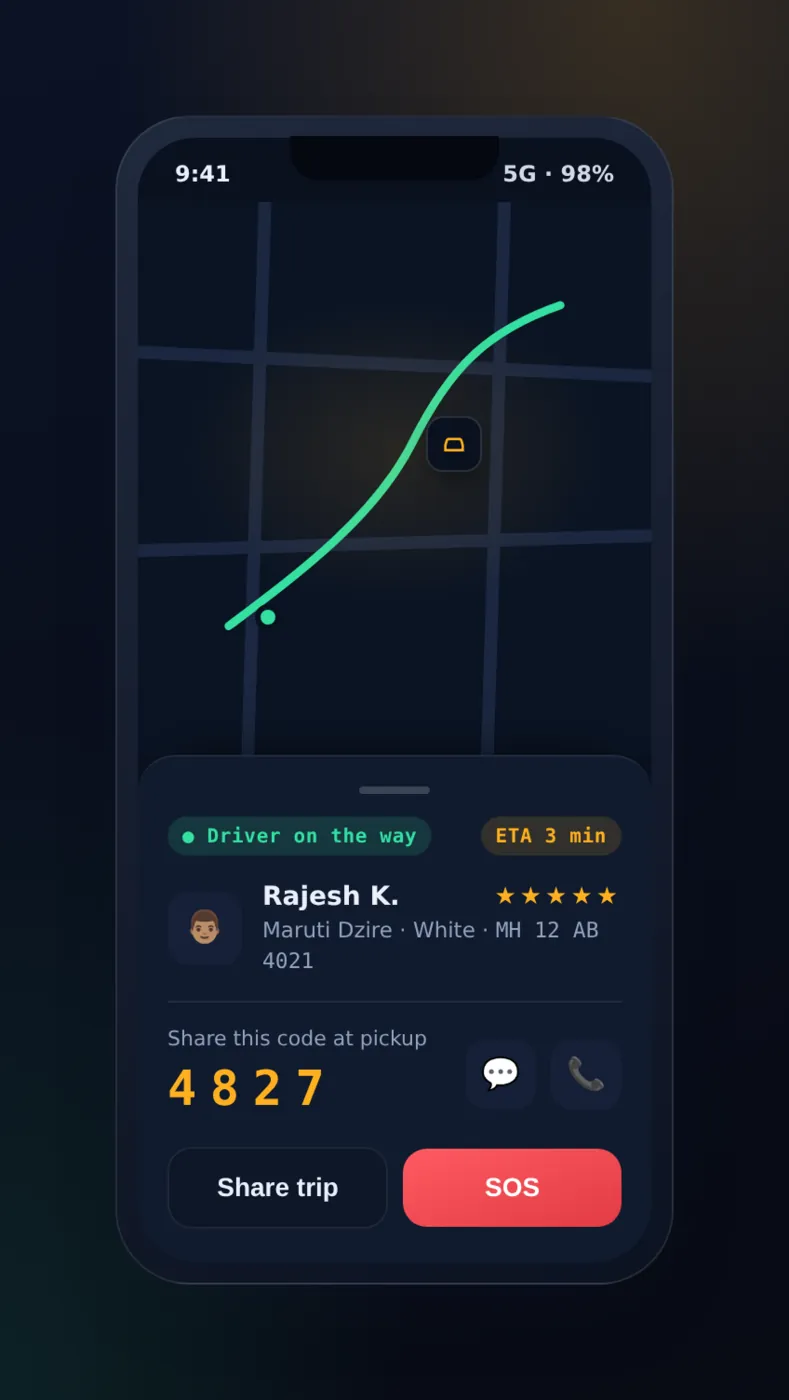
Live trip
The rider sees the car on the map, the driver's details and a code to share at pickup.
The third part is the web admin panel. Your office uses it to approve drivers, set fares, watch live rides and read reports. We build this panel as a web application that runs in any browser. Your staff need no special computer.
The problem
Where taxi operators go wrong with white label apps
These are the mistakes we hear about most from owners who come to us after a first try.
- The app is rented, not owned. The seller keeps the code. When you stop paying, your app stops working.
- The store account is the seller's. Your app sits on their Google Play or Apple account. Moving it later is slow and hard.
- Only the logo changes. Fare rules, ride types and city zones stay as the seller set them.
- No one checks drivers. The admin panel cannot store a licence, vehicle papers or expiry dates.
- Data sits on a shared server. Rider phone numbers and trips are mixed with other clients' data.
- No help after launch. Maps or payment rules change, and nobody updates the app.
What the company should change for you
Rebranding is more than a new logo. Your app should feel like it was made for your city and your customers. Ask the company which of these it will change, and which stay fixed.
Brand and store listing
App name, icon, colours, splash screen, email and SMS sender name. The store pages on Google Play and the App Store should show your company as the publisher.
Ride types and fare rules
You decide the ride types: car, auto, bike or parcel. You set base fare, per-km charge, waiting charge, night charge and how busy-hour pricing works. All of this should be a setting in the admin panel, not a code change.
Payment methods
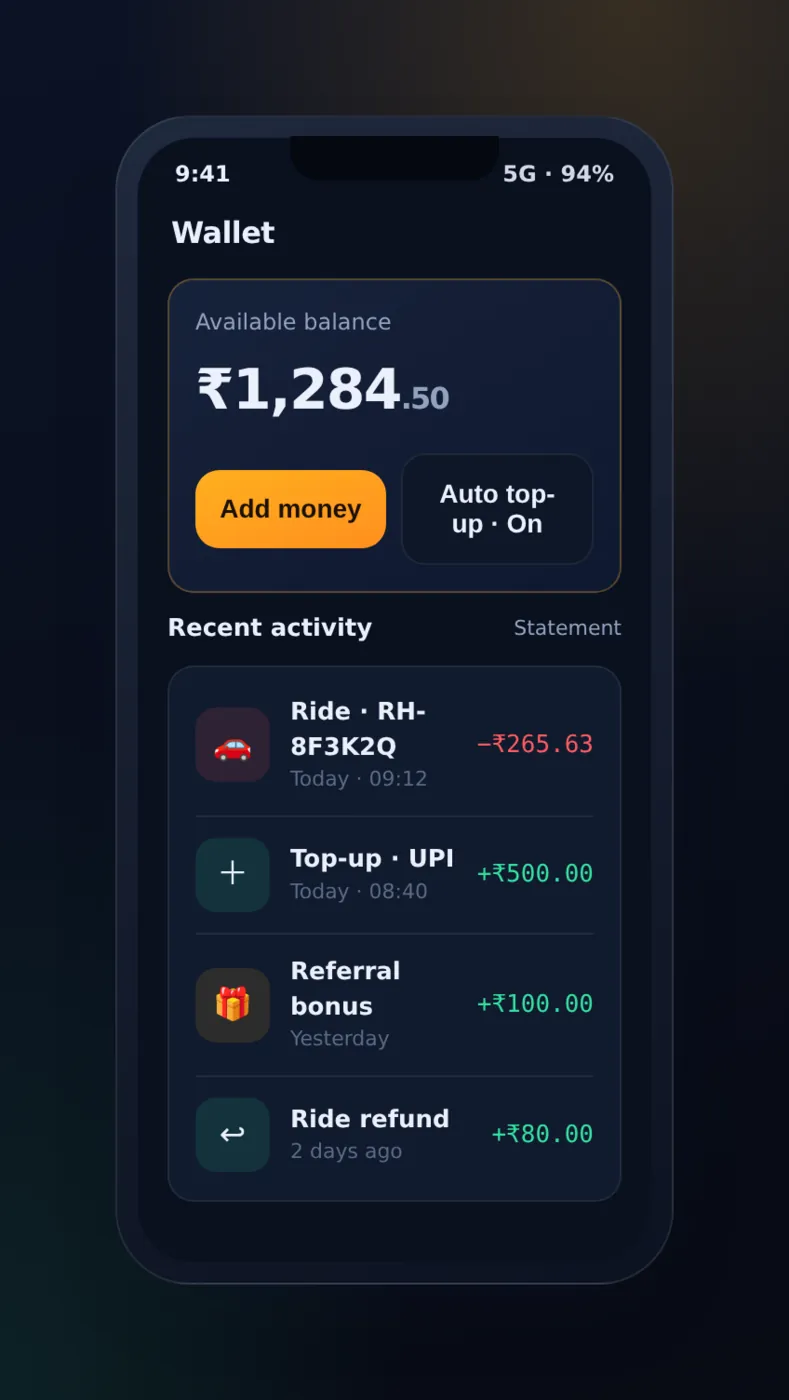
Cash, UPI, cards and an in-app wallet. Riders should be able to add money and see each trip in their wallet history.
Driver rules
Which papers a driver must upload, who checks them, and what happens when a paper expires. Your commission rule and payout cycle for drivers also belong here.
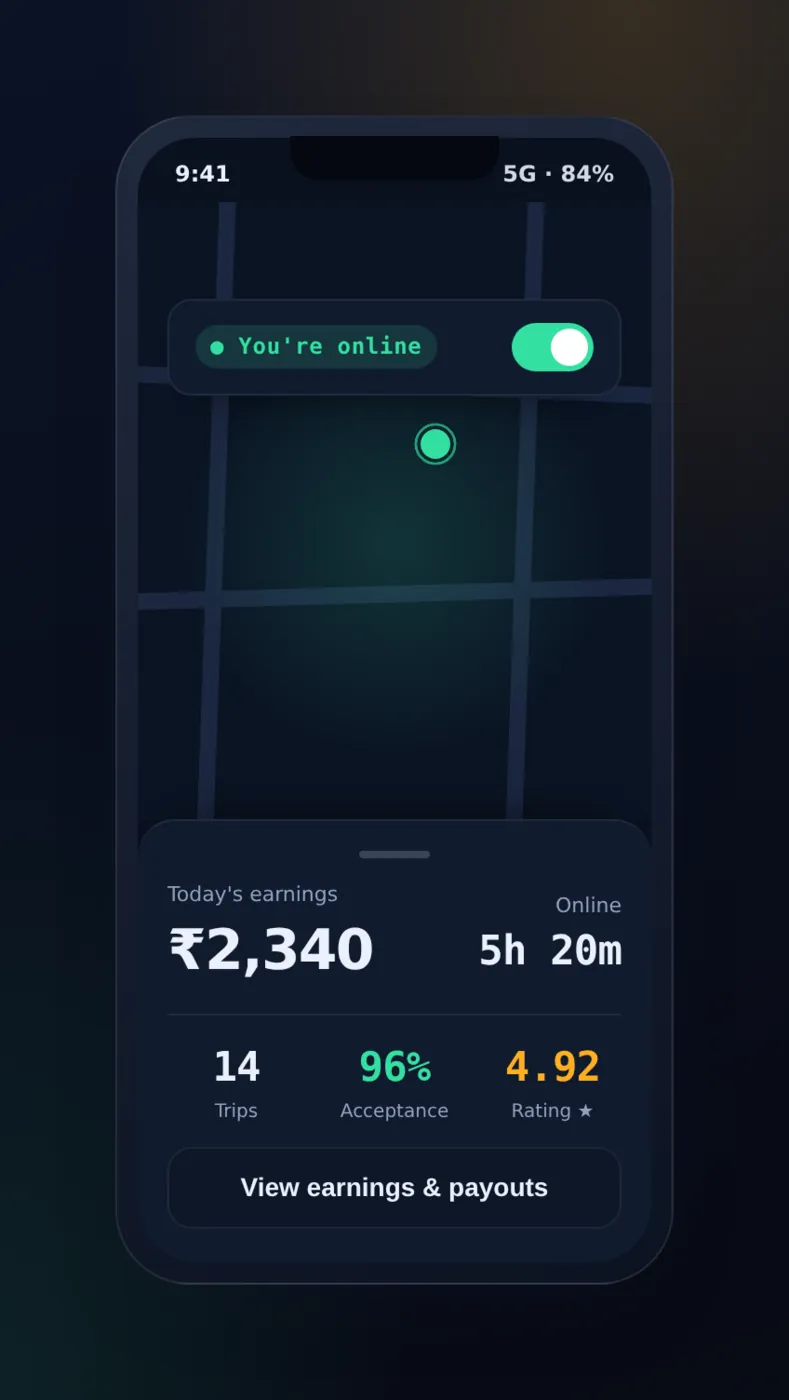
A driver dashboard should show the driver's day: online status, trips, acceptance and earnings. Drivers stay longer when they can see what they earn.
The admin panel your office will use every day
Riders see the app. Your team lives in the admin panel. When you test a white label app, spend more time on the panel than on the rider screens.
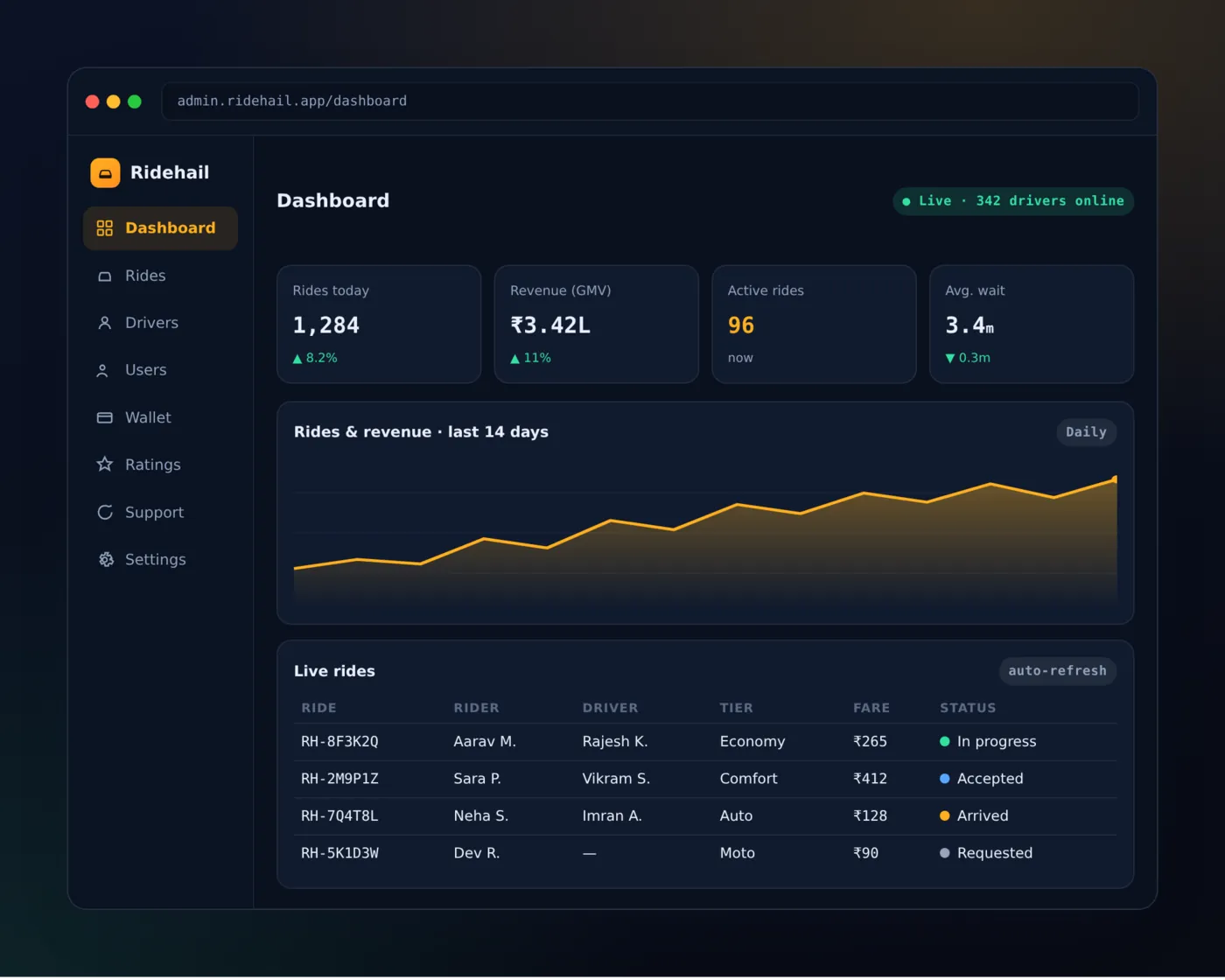
The dashboard should show rides in progress, drivers online and money collected, without anyone calling the drivers. The same panel should hold the rider list, the driver list, support tickets and settings.
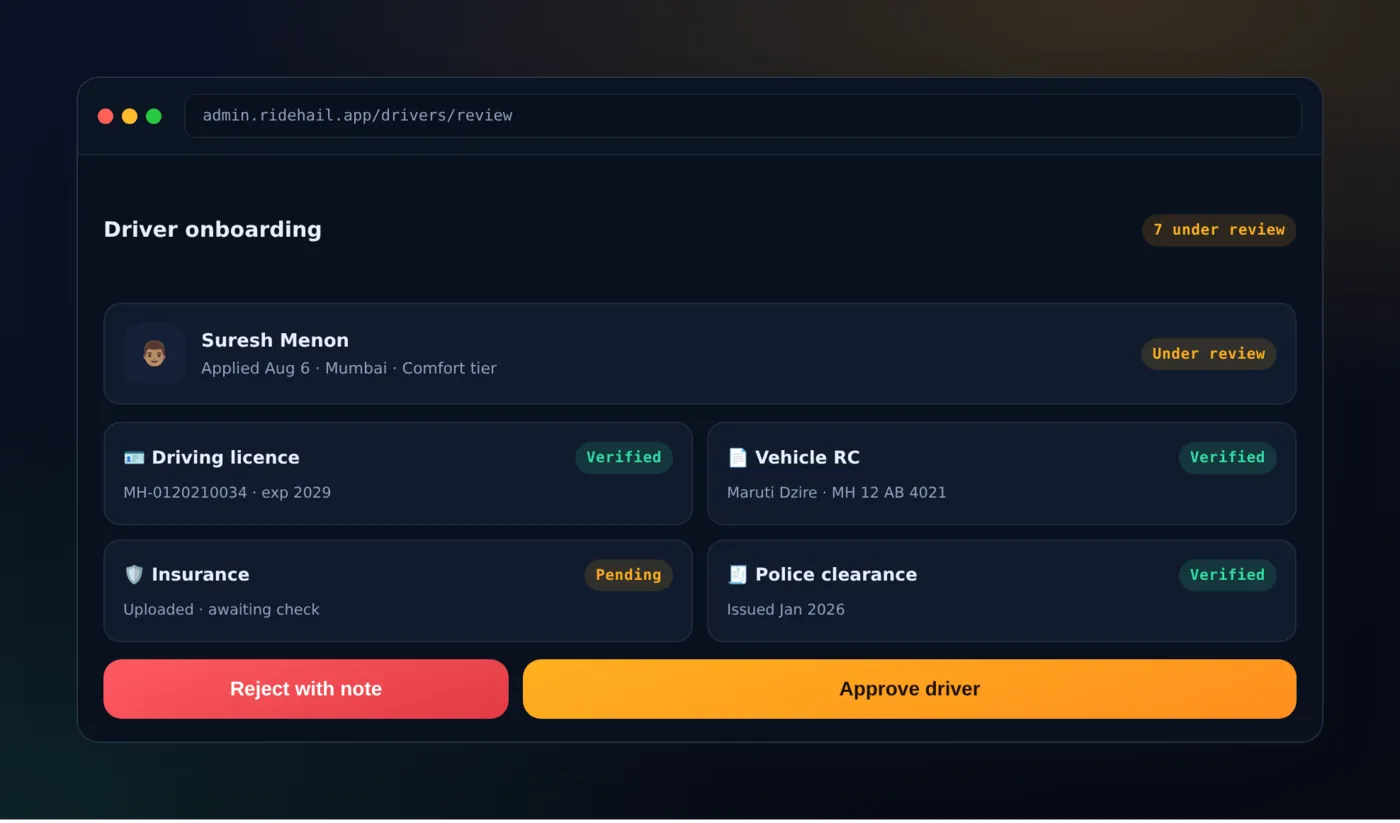
Driver approval is where many cheap apps fall short. Your staff should see each document, mark it verified or pending, and reject with a note. These rules come from your state transport department and the Ministry of Road Transport and Highways. Check the current rules for your state with a lawyer before launch.
White label vs rented app vs build from scratch
| What you get | Rented taxi app (monthly plan) | White label from a development company | Build from scratch |
|---|---|---|---|
| Time to launch | Short | Short to medium | Longest |
| Your brand on the apps | Logo only, sometimes | Yes, full rebrand | Yes |
| Your own fare and driver rules | Limited | Yes | Yes |
| Source code | Stays with the seller | Handed to you, if the contract says so | Yours |
| Store accounts in your name | Often not | Yes | Yes |
| Data on your own server | No | Yes | Yes |
| Cost over the years | Pay every month, often per ride or per car | One build cost, then optional support | Highest build cost |
If the seller will not hand over the code, you are renting, whatever the brochure says. Our post on clone scripts versus custom development explains this choice for ride apps in more depth.
Questions to ask a taxi app development company
Use these questions in your first call. A company that builds and hands over apps will answer them in writing.
- Can I see the rider and driver apps working? Ask for a demo on a real phone, not only a video.
- Who owns the source code after launch? The contract should say you do, for all three parts.
- Whose name is on the store accounts? You should open your own Apple Developer account and Google Play Console account. The company publishes under them.
- Where will the server run? It should run on a cloud account in your name.
- Which parts can I change from the admin panel? Fares, zones, ride types and commission should not need a developer.
- What happens after launch? Ask what support covers, and how new features are quoted.
- Can I see past work? Look at their case studies and ask what they built themselves.
Worked example: a travel agency launches its own cab app
Here is how one owner might move from phone bookings to a branded app. The business and steps are an example.
- The starting point. A travel agency in a hill town books cabs for tourists by phone. Drivers are attached car owners, paid each week.
- First call. The owner lists ride types: airport drop, local sightseeing and station pickup. He wants cash and UPI, and a fixed fare for the airport.
- Screens first. The company shows the rider app with his logo and the three ride types. He asks to add a "hotel pickup" field.
- Driver setup. His staff upload each driver's licence, RC, insurance and permit in the admin panel and approve them.
- Test week. Ten known customers and his drivers use the app for real rides. Small fixes go in the same week.
- Launch. The apps go live on his own store accounts. His hotel partners share a link to download the app.
- After launch. He watches live rides from the dashboard and adds a parcel option later, when hotels ask for it.
Our service
How we build your white label taxi app
We start from a taxi app we have already built, then shape it around your business.
- Understand your business. We go through your rides, fares, drivers and cities in one or two calls.
- Show screens first. You click through your branded screens and ask for changes before we write code.
- Build and change. We change the Android and iPhone apps built with Flutter and the Node.js server that runs the rides.
- Test with your team. Your drivers and staff use the apps on real trips. We fix what they find.
- Launch under your name. We publish on your store accounts and set up the server on your own cloud account.
- Support and grow. We add ride types, cities and features when you need them.
White label taxi app development cost: what decides it
We do not publish a fixed price, because each operator needs different changes. The cost depends on a few clear things:
- How many apps you need: rider, driver, admin, and maybe a corporate booking panel.
- How many ride types and fare rules, such as rentals, airport fixed fares or parcels.
- Which payment, SMS and map services you want to connect.
- Whether you plan to run one city or give the platform to other operators under your name.
| Monthly taxi app plan | White label app built for you | |
|---|---|---|
| Start | Quick, low first payment | A few weeks of changes and testing |
| Cost over years | Rises with every ride or car | One build cost, then optional support |
| Your fare rules | Within the seller's options | Set the way you work |
| Brand on the apps | Partly | Fully yours |
| Data and source code | Stay with the seller | Yours |
Tell us your ride types and cities. We send a written quote after one call.
Whoever builds your white label taxi app, make sure it can:
- Run under your name on your own Google Play and Apple accounts
- Let you change fares, zones and ride types from the admin panel
- Store each driver's papers with expiry dates and approval notes
- Show live rides and drivers online on one screen
- Take cash, UPI and wallet payments, with a record of each trip
- Give riders an SOS button and a way to share the trip
- Keep rider and driver data on a server in your name
- Export your data whenever you want
FAQ
What is a white label taxi app?
It is a taxi app that a company has already built and then rebrands for you. It gets your name, logo, colours, fares and rules. If the code is handed over, the app becomes yours.
How do I choose a taxi app development company in India?
Ask for a working demo of the rider and driver apps. Ask who owns the code, the server and the store accounts. Then check past work and what support covers after launch.
How long does it take to launch a white label taxi app?
It depends on how much needs to change. After one call about your rides and fares, we share a dated plan. It starts with screens you can click through.
Will I own the source code of my taxi app?
Yes, when we build it for you. We hand over the code for the rider app, driver app, admin panel and server. The apps are published on your own store accounts.
Which platforms will my taxi app work on?
The rider and driver apps work on Android and iPhone. The admin panel runs in a web browser on any computer.
Is rider and driver data safe in a white label app?
It should run on a server in your name, with access by role. The Digital Personal Data Protection Act applies to rider phone numbers and trips. So the app should record consent and limit who sees what.
Can I add parcel delivery or rentals later?
Yes. A good base app lets you add new ride types later. Ask the company to show how a new ride type is added before you sign.
Do I need a licence to run a taxi app in India?
Ride apps are covered by state aggregator rules under the Motor Vehicles Act. The rules differ by state, so check with a lawyer and your state transport department before you launch.
Can PRS India build a white label taxi app for my business?
Yes. We build the rider app, driver app and admin panel under your brand, on your own accounts. Book a consultation and we will show you the apps working.
Related guides
Written by
Aditi
Building software at PRS India.