Influencer Marketing Platform Development in India
We build your own influencer platform for India: creator search by city and language, briefs, draft review, UPI payouts and reports.
Written by Babita Kumari, Business Developer
Reviewed by the PRS India software & mobile app development team
12 min read
Written from production. Our articles draw on products we run live and the client work behind them, and are revised as the systems they describe evolve.
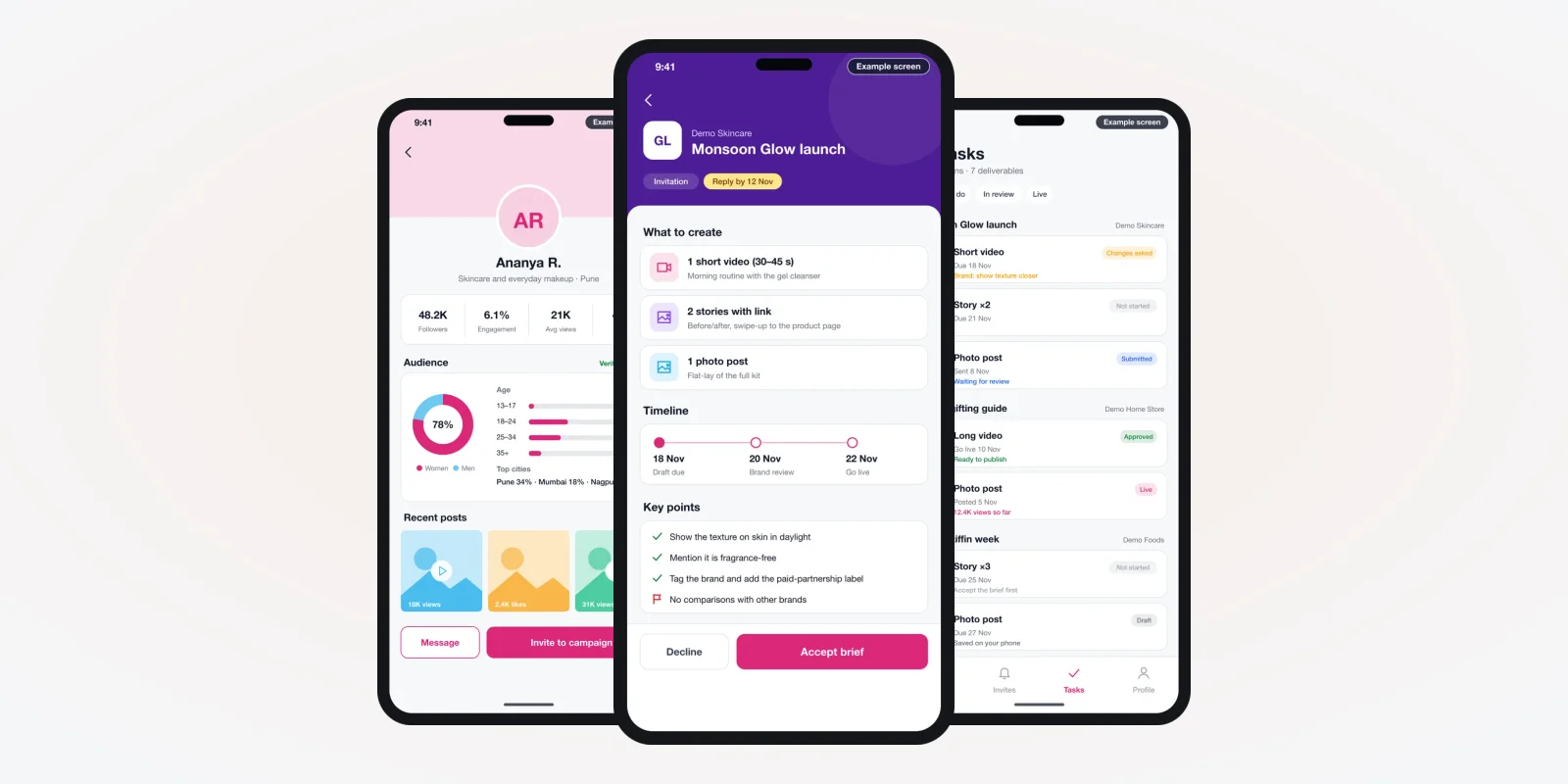
Brands in India now spend real money on creators. Yet most of that work still runs on spreadsheets, DM threads and long email chains. A brand manager asks ten creators for rates on WhatsApp. A finance person chases screenshots to prove a reel went live. Nobody can say which creator brought sales.
An influencer marketing platform in India puts all of this in one place. It helps brands find creators, send briefs, approve drafts, pay on time and see results. More companies now choose influencer platform development over renting a tool. Their own platform carries their brand and keeps their creator data. PRS India builds it as a two-sided marketplace for brands and creators, with a web app and phone apps. This guide explains what the platform requires for the Indian market and how we build it for you.
Key takeaways
- An influencer platform has three sides: brands, creators and your own admin team.
- India adds its own needs: many languages, creators in small cities, UPI payouts, GST invoices and TDS.
- Posts must carry a clear "ad" label under ASCI and government rules, so the platform should check for it.
- Creator numbers should come from each social platform's official API, with the creator's own permission.
- When we build it for you, the brand, the creator list, the data and the source code are yours.
What is an influencer marketing platform?
It is software that connects brands with creators and runs the whole deal between them. A brand posts a campaign. Creators who fit are found and invited. They accept a brief, make content and send a draft. The brand approves it. The post goes live, the numbers come in, and the creator gets paid.
Without a platform, each of these steps lives in a different app. With one, every step has a status, a date and a person in charge. You can also run the platform as a business. Brands pay to use it, and your team can sell managed campaigns as well.
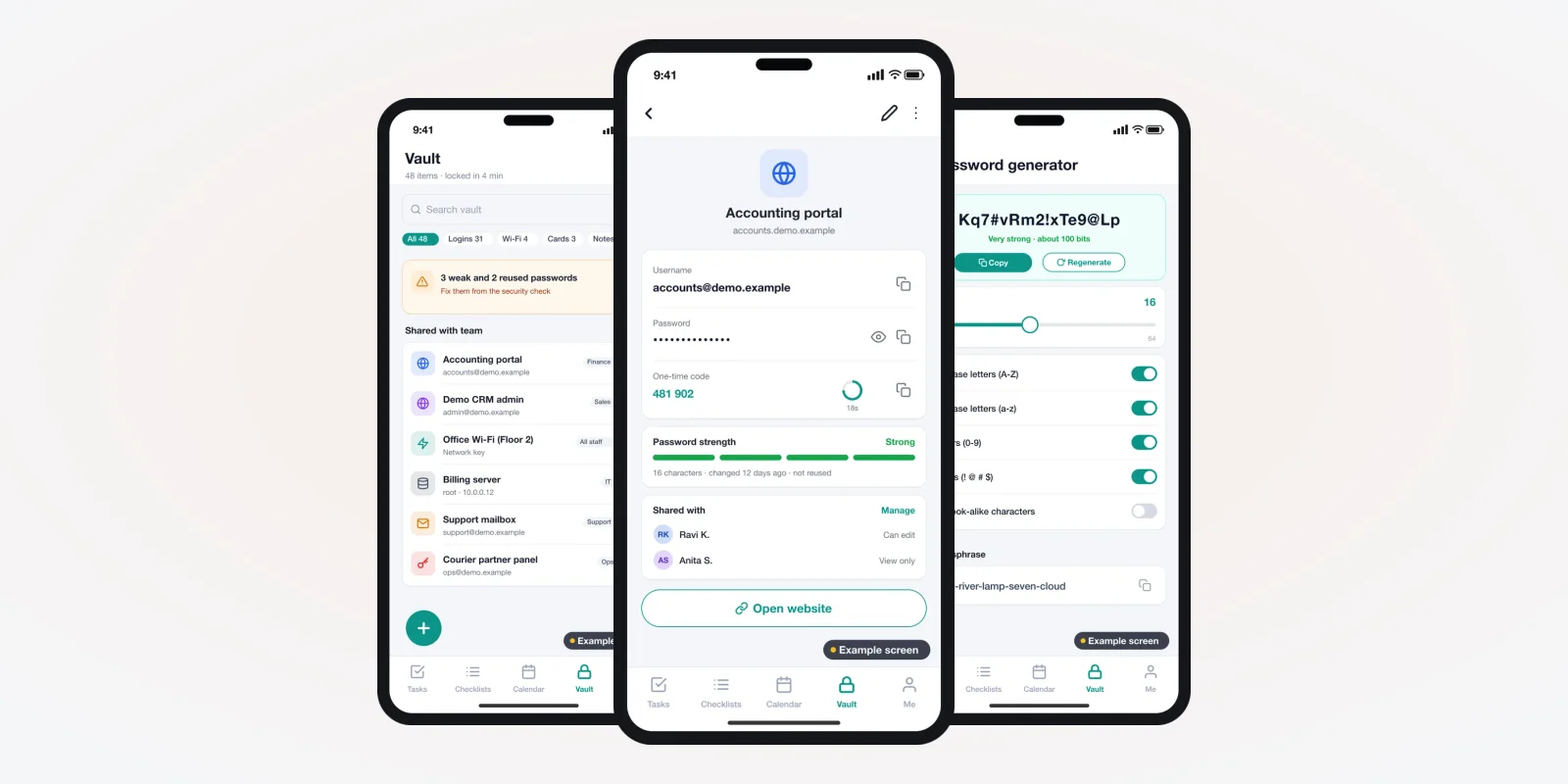
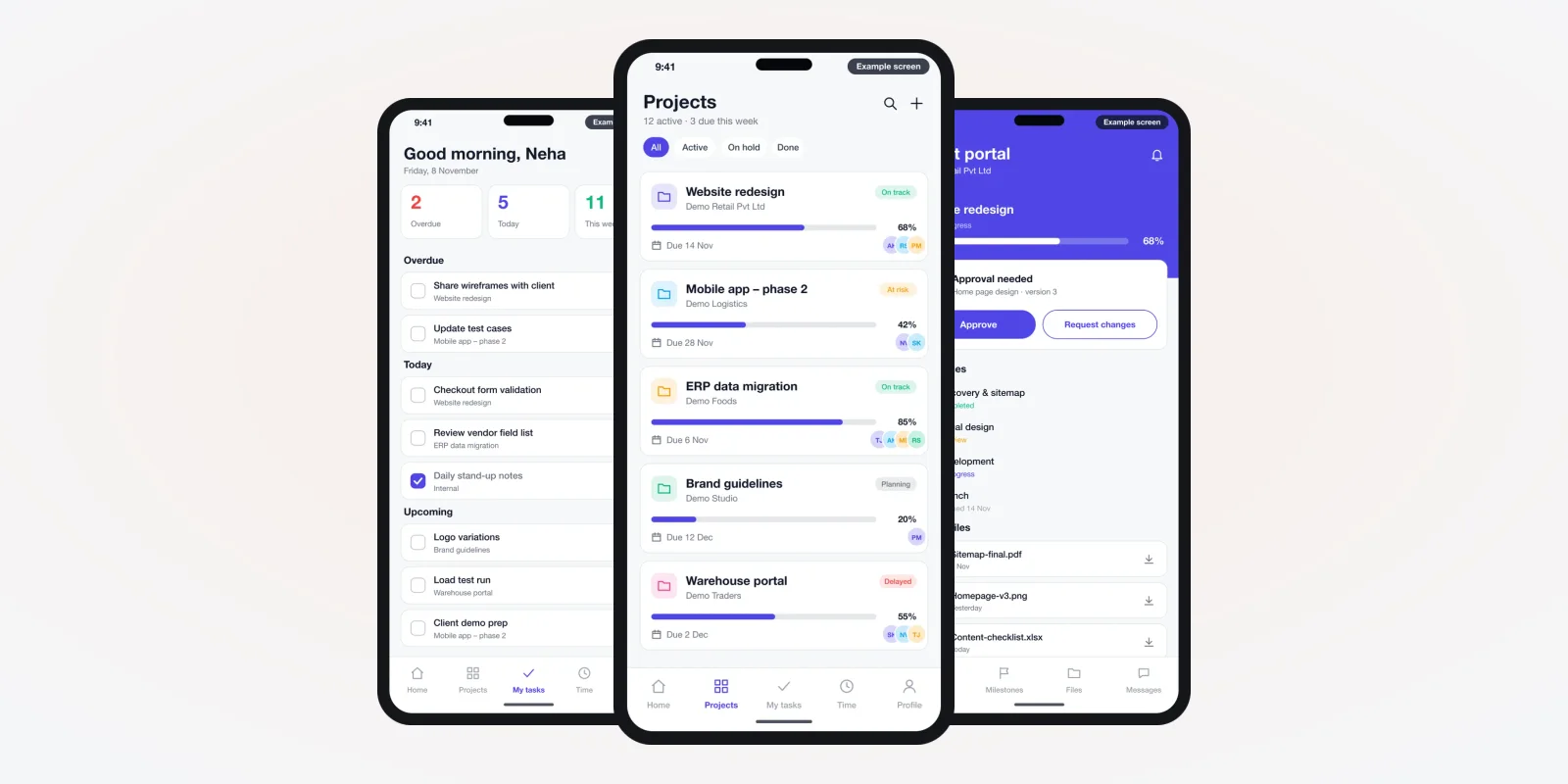
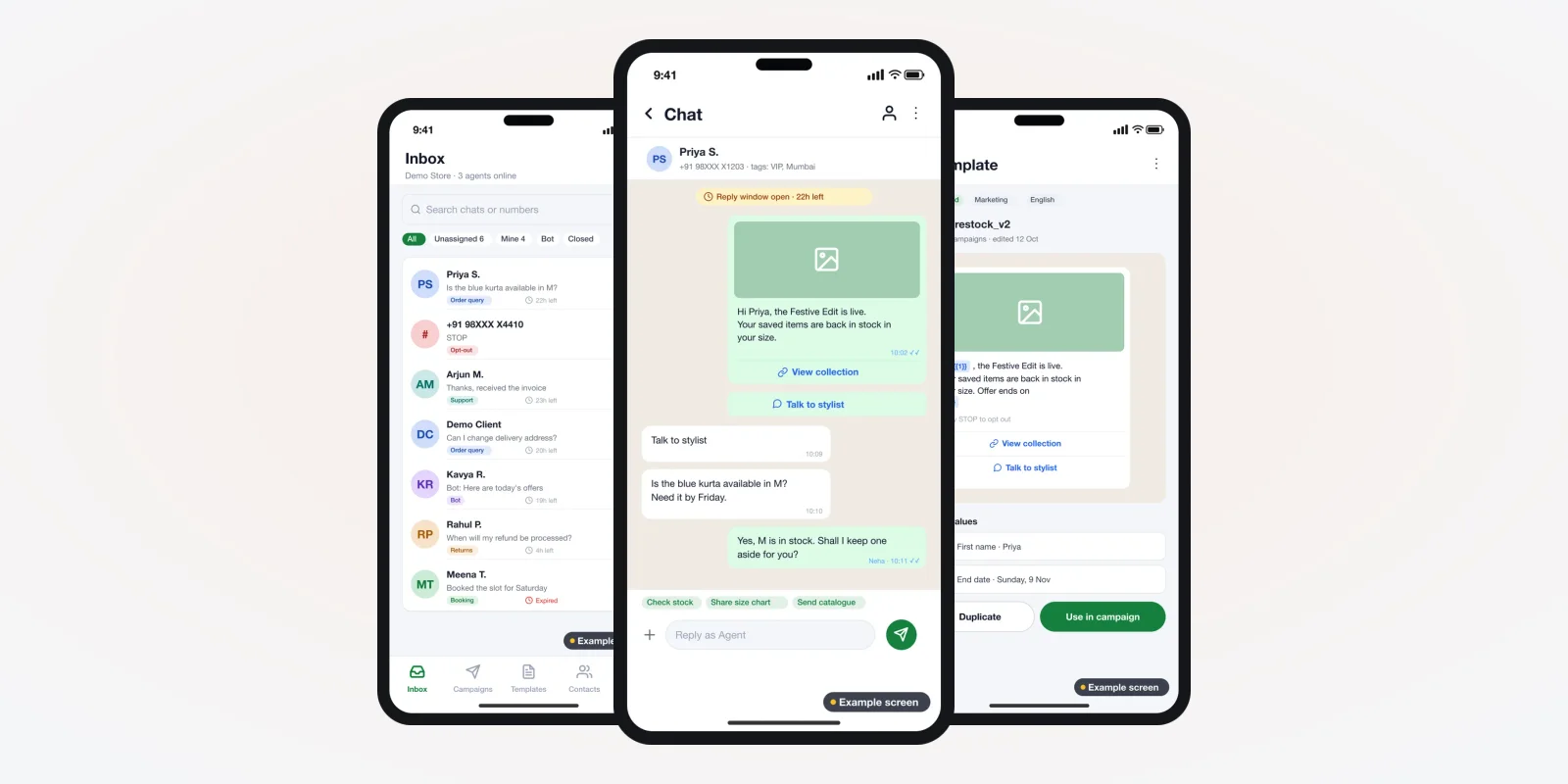
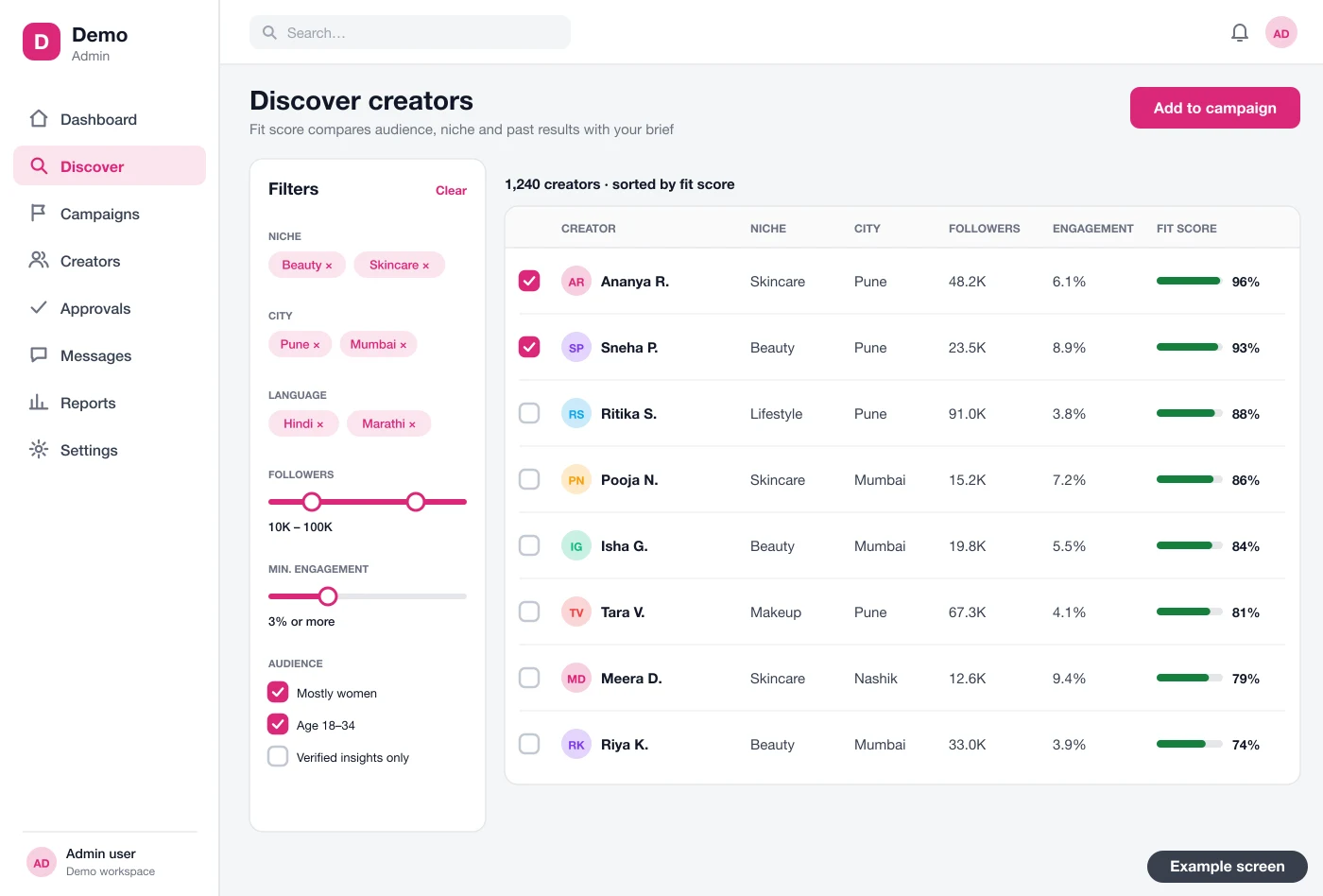
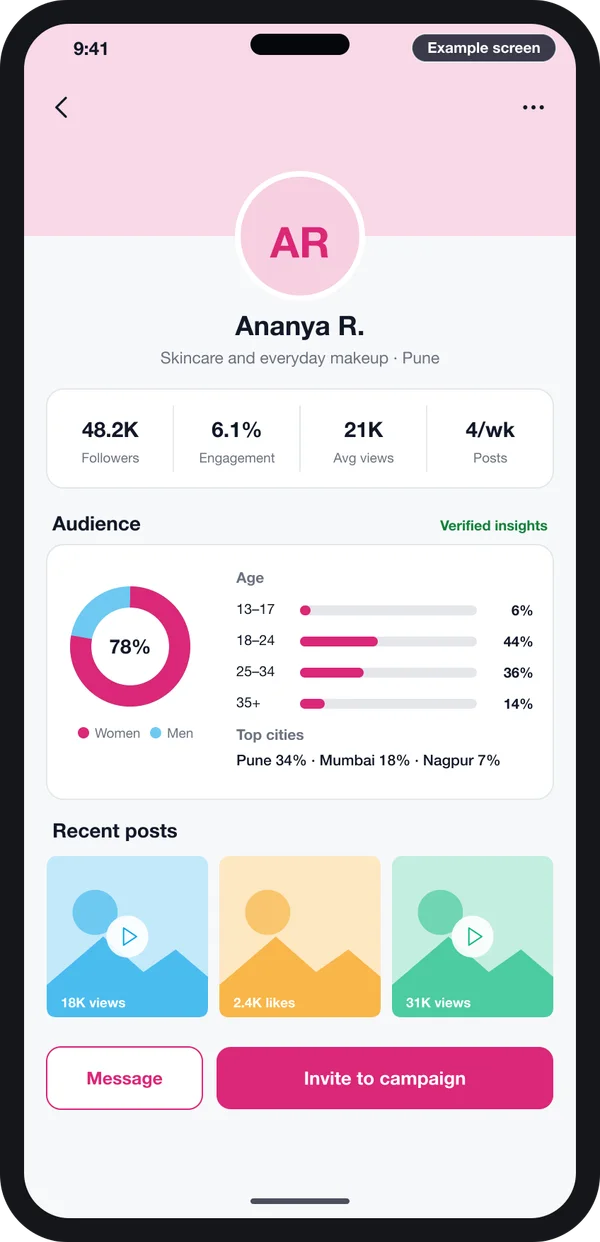
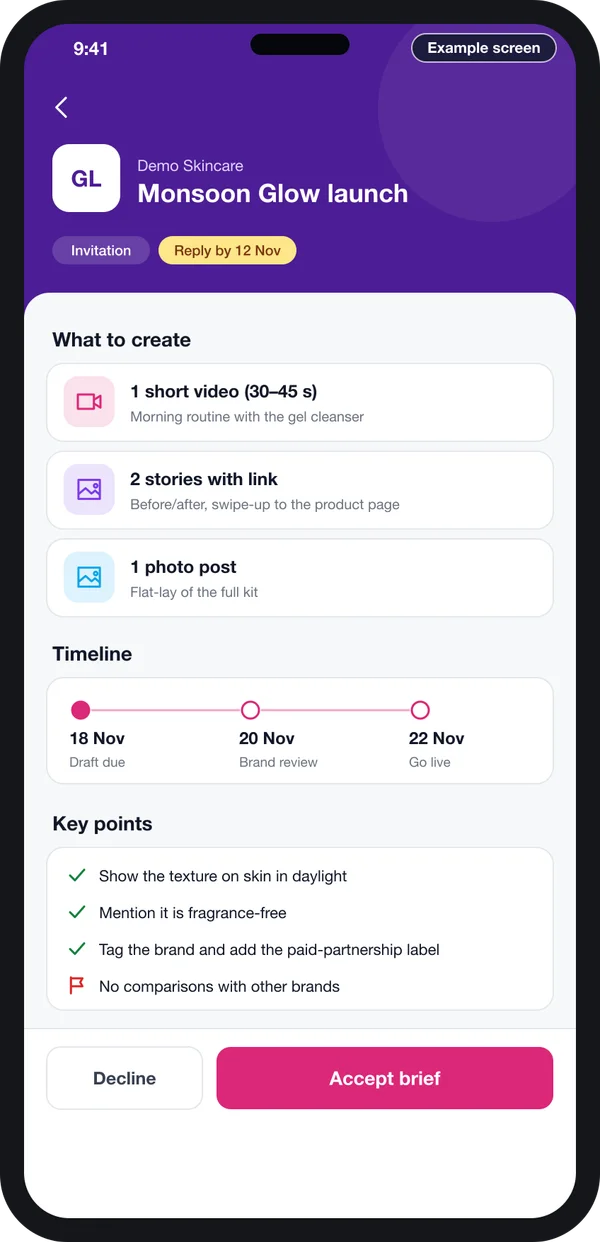
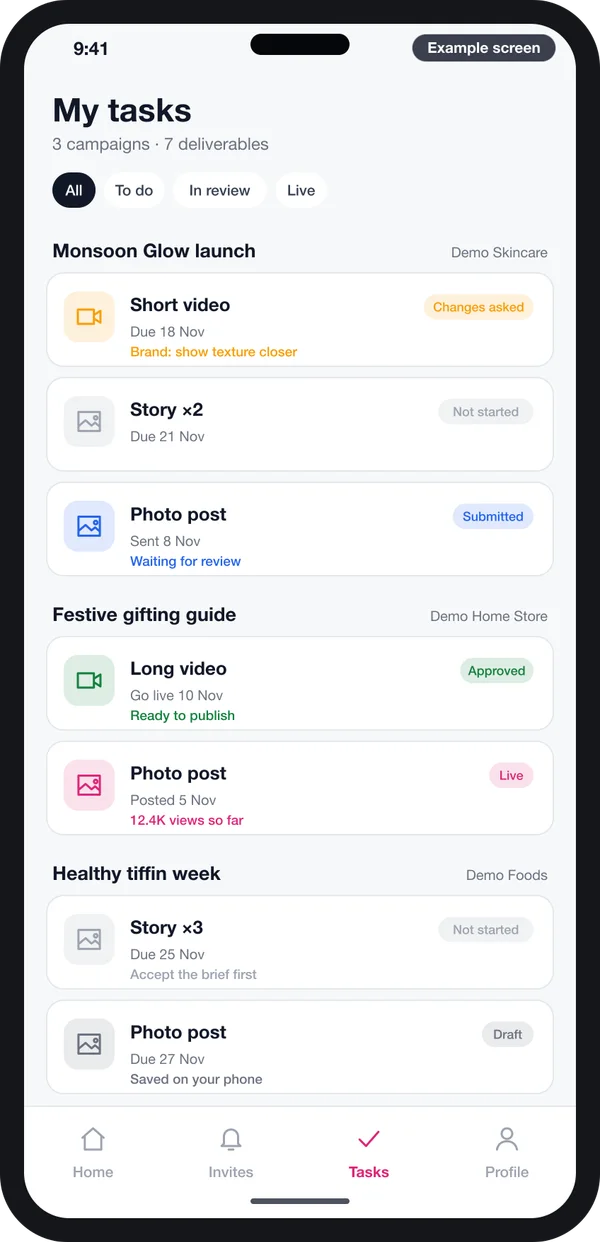
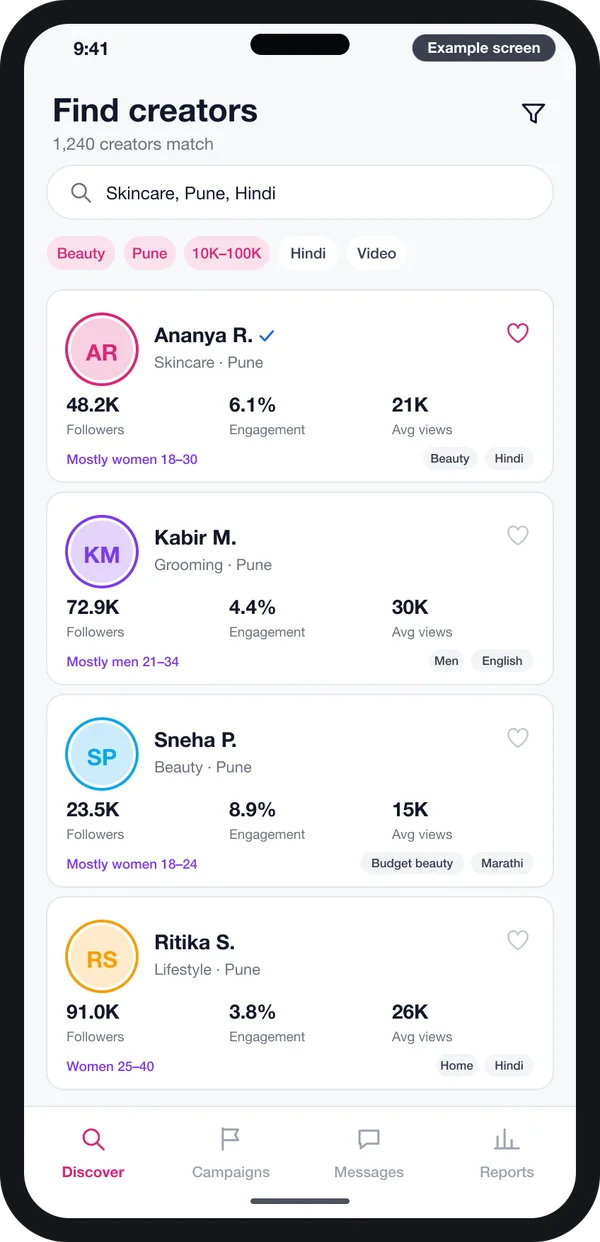
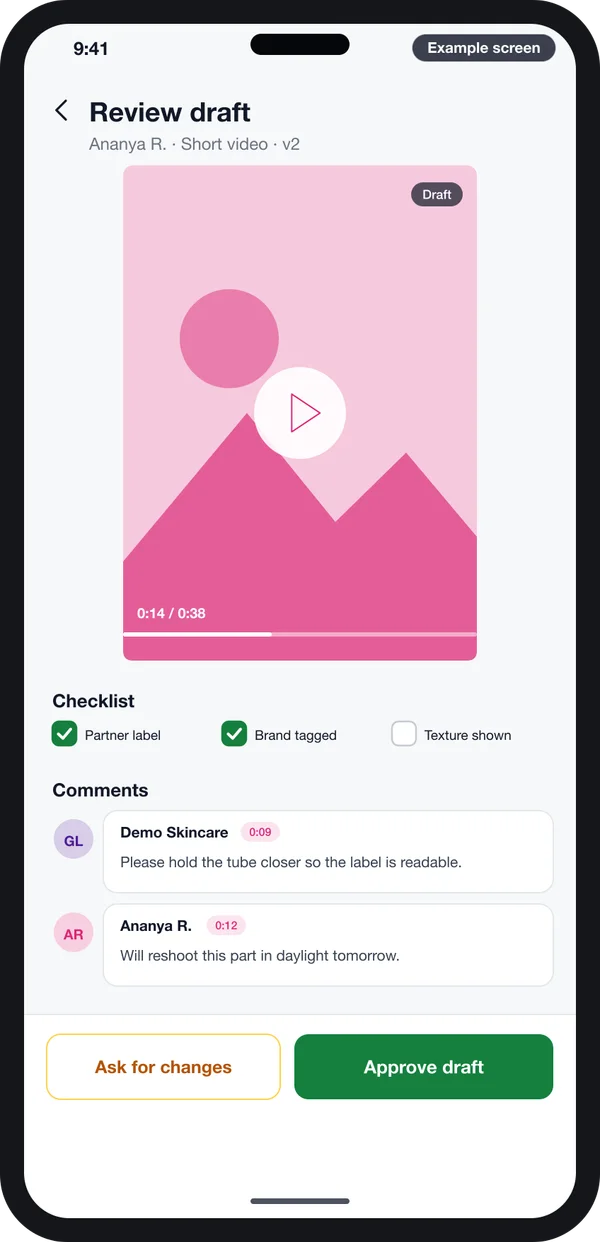
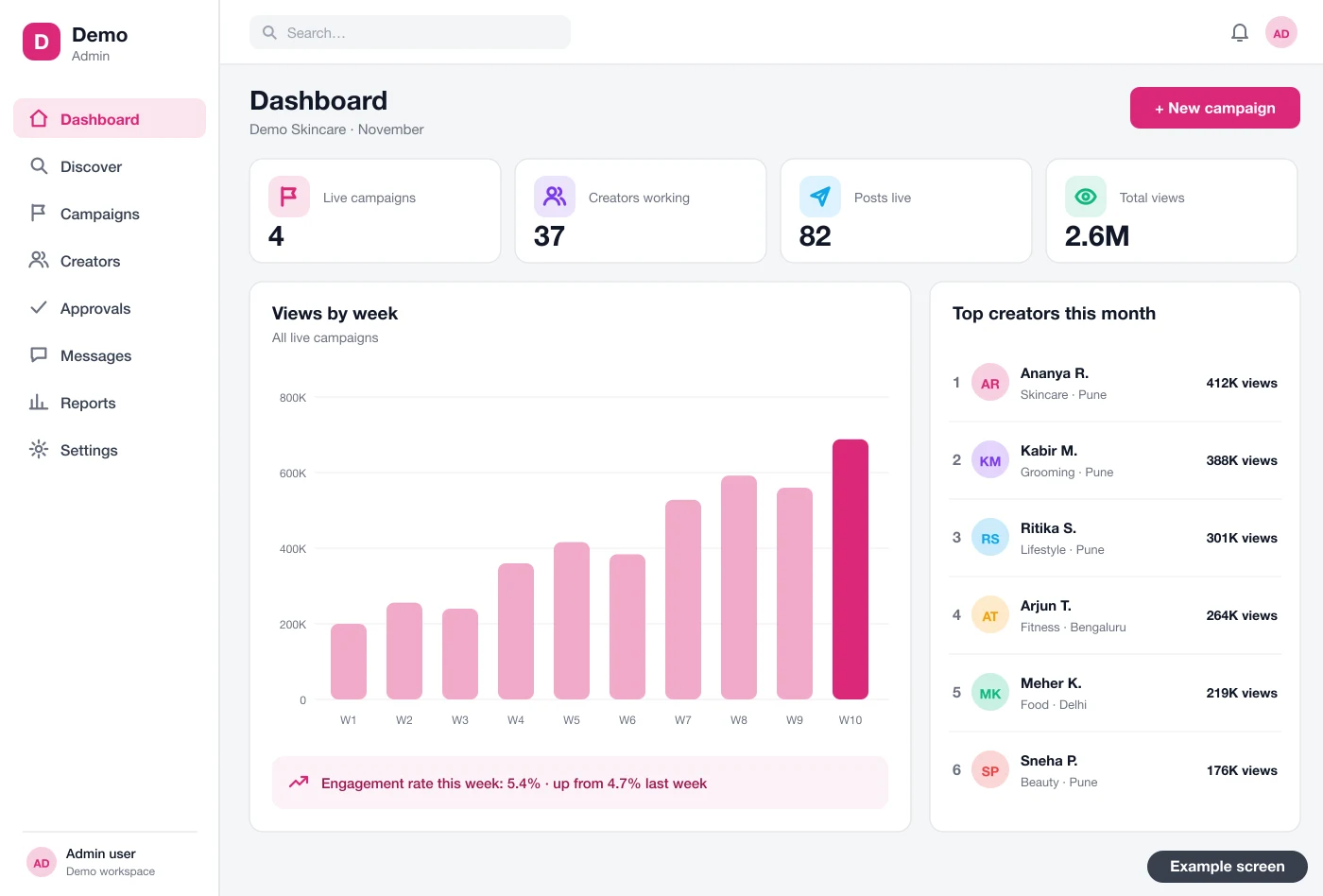
The screens in this guide are example designs we drew for an influencer platform, filled with demo data. They are not a live product. They show what we would build and change for you. You can also see other apps and platforms we have built.
What makes the Indian market different
A platform copied from a foreign tool often misses how creator deals work here. These five points shape what we build for India.
- Many languages. A creator in Indore may post in Hindi. One in Coimbatore may post in Tamil. Brands need to filter by the language of the audience, not just the creator.
- Small cities matter. Much of the reach now comes from creators outside the metros. The search must work by state and city.
- Barter deals. Many small creators work for products, not cash. The platform must track gifted products as a deal, with a value.
- UPI and bank payouts. Creators expect quick payment to a UPI ID or bank account, with proof of payment.
- Tax papers. Brands need GST invoices from creators who are registered, and TDS records. The platform should keep both.
The problem
Where influencer campaigns go wrong
These problems show up in almost every campaign run without software.
- Fake reach. A creator shows a big follower count. Many followers are inactive, and the brand only finds out after paying.
- Lost briefs. Key messages and dates sit in a long chat. The creator misses the product name or the launch date.
- Endless edits. Drafts go back and forth on email. Nobody knows which version is final.
- No proof. The post goes live, but screenshots of views come days later and are hard to check.
- Late payments. Creators wait weeks. Good ones stop working with the brand.
- Missing labels. A paid post goes live without an "ad" tag. The brand gets a complaint.
The three sides of the platform
Each side needs its own screens. Brands work mostly on a laptop. Creators work mostly on a phone. Your team works in an admin panel that sees everything.
Brands
Search creators, check their audience, invite them and approve their drafts.
Creators
Get invites, read the brief, upload drafts and see when they will be paid.
Your admin team
Verify creators, settle disputes, release payouts and watch every campaign.
Creators rarely open a laptop for this work. That is why a creator mobile app matters more than a website for them.
Features an India influencer platform needs
1. Creator search by niche, city and language
Brands filter by niche, such as food, fashion or finance. They add city, audience language, follower range and engagement rate. Each result shows recent posts and past brand work on the platform.
2. Audience details the brand can trust
The profile shows the age, gender and city split of the audience. This data should come from the social platform's official API after the creator connects the account. Self-typed numbers are marked as "not verified".
3. Briefs with clear deliverables
The brief lists each piece of content: one reel, two stories, one post. It has dates, key messages, words to avoid and the label to use. The creator accepts it in the app, so both sides agree on the same terms.
4. Draft review with comments
The creator uploads the draft. The brand watches it and leaves a comment at the exact second that needs a change. When it is right, one button approves it. Every version is saved.
5. Live post tracking and reports
Once the post is live, the creator adds its link. The platform then reads views, likes, comments and shares through the official API, where the creator has given access. Link clicks and discount code use can come from your own tracking links. The brand sees it all per creator and per format.
6. Payouts, invoices and TDS records
Money can sit with the platform until the post is approved and live. Then it is released to the creator's UPI ID or bank account. The payment part needs a licensed payment partner. The platform keeps the invoice, the TDS entry and the payout proof together.
7. Disclosure checks
The platform can remind the creator to add the label named in the brief. Your team can also check the live caption for it before the payout is released. This does not replace legal advice, but it stops many simple misses.
Rules to know before you build
Your platform will handle paid posts, payments and personal data. These are the official sources to read. Laws and guidelines change, so check with a lawyer or a CA before you go live.
- Ad labels. The Advertising Standards Council of India has guidelines for influencer advertising in digital media. They require a clear label, such as "Ad" or "Collaboration", on paid or gifted posts.
- Government guide. In January 2023, the Department of Consumer Affairs released "Endorsements Know-hows!" for celebrities and influencers. It asks creators to disclose any brand connection. Later updates appear on the Department of Consumer Affairs website.
- TDS on benefits. Section 194R covers TDS on benefits given in business. CBDT Circular 12 of 2022 explains products given to social media influencers. Ask your CA how it applies to you.
- Personal data. The Digital Personal Data Protection Act, 2023 applies to creator and audience data. The platform should ask for consent and let users delete their data.
Source: ASCI, Department of Consumer Affairs (PIB release, 20 January 2023), Income Tax Department and MeitY, as linked above.
Own platform vs rented tool vs spreadsheets
| What you need | Spreadsheets and chats | Rented influencer tool | Your own platform |
|---|---|---|---|
| Search by Indian city and audience language | No | Sometimes | Yes, your filters |
| Barter deals tracked with a value | Hard | Sometimes | Yes |
| UPI payouts with TDS records | Manual | Varies | Yes |
| Your brand on the app and web | No | No | Yes |
| Sell access to other brands | No | No | Yes |
| Creator list and history you keep | Scattered | Stays with the vendor | Yours |
Worked example: a skincare launch in five cities
Here is how one campaign could move through your platform. The brand, cities and steps are examples.
- Week 1, plan. A skincare brand creates a campaign for Lucknow, Jaipur, Pune, Kochi and Guwahati. It wants creators who post in Hindi, Marathi or Malayalam.
- Week 1, search. The brand filters by beauty niche, city and audience language. It shortlists twenty creators and invites twelve.
- Week 2, accept. Nine creators accept the brief in the app. Five are paid in cash, four in products. Both deal types are logged with a value.
- Week 3, drafts. Drafts come in. The brand asks two creators to show the product name earlier. Both fix it the same day.
- Week 4, live. Posts go live with the "Ad" label. Your team checks each caption before release.
- Week 5, pay and report. Payouts go to UPI with TDS entries saved. The brand sees views and code use per city and picks creators for the next round.
Our service
How we build your influencer platform
We build it around your business model, not a fixed template.
- Understand your model. We go over who pays, who earns and what your team does in one or two calls.
- Design the screens. You click through screens like the ones in this guide and change them before coding starts.
- Build the apps. A brand web app and an admin panel, plus one Android and iPhone app for creators. The server side often runs on Laravel.
- Connect the services. Official social APIs, a payment partner, SMS or email, and optional AI to suggest creators for a brief.
- Test with real users. A few brands and creators run a real campaign. We fix what they find.
- Launch and support. Your name on the stores and the web, your data on your own cloud server. We stay on to add features.
Want to compare open-source options first? Read our guide to open-source influencer platforms and when to build your own.
Influencer platform development cost: what decides it
We do not publish a fixed price, because each platform is different. The cost depends on these points:
- How many apps you need: brand web app, creator app, admin panel, or all three.
- How many social platforms you connect through official APIs.
- Whether money flows through the platform, with holds, payouts and TDS records.
- How many languages the app screens need.
- Whether you run it for one brand or sell it to many brands as a subscription.
| Monthly tool plan | Your own platform (built for you) | |
|---|---|---|
| Start | Quick sign-up | A few weeks to design and build |
| Cost over years | Pay every month, often per seat | One build cost, then optional support |
| India features: languages, UPI, TDS | Depends on the vendor | Built the way you need |
| Earn from other brands | No | Yes |
| Data and source code | Stay with the vendor | Yours |
Share your model and the users you expect. We send a written quote after one call. You can read our past project write-ups before you decide.
Whoever builds your influencer platform, make sure it can:
- Filter creators by Indian city, state and audience language
- Pull creator numbers only through official APIs, with the creator's permission
- Track cash and barter deals in the same campaign
- Keep every draft version and every comment
- Remind creators about the ad label and let your team check it
- Hold payment until approval, then pay to UPI or bank with proof
- Save GST invoices and TDS records per creator
- Let users see and delete their personal data
FAQ
What is an influencer marketing platform in India?
It is software where brands find creators, send briefs, approve content, pay and see results. An India platform also handles local languages, small-city creators, UPI payouts and tax records.
How long does it take to build an influencer platform?
It depends on how many apps and features you need. After one call, we share a plan with dates for each part. You see clickable screens first.
Will I own the platform and its source code?
Yes. We build it under your brand and hand over the source code. The creator list and campaign data are yours.
Which platforms do you build for?
We build a web app for brands and an admin panel for your team. Creators get one app for Android and iPhone.
How do you get follower and view numbers?
Only through each social platform's official API, after the creator connects the account and gives permission. We do not scrape profiles.
Is creator data safe on the platform?
It should be. We add consent, role-based access, encrypted storage and a way to delete data. Check your own duties under the DPDP Act with a lawyer.
Does the platform make posts legal under ASCI rules?
No software can promise that. The platform can remind creators to add the label and let your team check it. Ask a lawyer about your campaigns.
Do I need to deduct TDS when I send products to creators?
Section 194R may apply to benefits given in business, including some products sent to creators. The platform can store the records, but please confirm with your CA.
Can PRS India build an influencer marketing platform for my company?
Yes. We build the brand web app, the creator app and the admin panel under your name. Book a consultation and we will show you screens for your model.
Related guides
Written by
Babita Kumari · Business Developer
Business Developer at PRS India. Talks with business owners about the app or software they want, and helps them work out the scope, cost and launch steps before any code is written.