Carpooling App Development for Intercity Routes
We build intercity carpool apps: seats between highway stops, per-km cost share, live tracking and SOS. Android, iPhone and web.

Written by Prabhjot Kaur, Product Manager
Reviewed by the PRS India software & mobile app development team
11 min read
Written from production. Our articles draw on products we run live and the client work behind them, and are revised as the systems they describe evolve.
A car leaves one city for another with empty seats. On the same highway, people wait for a bus or pay for a whole cab. Carpooling for intercity trips fills those seats. The driver was going anyway, and each rider shares the running cost for the part of the road they use.
Long trips need more than a city carpool app gives. Riders board at stops along the highway, book days ahead and want their family to see where the car is. PRS India offers carpooling app development services for this. We build your own rider and driver app and a web admin panel. It carries your brand, and you get the source code.
Key takeaways
- Intercity trips have stops on the way. The app must sell a seat for part of a route, not only end to end.
- Riders book ahead, so the app needs approval booking, reminders and clear cancel rules.
- Per-km cost sharing fits long trips: a rider pays for the kilometres between their own pickup and drop.
- Live tracking, trip sharing and SOS matter more on a highway at night than in town.
- We build it for Android, iPhone and web, and you own the code and data.
How intercity carpooling differs from city carpooling
In a city, a carpool trip is short and often daily. The same few people go to the same office. An intercity trip is longer, less frequent and usually with strangers. That changes what the app must do. Travel firms that already run tour and travel booking software see the same pattern.
| Point | City carpool | Intercity carpool |
|---|---|---|
| When people book | Same day, often minutes before | Days ahead, around weekends and festivals |
| Where riders board | One pickup near home | Bus stands, highway junctions, towns on the way |
| Who rides | Regular colleagues | Mostly people who have never met |
| Cost to share | Small fuel share | Fuel plus highway tolls for a long distance |
| Safety worry | Low, people know each other | Higher, long stretches and night driving |
The intercity route model: stops on the way
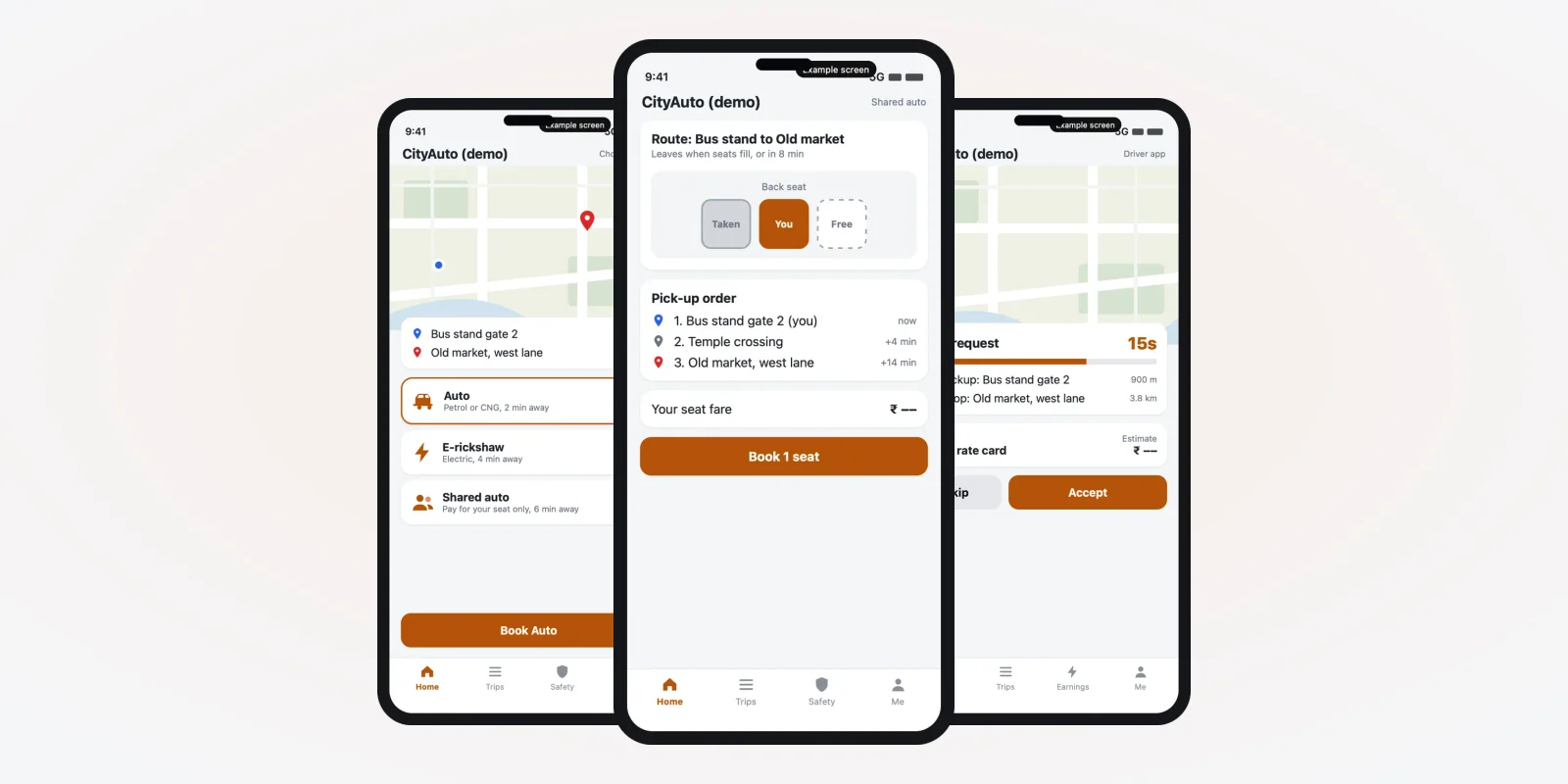
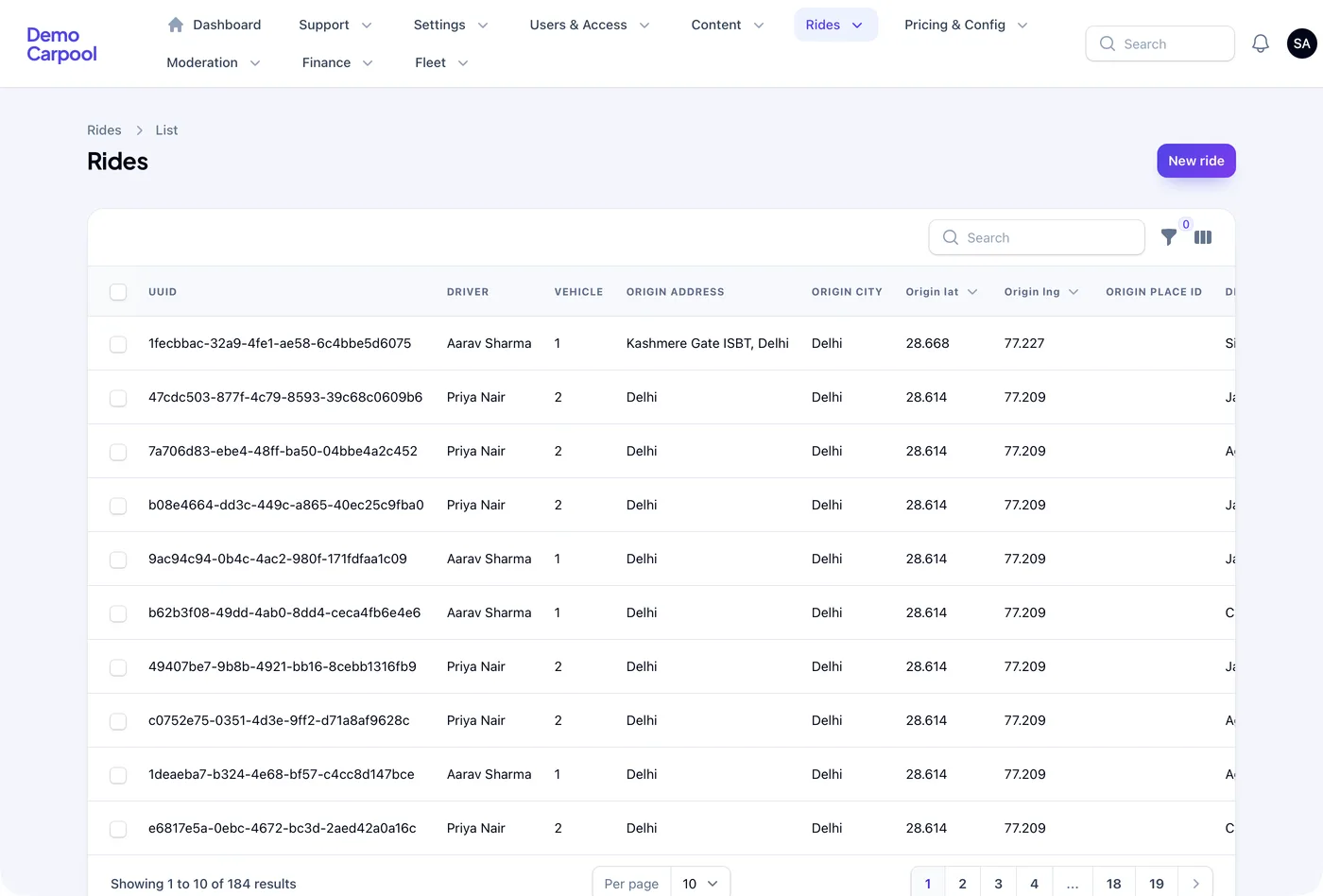
The key design choice is the route. A driver going from Delhi to Jaipur passes many towns. A rider from a town halfway should be able to book a seat for the second half only. So we save each trip as a start point, an end point and a list of stops between them.
Each stop has a map point and a time. When a rider searches, the app finds trips that pass their pickup stop and then their drop stop. This is a two-sided booking system, close to the marketplaces we build. Seat counts are kept per leg. A seat left empty at a halfway town can be sold again.
The problem
Where intercity carpool trips go wrong
These are the complaints that come up again and again on long shared trips.
- Wrong meeting point. "Near the highway" is not an address. The rider waits at one gate, the car at another.
- Late cancellations. A rider drops out the night before. The driver loses their share of the cost.
- Fights over tolls. Nobody agreed who pays which toll plaza, so the talk turns sour at the first one.
- No one knows where the car is. Family members call again and again during a long drive.
- Unknown driver. The rider has no idea if the licence and car papers are real.
- No help on the highway. If the car breaks down at night, there is no SOS and no record of who was on board.
Features for intercity carpooling apps
1. Pickup stop and drop stop on every booking
Each seat booking stores the rider's own pickup stop and drop stop. The driver sees a stop-by-stop list on the day: who gets in where, and who gets out where.
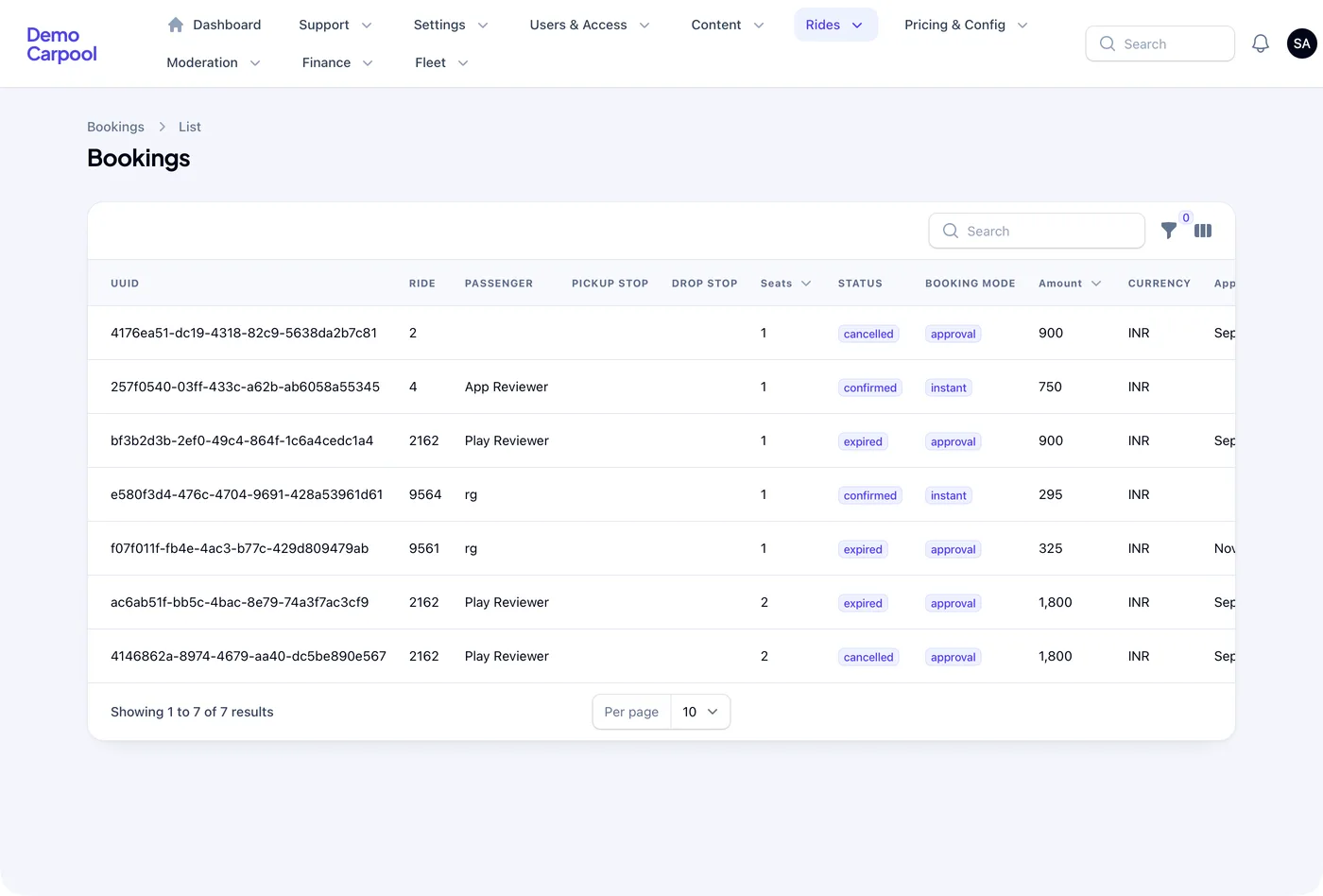
2. Instant or approval booking
For long trips, many drivers like to see who is coming. With approval booking, the rider sends a request and the driver accepts or declines. If the driver does not reply in time, the request expires and the rider's money is returned.
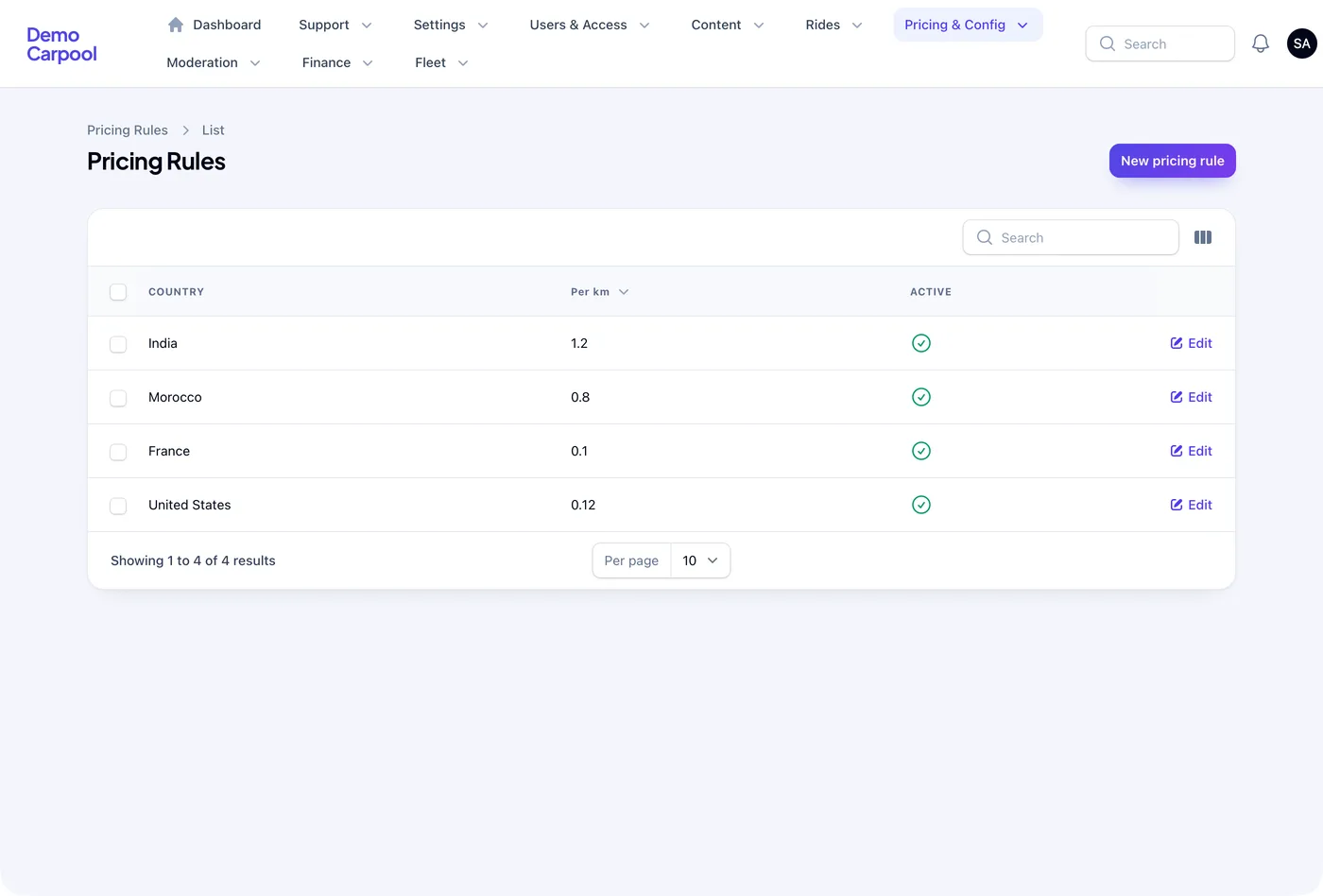
3. Cost share by kilometre between stops
The rider pays only for the distance between their two stops. The app works this out from a per-km rule your admin team sets. Tolls can be added as a fixed share per seat for the stretch that has them. On national highways, toll is paid through FASTag, so the driver has a clear record of each toll. Source: Indian Highways Management Company (NHAI).
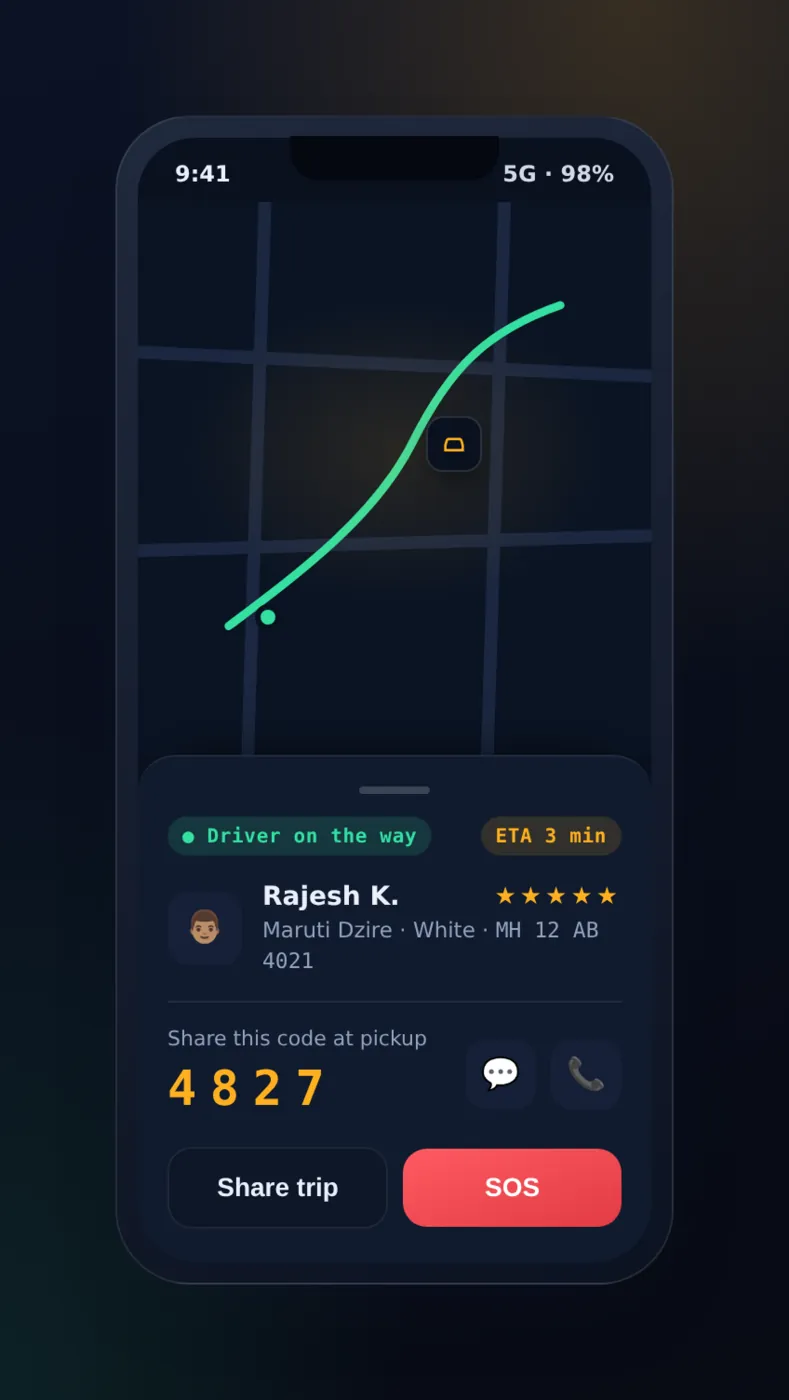
4. Live tracking and a pickup code
The rider sees the car coming to the stop. A short code confirms the right rider got into the right car.
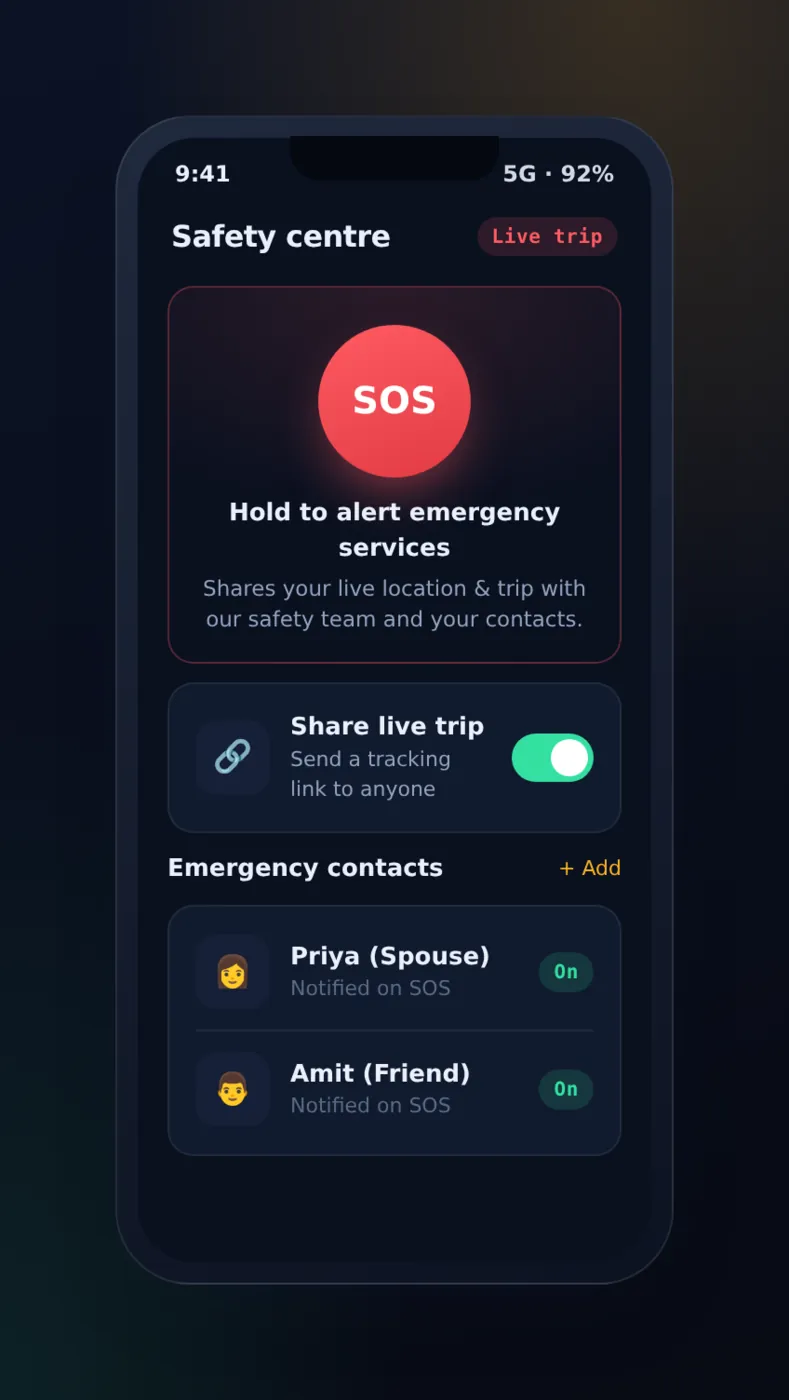
5. Trip sharing and SOS
Family can follow the trip by link. SOS alerts your support desk and saved contacts with the live location.
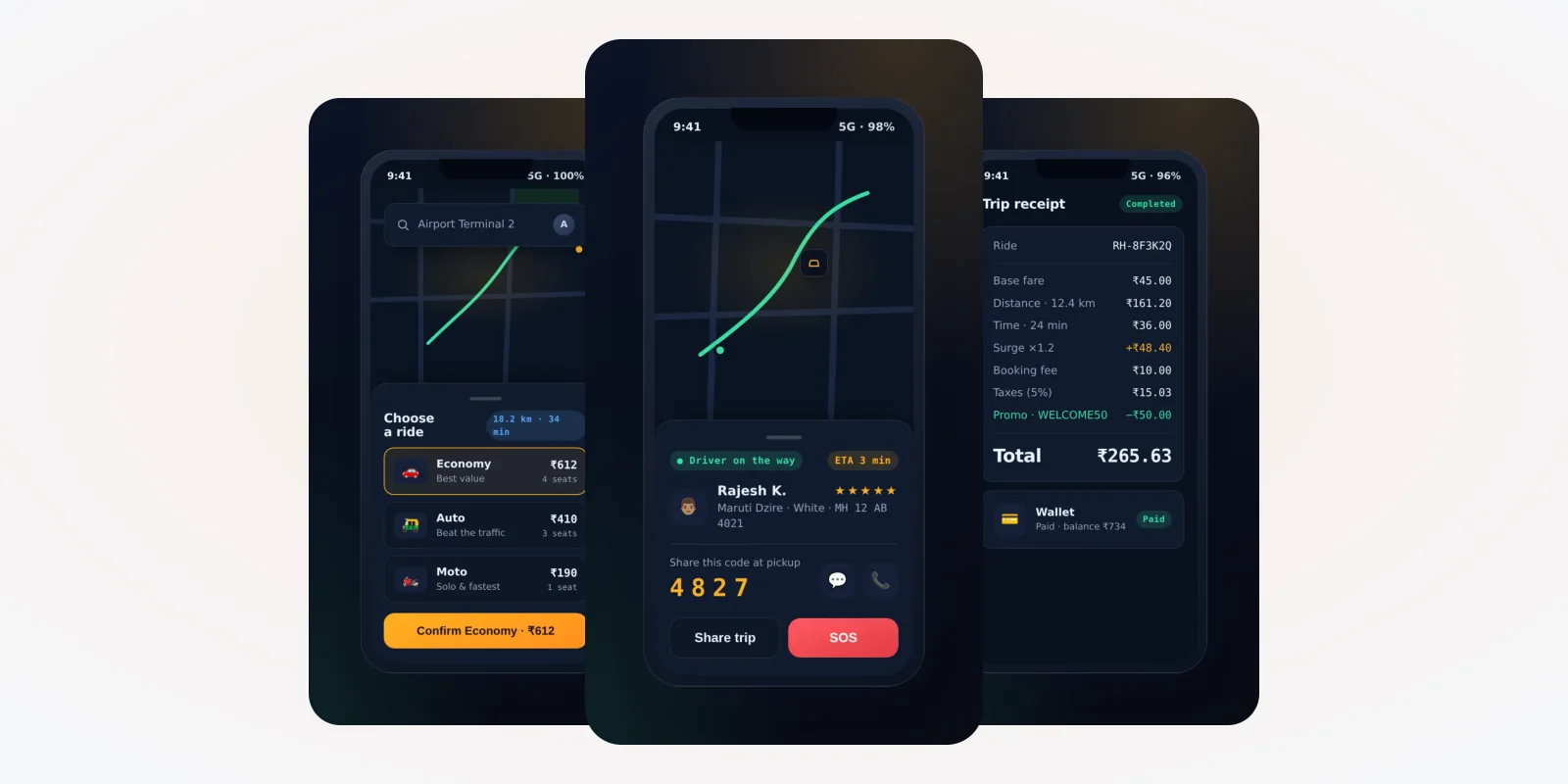
These two phone screens come from a taxi app we designed. We reuse the same tracking and safety parts in carpool apps, and in the taxi apps we build. On national highways, the national highway helpline number is 1033, and the app can show it next to SOS. Source: IHMCL national highway helpline.
6. Women-only seat option
The national aggregator guidelines of 2020 asked pooling apps to let women riders choose to pool only with other women. Source: Ministry of Road Transport and Highways, Motor Vehicle Aggregator Guidelines 2020. We can build this as a filter on search and a setting on each trip. Rules on private cars carrying paying riders differ by state, so check with your state transport department and a lawyer.
7. Driver checks before long trips
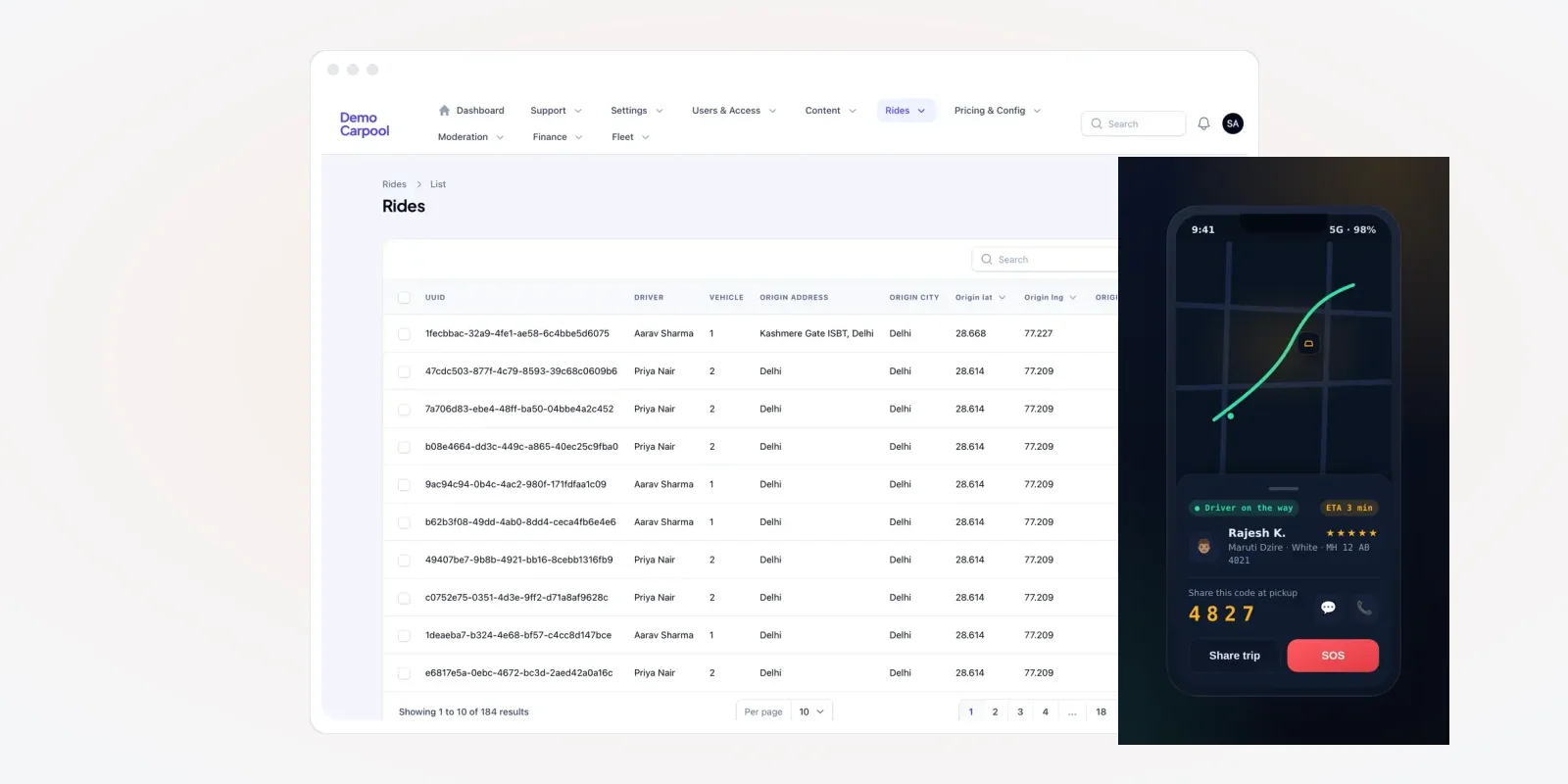
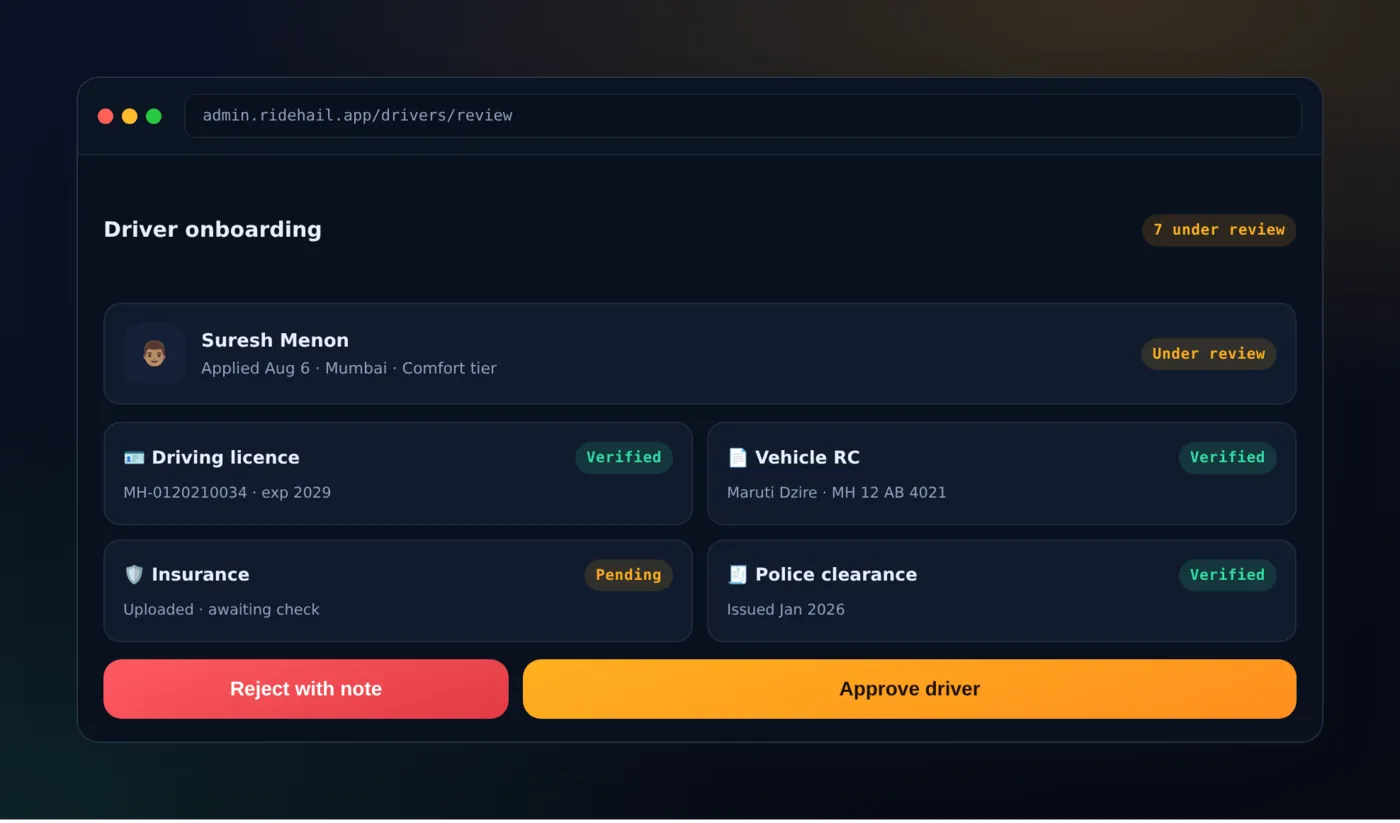
A driver uploads the licence, car registration, insurance and a police clearance letter if you ask for one. Your team reviews each paper. Our guide to ride app features covers more checks. A driving licence can be checked on the Sarathi licence portal run by the transport ministry.
8. A dashboard that shows busy routes and days
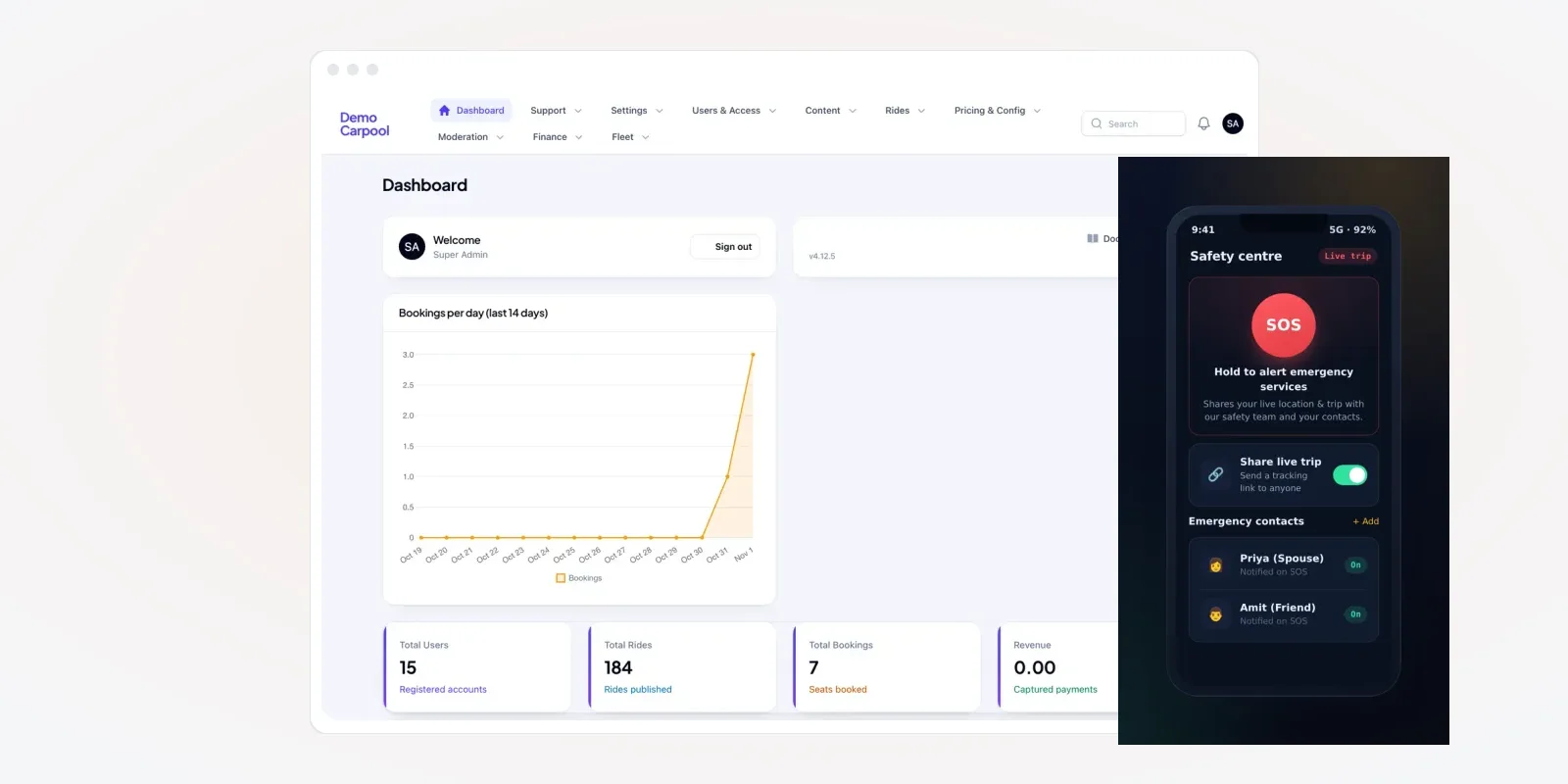
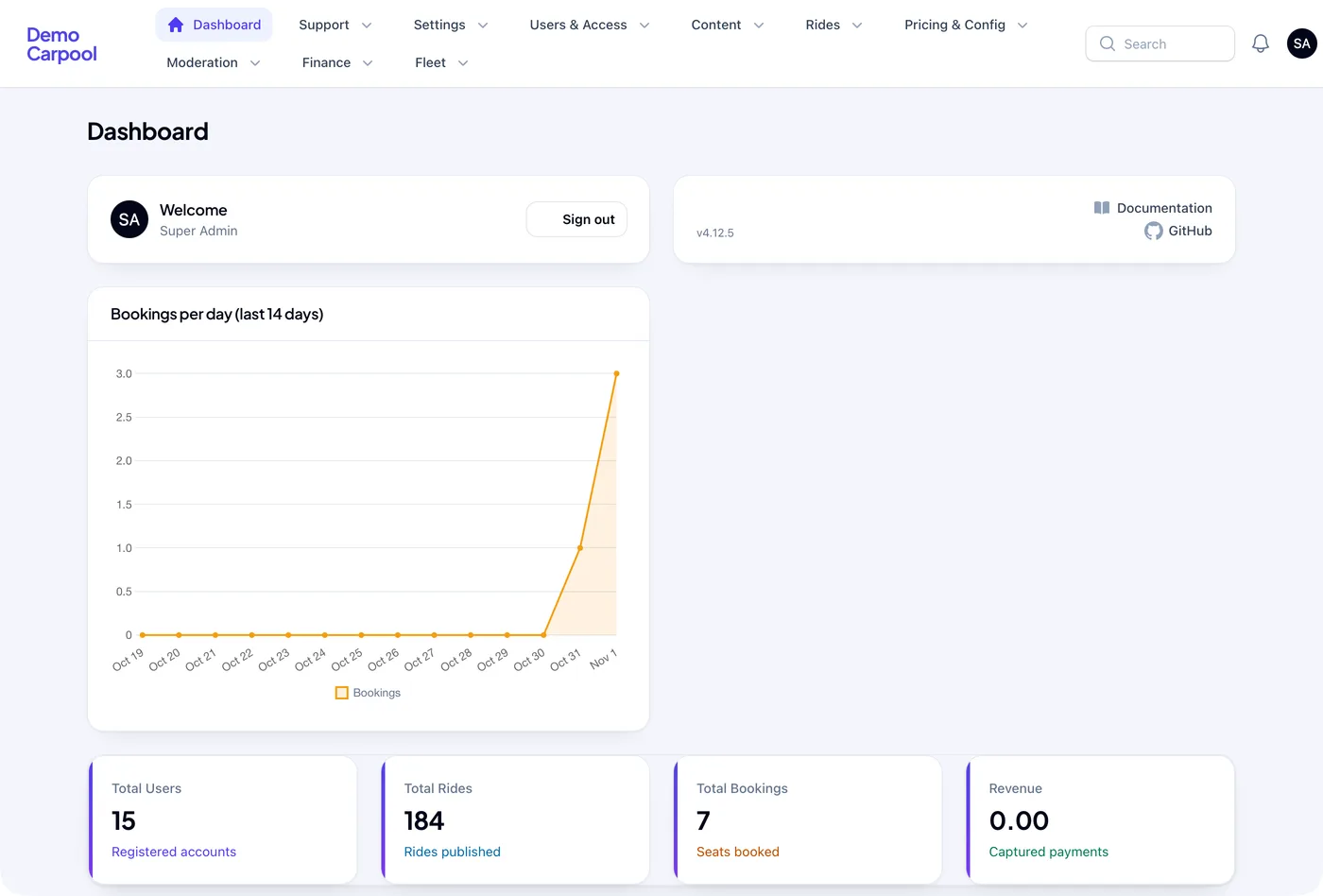
Intercity demand jumps before long weekends and festivals. The admin dashboard shows bookings per day, so you can bring in more drivers and run offers before those days.
Worked example: one weekend trip with three riders
Here is one intercity trip from start to end. The names and towns are examples.
- Tuesday. Ravi posts a Friday evening trip from Delhi to Jaipur with empty seats. He adds two stops on the highway and sets approval booking.
- Wednesday. Meera books from Delhi to Jaipur. Arjun books from the first highway town to Jaipur. Ravi approves both.
- Thursday. Another rider requests a seat but Ravi does not reply. The request expires and the rider is refunded.
- Friday, start. The app reminds everyone. Meera shows her pickup code at the bus stand gate and shares the live trip with her sister.
- On the way. Arjun boards at his town. His cost share covers only his part of the route.
- Arrival. The trip ends. Seat money moves from locked to the driver's wallet. Both riders rate the trip.
Our service
How we build your intercity carpooling app
Your routes and your rules come first. The code follows.
- Map your routes. We list your main corridors, stops and rider types with you.
- Design the booking flow. You try clickable screens for posting, searching and booking a part of a route.
- Build apps and panel. Android and iPhone apps from one Flutter codebase, and a web admin panel for your team.
- Add maps and payments. A Laravel API connects map and route services, UPI and wallet, and SMS or WhatsApp alerts.
- Test on a real highway. Your first drivers run real trips. We fix what they report.
- Launch and support. The apps go live under your store accounts, hosted on your own cloud, and we stay on for updates.
Intercity carpooling app development cost: what decides it
The budget depends on your scope, so we quote after we understand it. The main factors are:
- Stop handling: end-to-end trips only, or seats sold per leg between stops.
- Maps and route search: how many map lookups each search needs.
- Payments: wallet and UPI, held money, refunds and payouts to drivers.
- Safety: tracking, SOS, women-only option and document review.
- Languages, cities and how many admin roles you need.
| Rented carpool platform | Your own intercity app | |
|---|---|---|
| Seats per leg between stops | Only if the vendor has it | Built for your routes |
| Payment over time | Monthly or per-booking fees | One build cost, then optional support |
| Brand on the app and store | Vendor's or shared | Yours |
| Changes for a new rule or route | Wait for the vendor | You decide when |
| Rider data and source code | With the vendor | Yours |
The build steps are much like those in our ride app build guide, with stops added. Send us your corridors and must-have features. We reply with a written quote after one call.
Whoever builds your intercity carpool app, make sure it can:
- Sell a seat for part of a route, between any two stops
- Keep seat counts per leg so a seat can be sold twice on one trip
- Work out each rider's share from distance and tolls, not surge
- Let drivers approve riders, with expiry and auto refund
- Give a pickup code and a live trip link
- Offer a women-only seat option and an SOS button
- Show bookings per day so you can plan for festival rush
FAQ
What is intercity carpooling?
It is when a driver going from one city to another shares empty seats with riders on the same road. Riders pay a share of the trip cost for the distance they travel.
Can a rider book only part of the route?
Yes, if the app saves stops on each trip. The rider picks a pickup stop and a drop stop, and pays only for that stretch.
How long does it take to build an intercity carpooling app?
It depends on stops, payments and safety features. After one call, we share a plan with dates, starting with screens you can click through.
Which platforms will the app run on?
The rider and driver app runs on Android and iPhone from one codebase. The admin panel runs in a web browser.
Will I own the app and the source code?
Yes. Your apps are listed under your store accounts. The data stays on your server, and we hand over the source code.
How is rider data kept safe on long trips?
Phone numbers stay hidden between users, live location is shared only during the trip, and staff see data by role. We follow the Digital Personal Data Protection Act, 2023.
Is intercity carpooling in a private car allowed?
Rules on private cars carrying paying riders differ by state. Check with your state transport department and a lawyer before launch. We build the app to match the rules they give you.
Can PRS India build an intercity carpooling app for my business?
Yes. We build the rider and driver app for Android and iPhone, plus a web admin panel, under your brand. Book a consultation and share your main routes.
Related guides
Written by
Prabhjot Kaur · Product Manager
Product Manager at PRS India. Turns what a client needs into a screen-by-screen plan for the app, and checks every release against that plan before it goes out.