Best Shopify Alternative in India: Build Your Own Store
How to choose a Shopify alternative in India, and when to build your own online store with UPI, COD, GST bills and your own app.

Written by Babita Kumari, Business Developer
Reviewed by the PRS India software & mobile app development team
10 min read
Written from production. Our articles draw on products we run live and the client work behind them, and are revised as the systems they describe evolve.
Many Indian sellers open their first online store on Shopify or a similar store builder. It is quick to start. A year later, the questions begin. Why does each add-on cost extra every month? Why is cash on delivery so hard to set up? Why can't the checkout show a proper GST bill the way our CA wants?
That is when people search for a Shopify alternative in India. There are three real choices: another rented builder, an open-source store you host, or a store built for you. This guide helps you choose. It also shows how PRS India can build your own ecommerce website and app, if that is the right fit.
Key takeaways
- There is no single best Shopify alternative. The right one depends on your order volume, your team and how much you want to own.
- Indian stores need UPI, cash on delivery, pin code checks, GST bills and courier tracking. Check each one before you move.
- Open-source stores give you more control, but you or your developer must handle updates and the server.
- A custom-built store costs more at the start. You stop paying per add-on, and you own the code and data.
- Whatever you pick, make sure you can export your products, customers and orders.
Why Indian sellers look for a Shopify alternative
A rented store builder works well for many shops. The reasons to move are usually about fit, not about the builder being bad.
The problem
Six common reasons sellers start looking
- Add-ons stack up. Reviews, COD rules, GST invoices and WhatsApp updates often come from separate paid apps.
- Checkout is fixed. You cannot add a delivery slot, a pin code check or a COD limit exactly the way you want.
- GST bills need work. Your CA wants HSN codes, GSTIN and tax split lines in a set format.
- Stock lives in two places. Your shop counter and your website do not share one stock count.
- No app of your own. Repeat buyers want an app with their past orders and wallet. Building one on top is extra work.
- Data is rented. Your store runs on the builder's servers, under their rules and their plan changes.
The three kinds of Shopify alternatives
Every option on any "Shopify alternatives India" list falls into one of these three groups.
| Another rented builder | Open-source store you host | Your own custom store | |
|---|---|---|---|
| Examples | Other monthly store builders | WooCommerce, Magento | Built for you from scratch or a base |
| Start time | Days | Weeks | Weeks to a few months |
| Checkout changes | Limited | Wide, with plugins or code | Any change you need |
| Who runs the server | The builder | You or your developer | You or your developer |
| Own mobile app | Extra add-on or none | Extra project | Built along with the store |
| Data and source code | Stay with the builder | Yours | Yours |
For a side-by-side look at the open-source and hosted store systems, see our guide to ecommerce CMS platforms. If you only need a content site with a few products, read how to choose a CMS for SEO instead.
How to choose the right option
Answer these four questions honestly.
- How many orders a day? A few orders a week rarely needs a custom build. A steady daily flow can justify one.
- Do you need things no add-on does? Delivery slots per area, B2B price lists, mixed COD rules or a counter-and-online stock count.
- Do you want your own app? If repeat buyers matter, an app with order history and a digital wallet helps you sell again.
- Who will look after it? Open source needs someone to run updates. A custom store needs a support plan.
If you answer "no" to most of these, stay on a rented builder. We also work on Shopify stores, so we will say so.
What an Indian online store must do
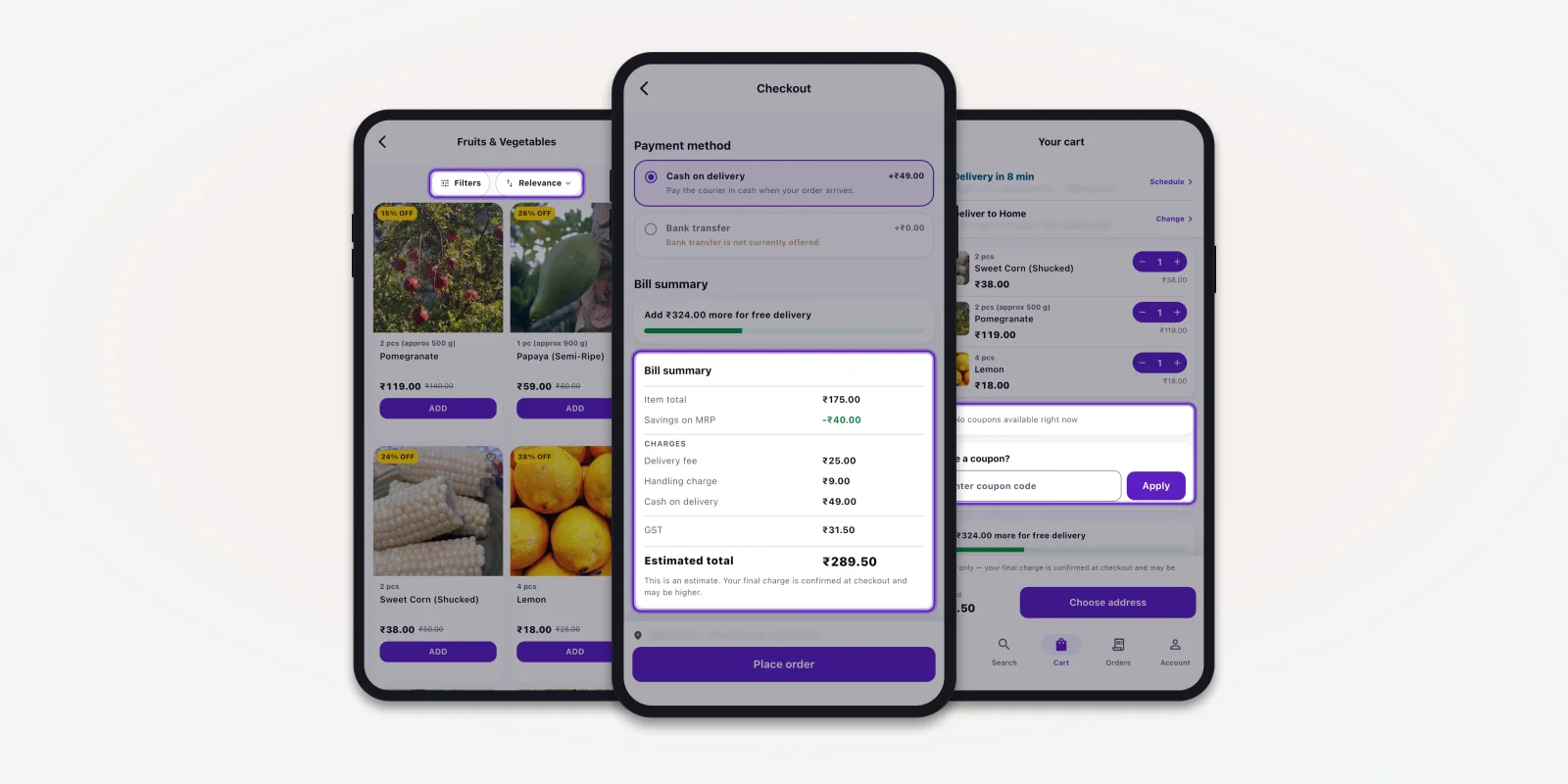
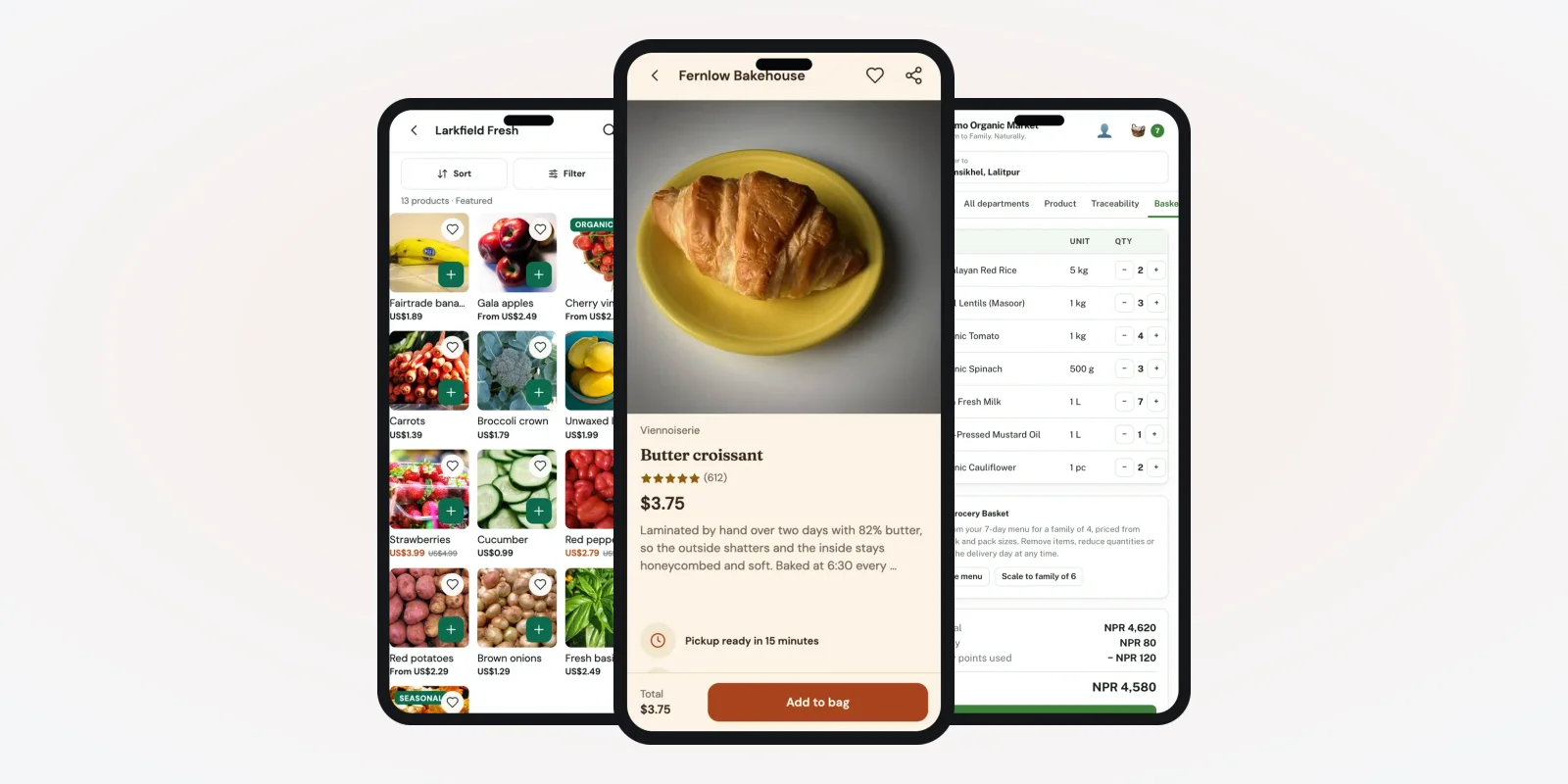
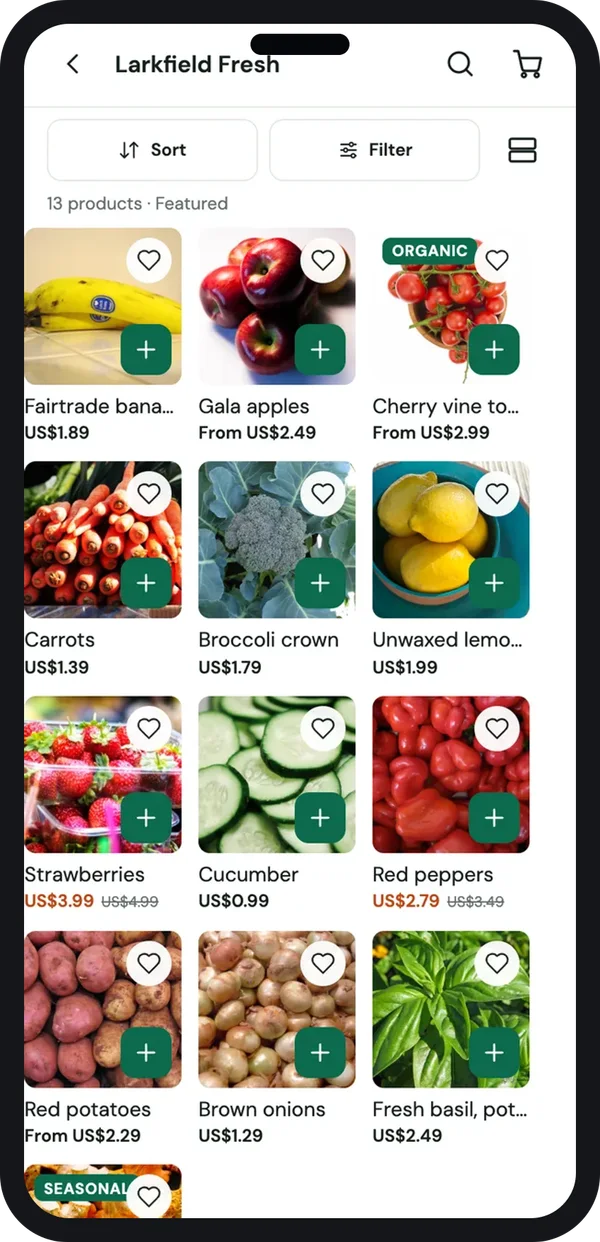
These are the parts that decide whether Indian shoppers finish their order. Check every one before you move. The screens below are from an online store and shopping app we built, with demo data.
1. Search that understands your products
Shoppers type short words, brand names and spelling mistakes. Search should show results with filters for brand, price and rating. Sort by price or discount should work on the first screen.
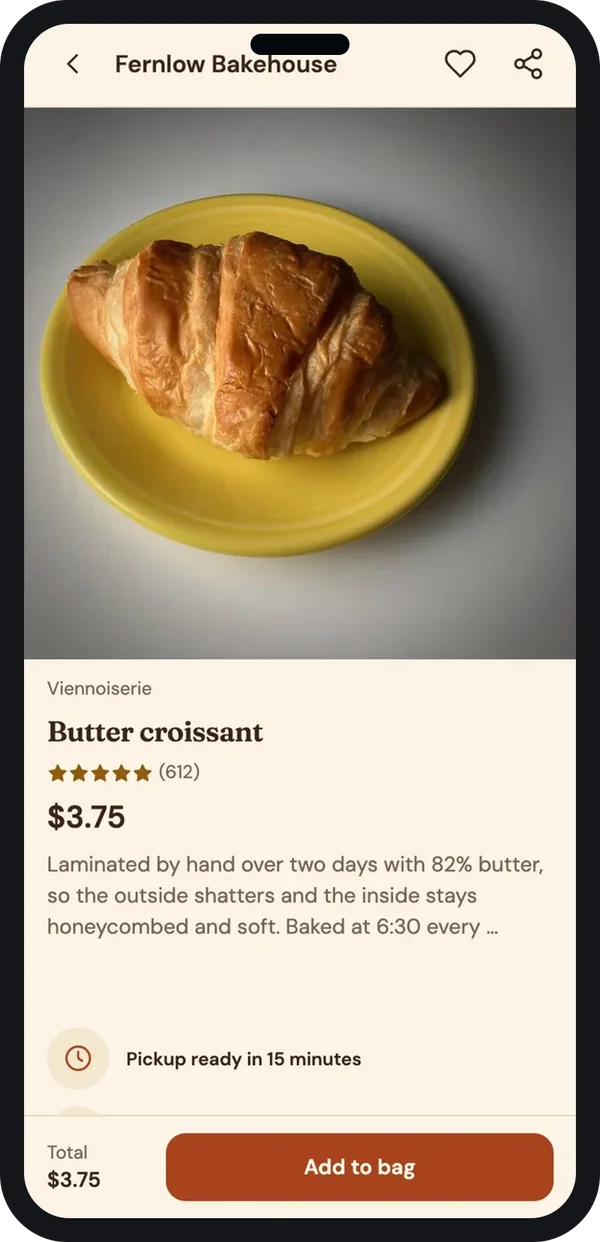
2. Clear product pages
Photo, price, rating and delivery or pickup time sit on one screen.
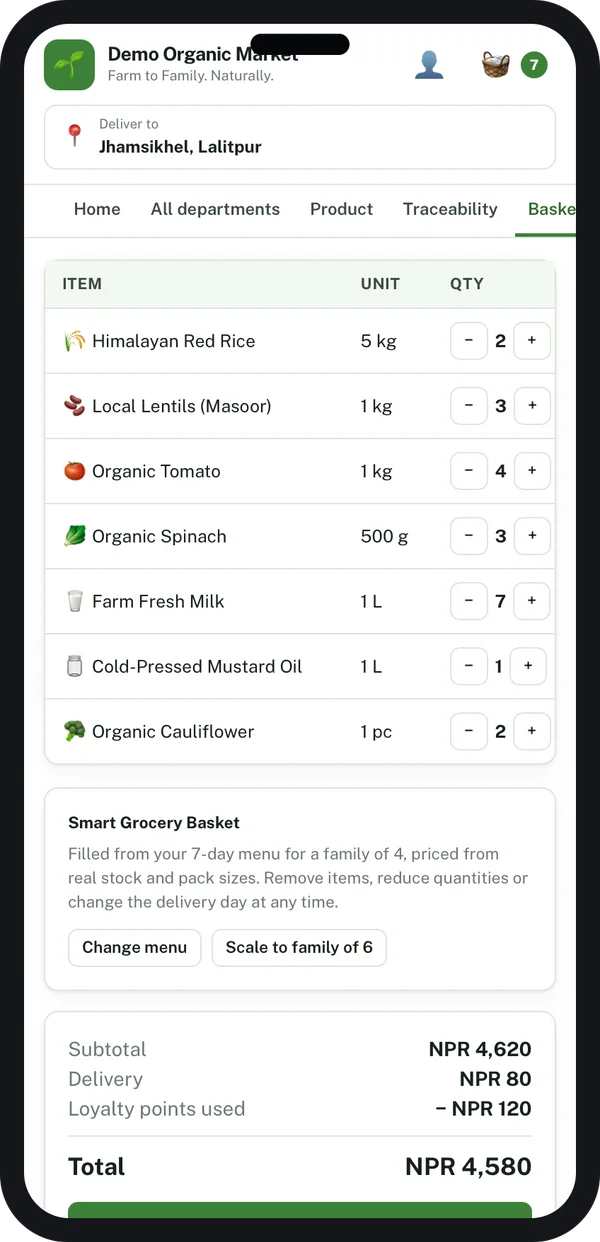
3. A basket that shows every charge
The shopper sees the delivery charge and any points before checkout.
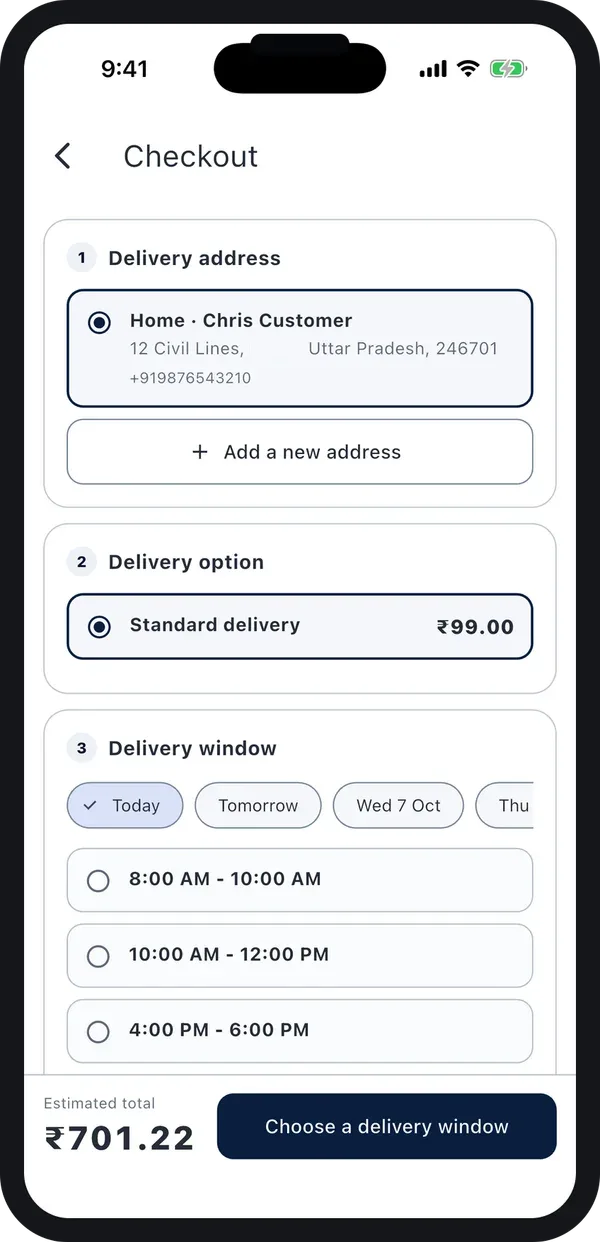
4. Delivery slots
The shopper picks a time window. You set how many orders each window can take.
5. UPI, cards and cash on delivery
Most Indian shoppers expect UPI at checkout. UPI is run by the National Payments Corporation of India. Source: NPCI. Your store connects to a payment gateway for UPI and cards. Cash on delivery needs its own rules: a limit per order, pin codes where it is allowed, and a phone check for first-time buyers.
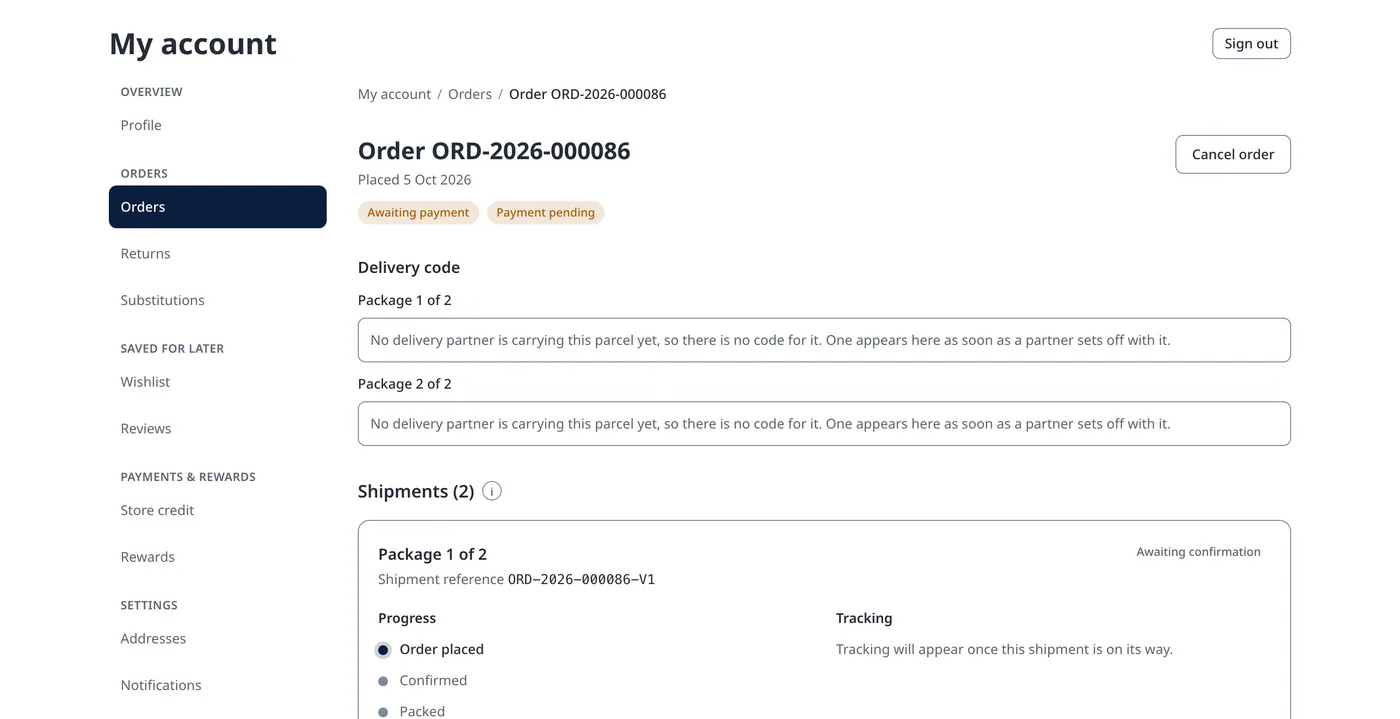
6. Orders split into parcels
One order may ship from two places or in two boxes. The shopper should see each parcel with its own status. This cuts "where is my second item?" calls.
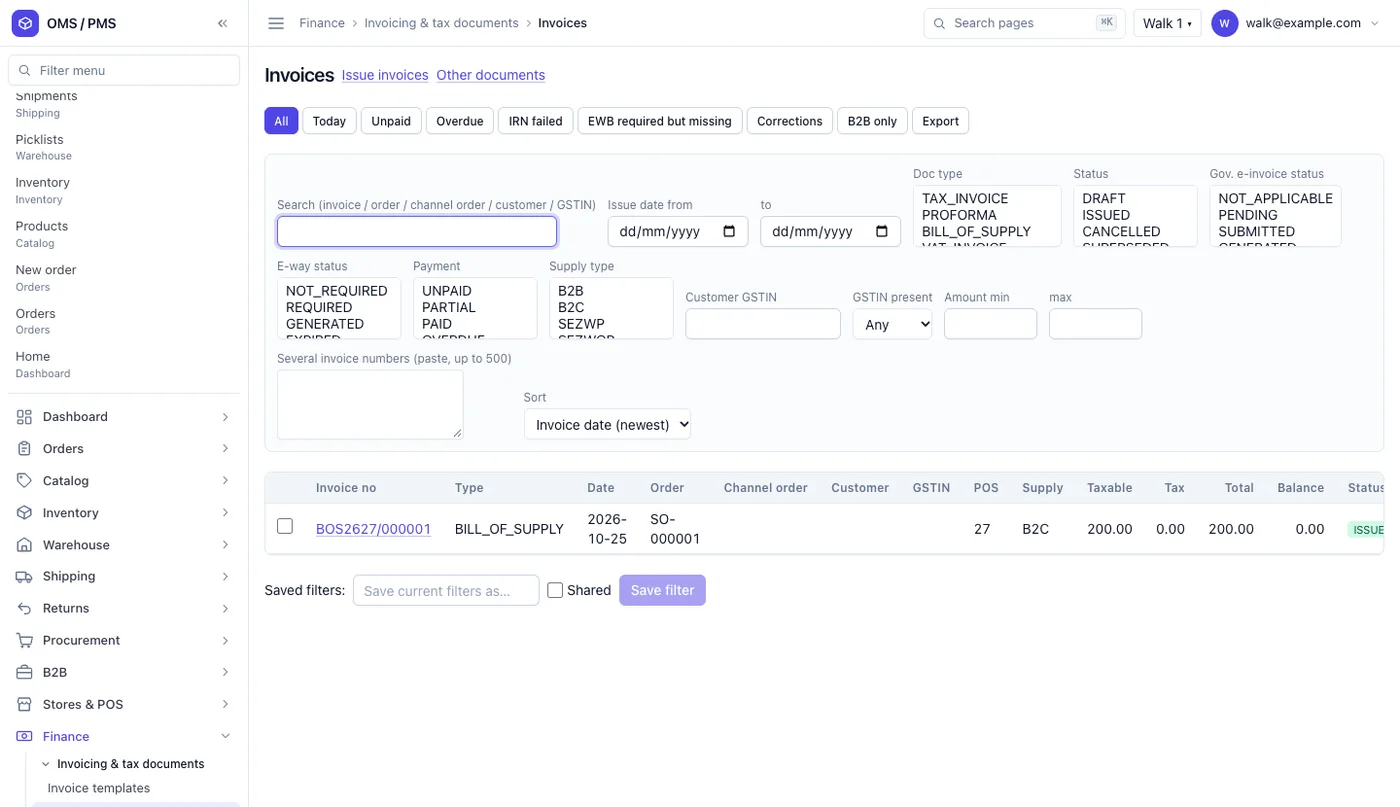
7. GST bills your CA accepts
Each bill needs your GSTIN, HSN codes and the right tax split. Larger businesses may also need e-invoices and e-way bills. Check what applies to you on the GST portal and with your CA.
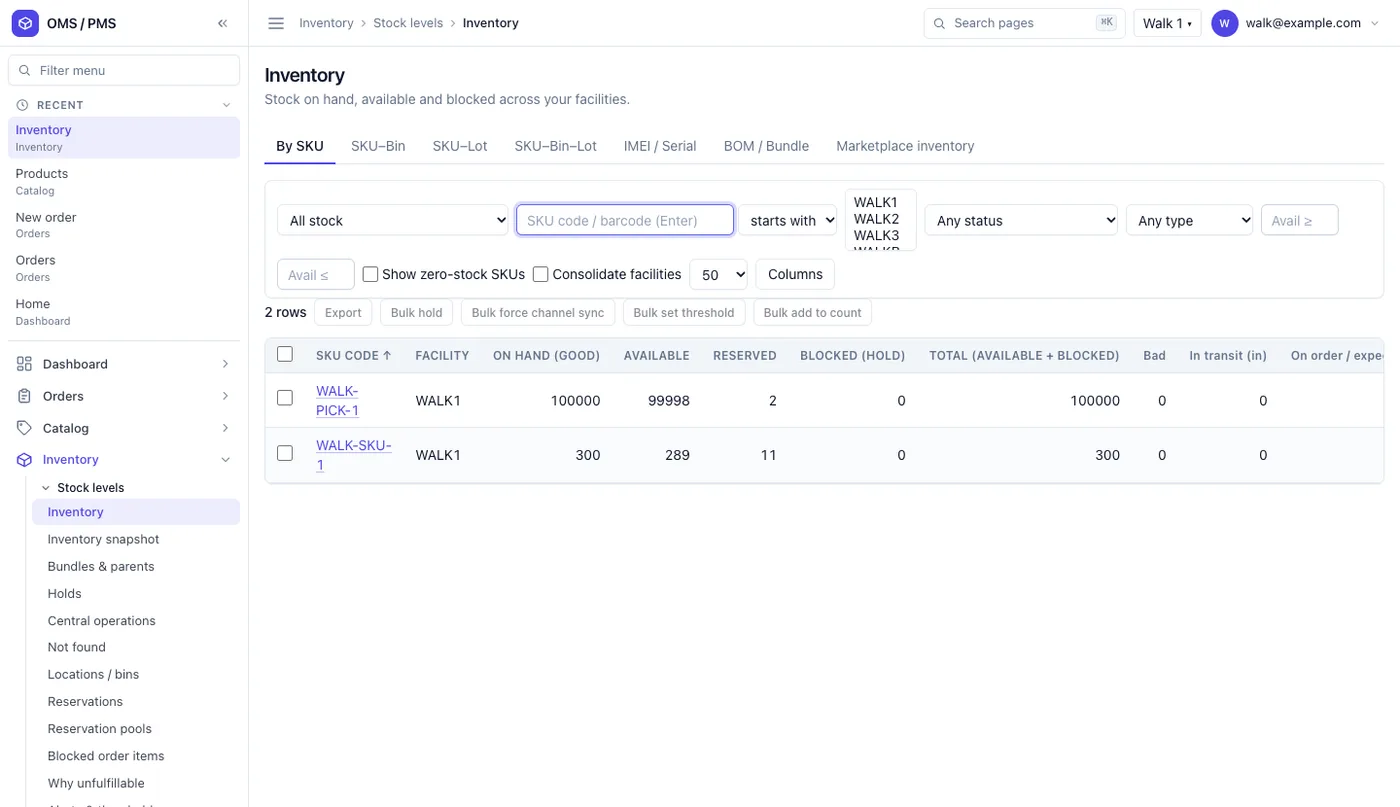
8. One stock count for shop and website
If you also sell from a counter, both should share one stock number. A sale at the counter should reduce the website stock at once. This needs a link between your store and your billing counter (POS) software.
9. Thank-you page and order emails
After payment, the shopper sees what they bought, how it will ship and when. The same details go out by email and SMS.
Online selling has rules. The Consumer Protection (E-Commerce) Rules, 2020 set duties such as showing return and refund terms and handling complaints. Shopper data falls under the Digital Personal Data Protection Act, 2023. Check what applies to you with a lawyer. We build the pages and settings your store needs.
Worked example: a saree brand moves its store
A Surat saree brand sells online and from one shop. The details are examples.
- The trigger. COD returns are high, and the shop and website stock never match.
- The choice. They need COD rules by pin code, one stock count and their own app. No add-on does all three, so they choose a custom build.
- Export. Products, photos, customers and past orders are exported from the old store.
- Build. A web store, an Android and iPhone app, and an admin linked to the shop's billing counter.
- Same links. Old product web addresses are redirected to the new ones, so search rankings are kept.
- Launch. The new store goes live on a quiet weekday. COD is allowed only on pin codes with low returns.
- After 60 days. The owner checks returns by pin code and turns COD on or off area by area.
Our service
How we build your own online store
Your store, your checkout rules, your app.
- Study your shop. We list your products, payment rules, delivery areas and reports.
- Show the screens. You click through the store and app designs and change them first.
- Build the store. A web store that loads quickly on phones and an admin, plus Android and iPhone shopping apps.
- Move your data. Products, customers and orders come across, and old links are redirected.
- Launch under your brand. Your domain, your app store listing, your own server.
- Support. Updates, new payment options and seasonal changes as you grow.
Build your own ecommerce website: what decides the cost
We do not publish a fixed price. These things decide the budget:
- Web store only, or web store plus Android and iPhone apps.
- Number of products, variants and price lists.
- Checkout rules: COD limits, delivery slots, B2B prices.
- Links to your billing counter, courier partners and accounting.
- How much data must move from your old store.
| Rented store builder | Your own custom store | |
|---|---|---|
| Start | Low first payment, fast | A larger first payment, a few weeks |
| Cost over years | Monthly plan plus paid add-ons | One build cost, then optional support |
| Indian checkout rules | Through add-ons, if one exists | Built the way you sell |
| Own app | Extra | Part of the build |
| Data and source code | With the builder | Yours |
Share your product count, apps and checkout rules. We send a written quote after one call. You can also see projects we have delivered.
Whichever Shopify alternative you pick, make sure it can:
- Take UPI, cards and cash on delivery, with COD rules by pin code
- Print GST bills with GSTIN, HSN codes and tax split lines
- Check delivery pin codes before the shopper pays
- Show each parcel's status to the shopper
- Share one stock count with your shop counter
- Keep your old product links working after the move
- Export products, customers and orders whenever you want
FAQ
What is the best Shopify alternative in India?
There is no single answer. A small shop may be fine on another rented builder. A growing brand with its own rules may need an open-source or custom store. Pick the one that handles UPI, COD, GST bills and your stock the way you work.
Can I move my store away from Shopify without losing data?
Yes. Products, customers and past orders can be exported and imported into the new store. Old product links should be redirected, so search engines and shoppers still find them.
How long does it take to build my own ecommerce website?
It depends on the number of products, checkout rules and apps. After one call, we share a plan with dates. You see clickable screens before we write code.
Will I own the store and its source code?
Yes. We build the store under your brand and hand over the source code. Your data stays on your own server.
Can you build an Android and iPhone app with the store?
Yes. The app and the web store share one admin, one product list and one stock count.
Is shopper data safe in a custom store?
It should be. We limit staff access by role, keep payment card details with the payment gateway, and log changes. The Digital Personal Data Protection Act, 2023 applies to shopper data.
Should a new seller build a custom store on day one?
Usually not. If you are testing a new product, a rented builder is fine. Build your own when your rules, volume or app needs outgrow it.
Can PRS India build my own online store?
Yes. We build the web store, admin and shopping apps around how you sell. Book a consultation and we will show you screens for your store.
Related guides
Written by
Babita Kumari · Business Developer
Business Developer at PRS India. Talks with business owners about the app or software they want, and helps them work out the scope, cost and launch steps before any code is written.