What Is CRM? Meaning, Full Form and Examples in India
CRM means customer relationship management. See what it is and what it keeps for a shop, a builder or a coaching institute. Learn when to get your own built.

Written by Babita Kumari, Business Developer
Reviewed by the PRS India software & mobile app development team
13 min read
Written from production. Our articles draw on products we run live and the client work behind them, and are revised as the systems they describe evolve.
CRM means customer relationship management. A CRM is software that keeps every customer, enquiry and follow-up in one place. Nobody on your team forgets who to call. If you are asking "what is CRM", the short answer is this. It is the digital version of the diary, the copybook and the Excel sheet your business already uses. It adds reminders and history.
This guide explains what a CRM is, what the full form means and how it works. It uses three Indian examples: a shop, a builder and a coaching institute. At the end, it shows when a business should get its own CRM built instead of paying a monthly plan.
Key takeaways
- CRM full form: Customer Relationship Management. It is one record per customer, with every call, visit and quote.
- A CRM keeps contacts, leads, follow-up dates and reports. The reminders are what stop leads from being forgotten.
- Any business that follows up with customers more than once can use one: a shop, a builder, a coaching institute.
- You can subscribe to a ready CRM, or have your own built with your stages, your brand and your source code.
CRM meaning and full form
The CRM full form is Customer Relationship Management. Read it in two halves. A "customer relationship" is every time you speak to a customer or a possible customer. It can be a call, a visit, a quote, a payment or a complaint. "Management" is writing it down, giving it to a person and setting a reminder for the next step.
So when someone asks "CRM, what does it mean", the plain answer is short. It is a system that remembers your customers, so your staff do not have to.
A short introduction to CRM
Shopkeepers have always kept a customer register. Sales teams kept a card box, then a spreadsheet. A CRM is the next step. It is the same register, but on a phone and a browser. The whole team shares it, with dates that remind people to call back. The idea is old. Only the tool has changed.
What is CRM software?
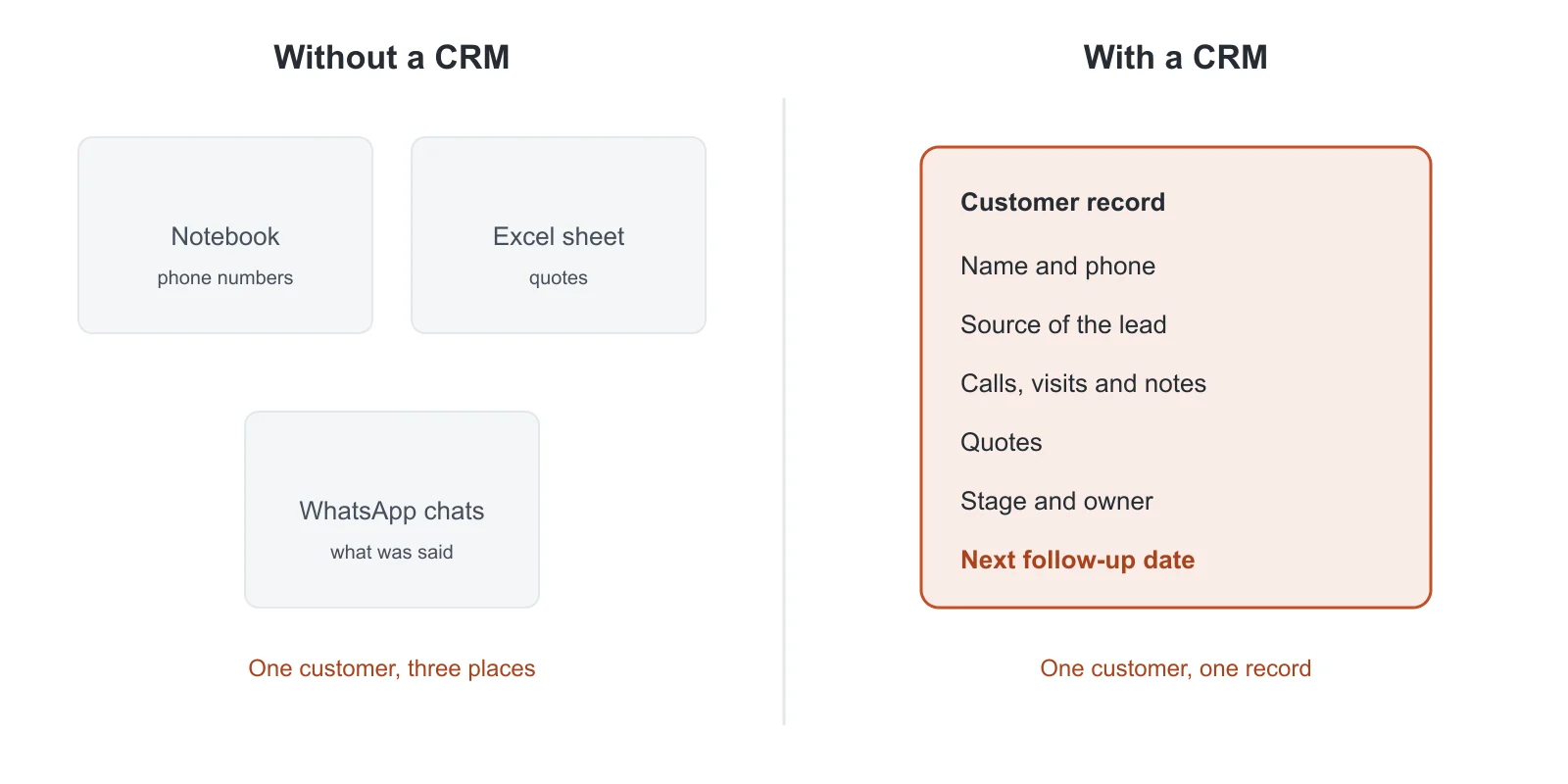
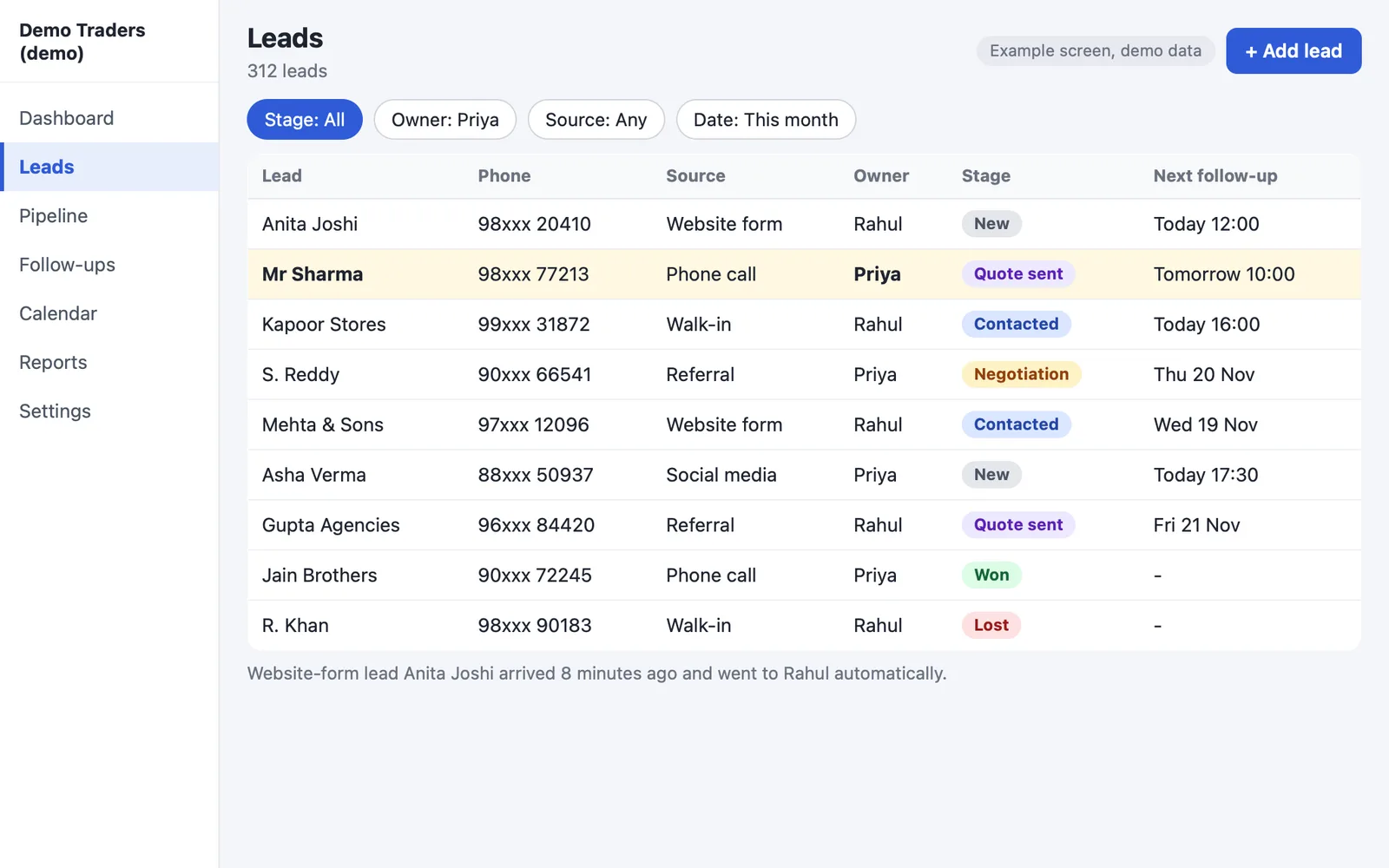
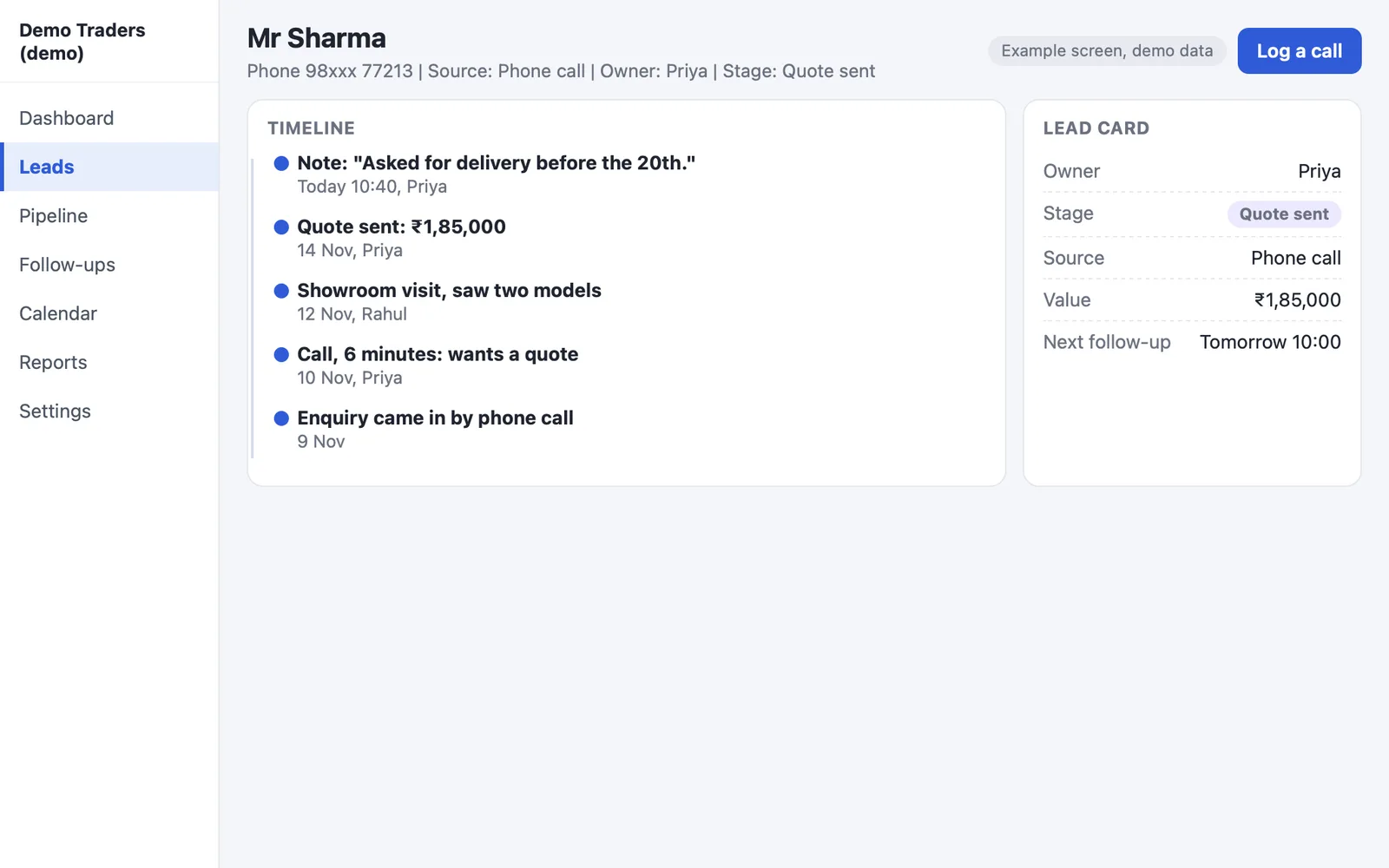
CRM software, also called a CRM system, CRM platform or CRM application, shows one screen for each customer or lead. That screen holds the name, phone and where the lead came from. It also holds the stage of the sale, the person responsible and the next follow-up date. Business owners also use the words "CRM management" for the habit of working from that screen every day.
Compare this with the usual way. Phone numbers sit in a notebook. Quotes sit in Excel. Customer messages sit in the WhatsApp of whoever received them. When that person is on leave or leaves the job, the history goes with them.
How a CRM works: one customer from enquiry to repeat sale
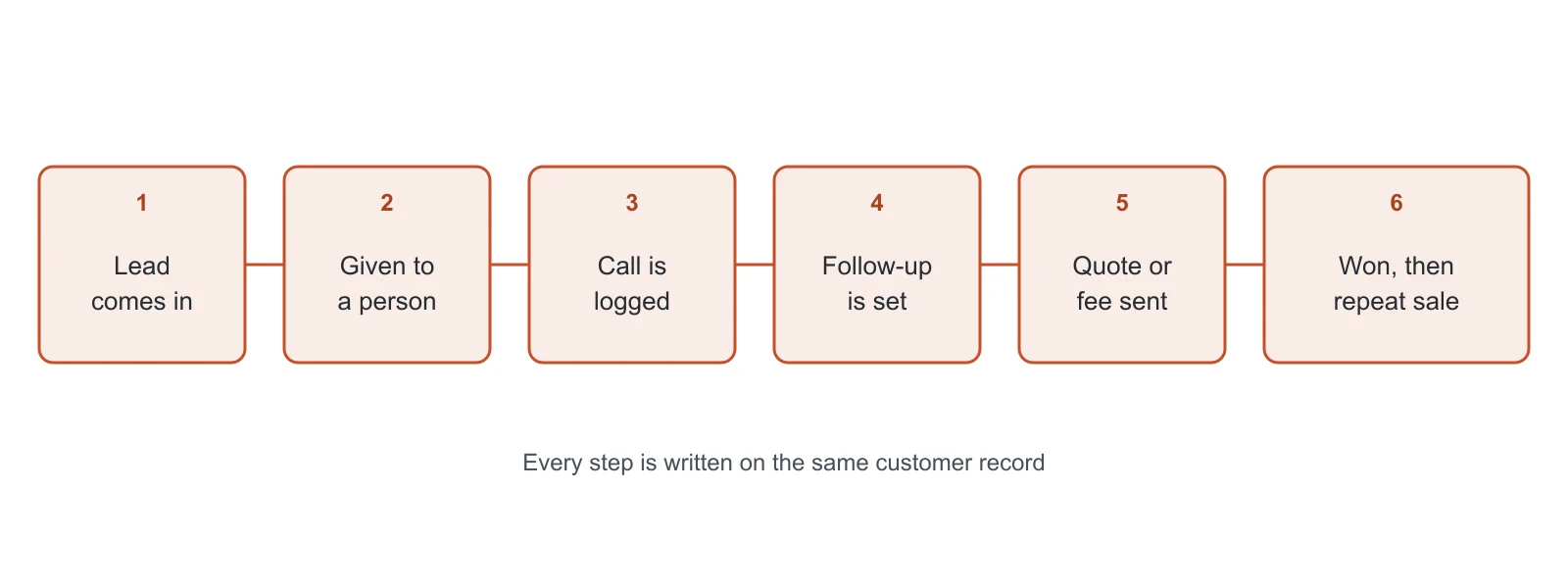
This is what a CRM is used for, step by step. Take one enquiry and follow it.
- The lead comes in. A phone call, a website form or a walk-in is entered once, with its source.
- It is given to a person. Every lead has one owner, so there is no "I thought you called".
- The call is logged. The person writes what the customer said, in two lines.
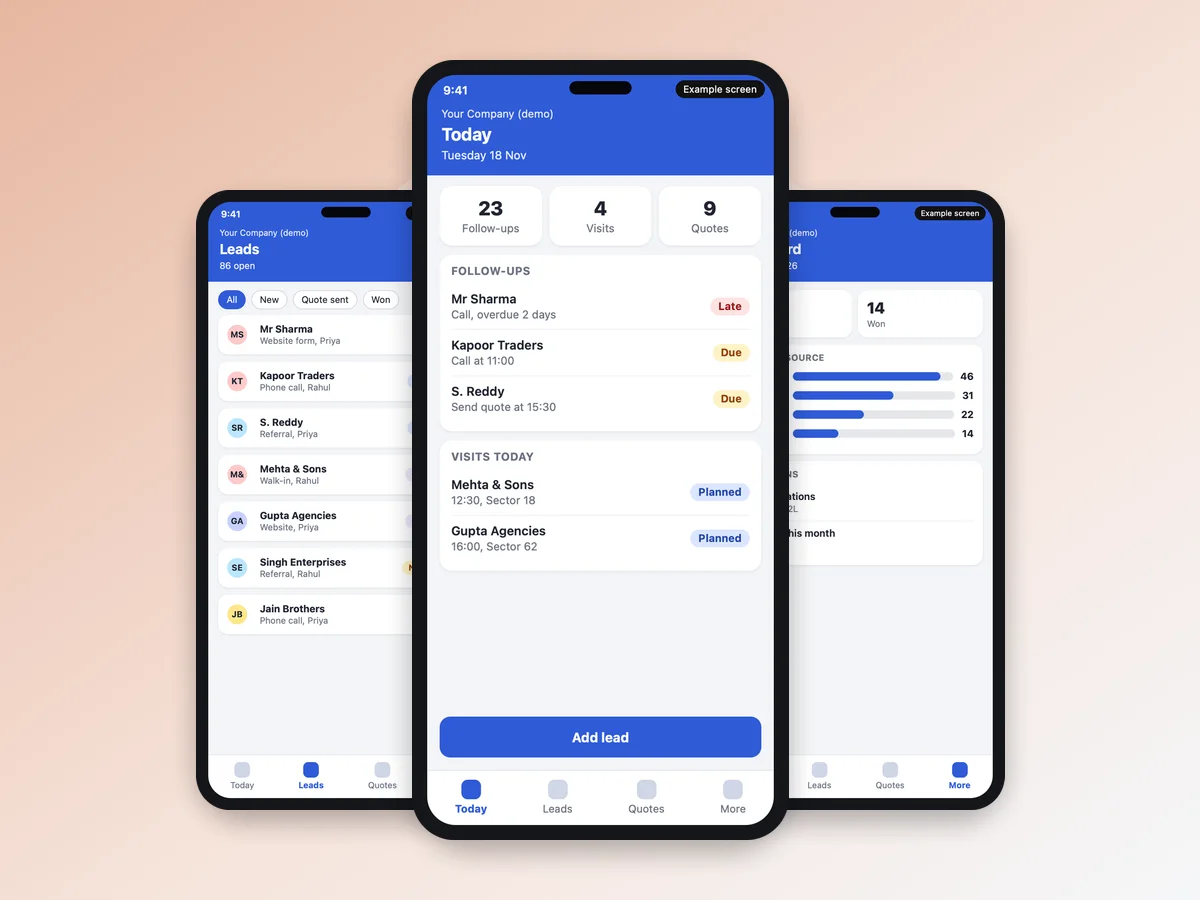
- A follow-up is set. The CRM shows "call Mr Sharma on Thursday". If the call is missed, it turns red.
- The quote or fee is sent. A quote with GST is made from the same record and stays on the history.
- Won, or lost with a reason. After a win, the CRM keeps the record for renewal, service or the next order.
What is CRM data?
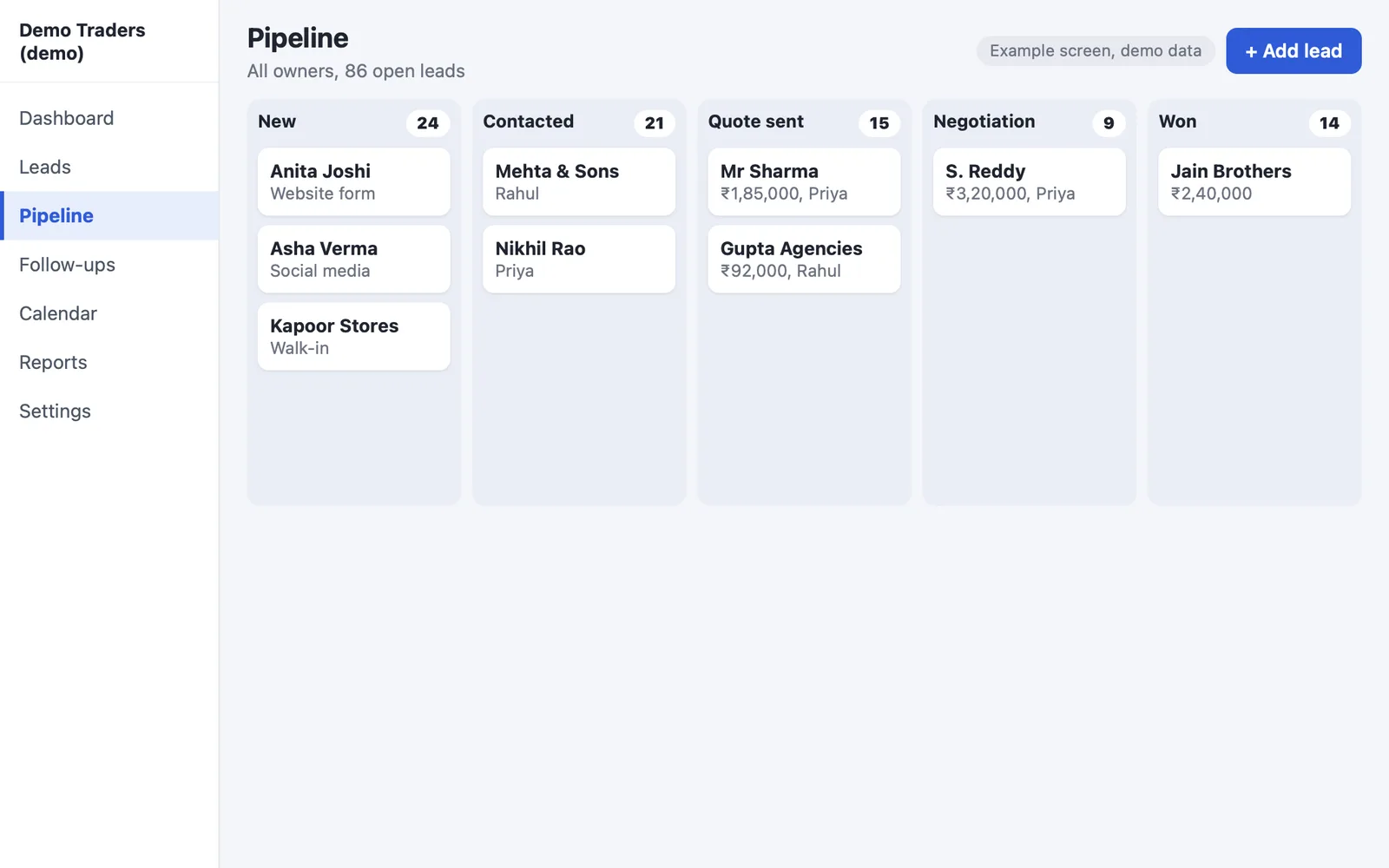
CRM data is the information a CRM keeps about each customer. It has the name and phone, the source of the lead, and every call and visit. It also has the quote value, the stage and the next follow-up date. Because it is all in one place, the owner can ask a question and get an answer in seconds. An example is "how many leads are waiting for a quote?"
CRM examples from Indian businesses
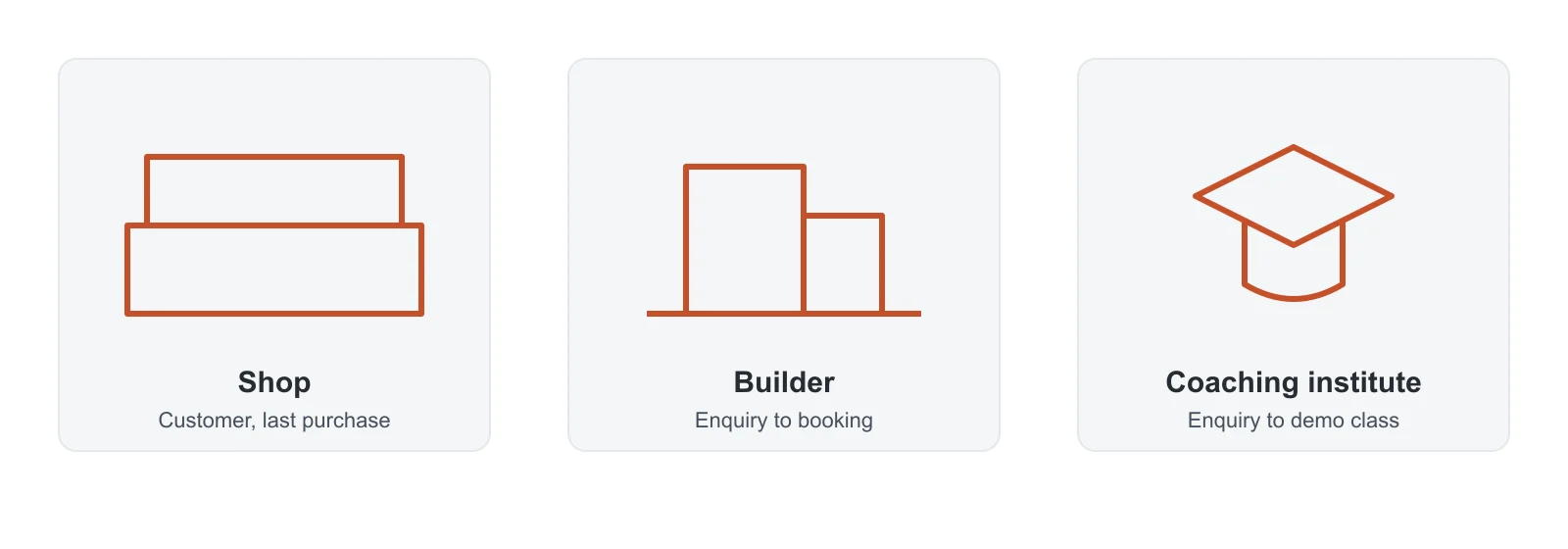
Three small examples show how the same idea fits different businesses. Each one is an illustration, not a client.
A mobile or furniture shop
Tracks: phone number, last purchase, items asked about.
Pain: walk-in customers are written in a copybook and never called again.
The CRM: keeps each customer's history. It sets a follow-up date, such as a call before a festival offer or a warranty end.
A builder
Tracks: enquiry, site visit, flat shown, booking, payment dates.
Pain: leads from property portals are shared on WhatsApp, and visits are missed.
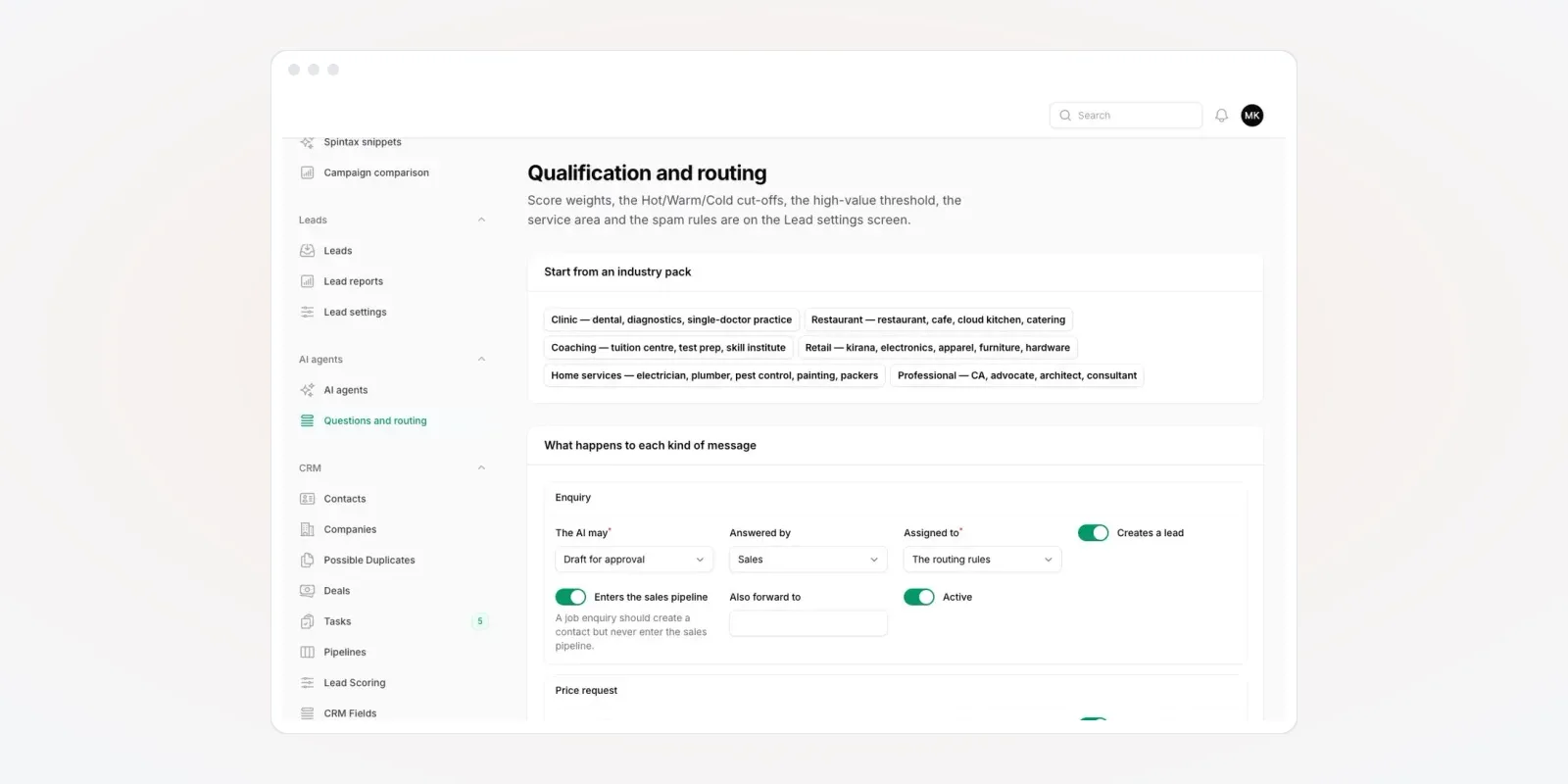
The CRM: one pipeline from enquiry to booking, with the visit date on the record. Leads from portals can be brought in as a build option. See a real estate CRM we built.
A coaching institute
Tracks: enquiry, counsellor, demo class, fee dates, next batch.
Pain: an Instagram enquiry is answered once, then forgotten.
The CRM: assigns a counsellor, books the demo and sets a follow-up for the next batch. Fee instalments can be kept as a custom field with a follow-up date.
Want to see built CRMs? See our work: a field service CRM and ERP and an affiliate and partner CRM. A longer guide with CRM software examples is coming: link when live.
CRM in sales and CRM in marketing
What is CRM in sales?
For a sales team, a CRM is the lead list, the pipeline, the follow-up dates, the quotes and the targets. Each salesperson opens it in the morning and sees who to call today. The manager sees which leads are stuck and which are overdue, without asking anyone.
What is CRM in marketing?
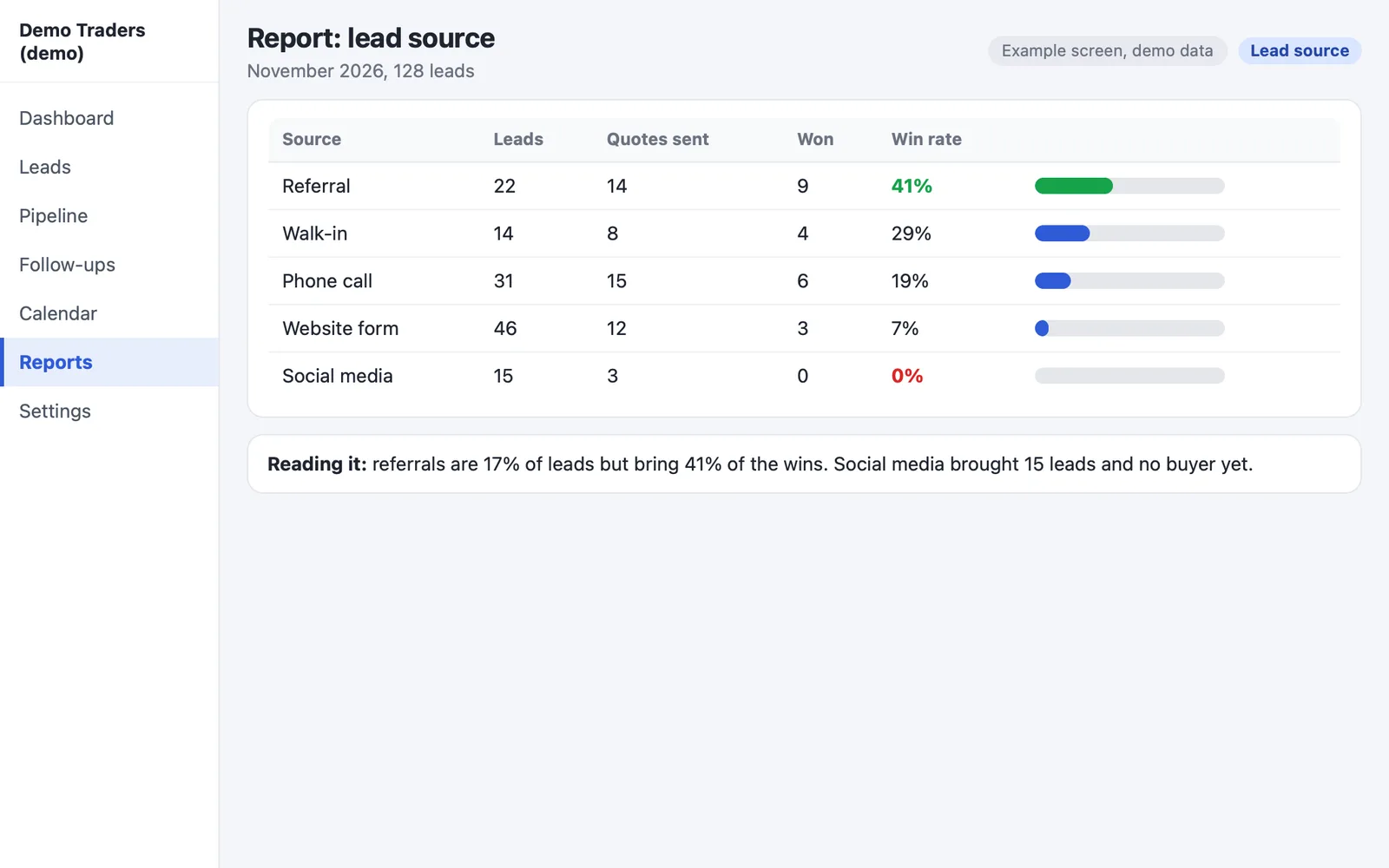
Customer relationship management in marketing means knowing which source brings real buyers. Every lead is saved with its source: a Facebook form, JustDial, IndiaMART, a walk-in or a reference. A lead source report then shows which of them turned into sales, not only enquiries. The CRM also lets you pick the right list and send them a WhatsApp, SMS or email message.
A full guide on CRM in digital marketing and marketing automation: link when live.
What a CRM keeps
Most CRMs are made of four parts.
- Contacts. People and companies, with phone, email and GSTIN.
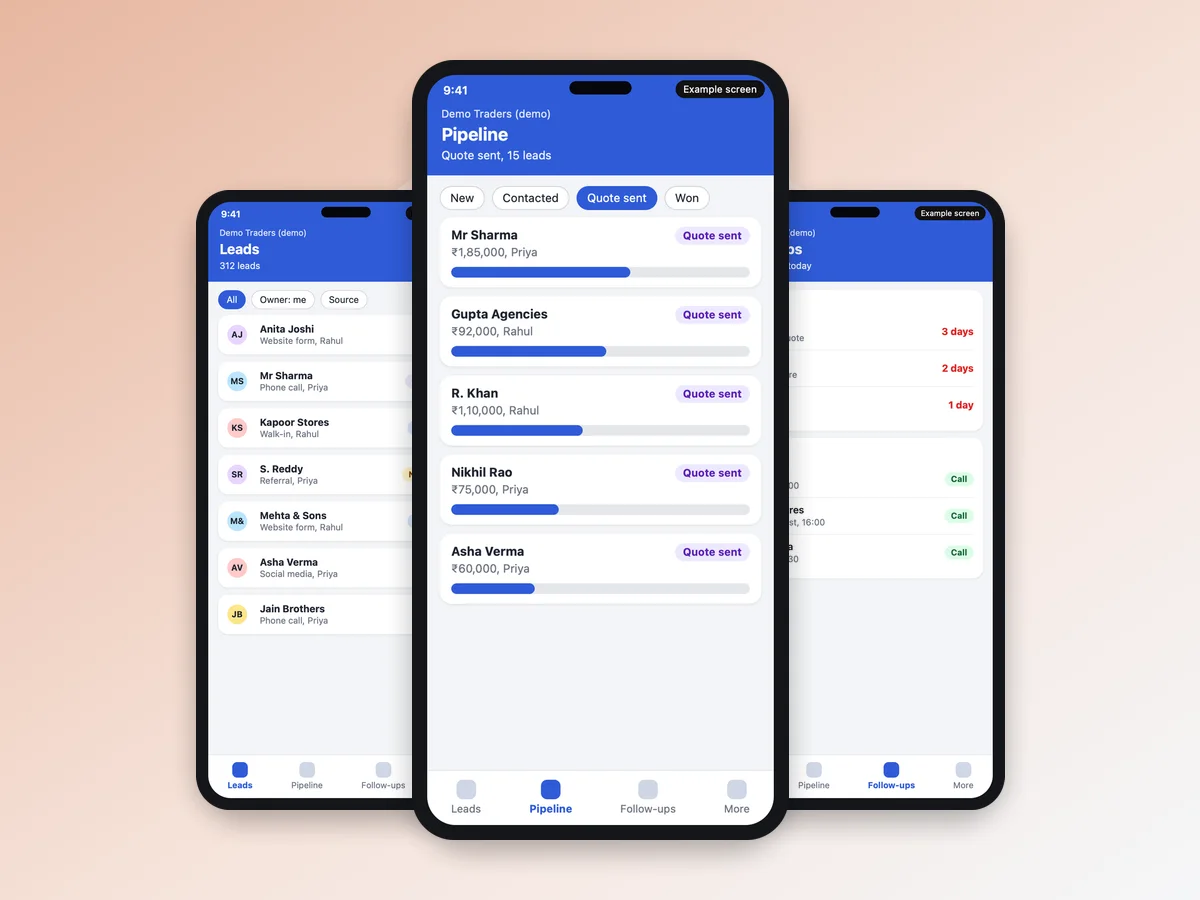
- Leads and pipeline. Every enquiry and the stage it is in.
- Follow-ups and calendar. The next step and the date for it.
- Reports. Counts and totals for the owner: leads by source, wins and losses, work per person.
A longer guide to each part is coming: link when live.
Three kinds of CRM, in one line each
- Operational: used every day by sales and service staff to handle leads and tasks.
- Analytical: reports and trends that show the owner what is working.
- Collaborative: one shared record, so sales, support and accounts see the same customer.
A full guide on the kinds of CRM: link when live.
What changes when a team uses a CRM
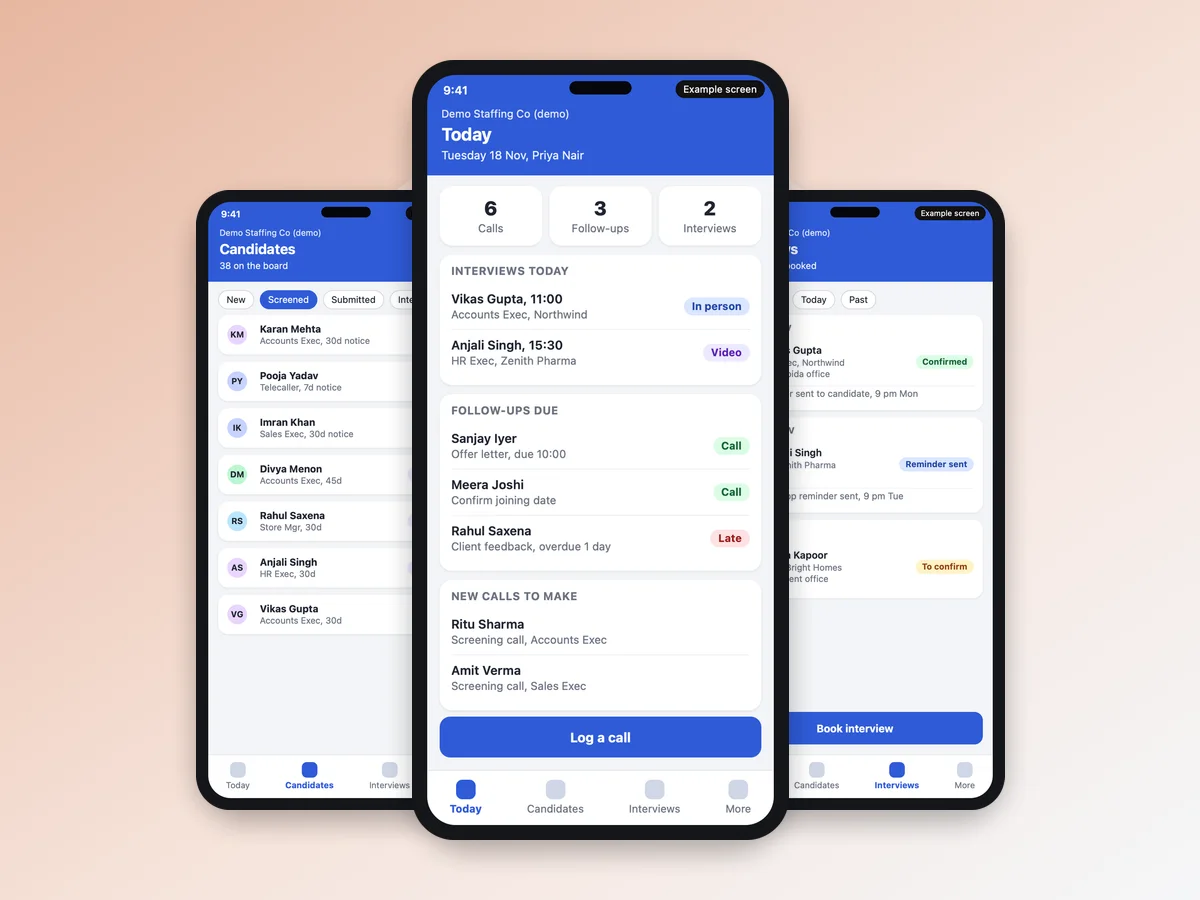
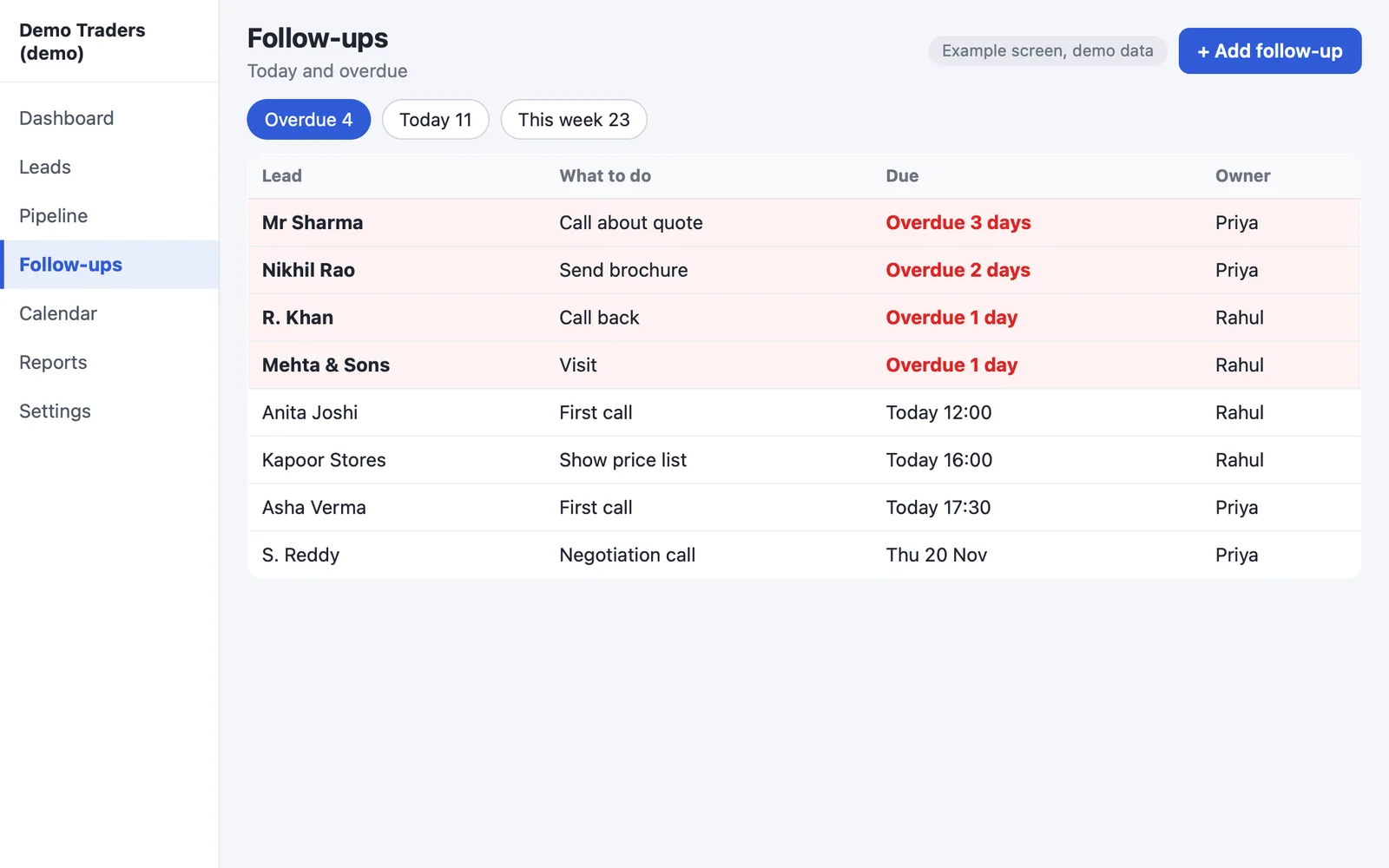
- A follow-up due list. Each person sees today's calls, and overdue ones in red.
- A stale-lead alert. A lead that nobody touched for days is flagged to the manager.
- One history per customer. Anyone can pick up a call and know what was said before.
- A record of who called whom. Two people stop calling the same lead.
- A daily report. The owner reads one page instead of asking five people.
One honest limit: a CRM does not help if nobody enters the data. If the team skips the calls and notes, fix that habit first. The software only shows what people write. A longer guide on the benefits of CRM: link when live.
Is a spreadsheet a CRM? When to move to one
Excel or Google Sheets can store names, so for a few customers it is enough. Move to a CRM when you see duplicate leads, missed follow-ups, or no history after a staff member leaves. A sheet does not remind anyone and cannot keep a history per customer. Guide on Google Sheets as a CRM: link when live.
Cloud, mobile and WhatsApp: how a CRM reaches your team
- Cloud based: opens from any browser or phone, with no installation in the office. Guide on cloud based CRM: link when live.
- Mobile: a staff phone app puts the day's calls and visits in the pocket. See our field sales CRM mobile app.
- WhatsApp: chats can be turned into leads as a build option. Read about WhatsApp Business API integration. Guide on WhatsApp CRM: link when live.
CRM integration
CRM integration means the CRM exchanges data with another tool: a website form, a property portal, accounts software or a calling system. Each one is a separate build step, set up around the tools you already use. Guide on CRM integration: link when live.
CRM by industry
The same idea changes shape for every trade. These are the industries we plan guides for, with the live ones linked.
- Solar CRM software development
- Recruitment CRM (link when live)
- Real estate CRM (link when live)
- Hospital CRM (link when live)
- Insurance CRM (link when live)
- Travel agency CRM (link when live)
- Education and coaching CRM (link when live)
- Car showroom CRM (link when live)
- Pharma CRM (link when live)
- Telecalling CRM (link when live)
- Construction CRM (link when live)
- Jewellery CRM (link when live)
Banks and lenders also use a CRM for loan leads and customer calls. A guide on CRM in banking: link when live.
Buy a subscription CRM or build your own?
Once you know what a CRM is, the next choice is how to get one. You can pay a monthly plan for a ready CRM, or have one built for you. There is also a ready-made CRM that we set up with your own brand.
| Subscription CRM | Custom CRM built by PRS India | |
|---|---|---|
| Cost shape | Per user, every month | One build cost, then optional support |
| Your own fields and steps | Fixed or limited | Built around the way you work |
| Data and source code | Stay with the vendor | Yours, with full source code handover |
| Indian needs (GST quote, portal leads, Tally) | Depends on the plan | Built in as you need them |
| Adding users later | Each user adds to the bill | No per-user fee |
| Time to start | Same day | After a build, timeline given after one call |
Guide on CRM development cost in India: link when live.
How we build your own CRM
- Understand your sales steps. We map your stages, roles and reports in a call or two.
- Clickable screens. You see the screens first and change them before code is written.
- Build. A web admin for the office, and Android and iPhone apps through mobile app development.
- Test with your team. Your staff use it on real leads. We fix what they find.
- Launch under your brand. We set it up on your own AWS account or server, or host it for you. Daily backups come with it, and an AMC is optional.
- Support. We add features as your business grows.
You get your brand, your data and the full source code. A ready CRM base with 30 ready reports is available as a starting point.
CRM development cost: what decides it
We do not publish a fixed price, because it depends on your business. The factors are the number of users and roles and the modules switched on. They also include integrations such as WhatsApp, telephony, Tally or portals. Mobile apps, moving data from Excel and hosting count too. We send a written quote after one call.
Before you choose any CRM, check this
Whichever CRM you pick, ask:
- Can it carry your own stages and fields?
- Who owns the data, and can you export it any time?
- Does it work on phones for your field staff?
- If a staff member leaves, does the history stay?
- Can it make a quote with GST?
- Where is customer data stored? The Digital Personal Data Protection Act, 2023 applies to personal data held in a CRM.
Frequently asked questions
What is CRM?
CRM means customer relationship management. It is software that keeps all your customers, enquiries, calls and follow-ups in one place.
What is the full form of CRM?
Customer Relationship Management.
What is CRM software used for?
To record every lead, remind staff of follow-ups, send quotes, and show the owner which leads are won, lost or waiting.
What is CRM in marketing?
It shows which source brings real buyers, and lets you send the right message (WhatsApp, SMS, email) to the right list.
What is CRM in sales?
The sales team uses it for the lead list, pipeline stages, follow-up dates, quotes and targets.
Is Excel or Google Sheets a CRM?
It can store names, but it does not remind staff, keep history per customer or stop two people calling the same lead. Move when follow-ups start slipping.
Can a small shop or coaching institute use a CRM?
Yes. Any business that follows up with customers or enquiries more than once can use one. Start with leads, follow-ups and a daily report.
Can PRS India build a CRM for my business?
Yes. We build custom CRM software with your own stages and fields. It comes as web plus Android and iPhone, under your brand. You get your data and full source code. We give the build time after one call. Contact us to see it working.
Related guides
Written by
Babita Kumari · Business Developer
Business Developer at PRS India. Talks with business owners about the app or software they want, and helps them work out the scope, cost and launch steps before any code is written.