Refurbished Phone Business Software Development: How to Start
How to start a refurbished phone business, step by step, and the software each step needs: buyback, IMEI checks, workshop, grading and online sales.

Written from production. Our articles draw on products we run live and the client work behind them, and are revised as the systems they describe evolve.
Many people want to start a refurbished phone business. They see used phones everywhere. They see buyers who want a good phone at a lower cost. But the money in this trade is made or lost on small details. Did you pay too much for a phone? Was it stolen? Did the battery fail one week after the sale?
A notebook and a WhatsApp group cannot answer these questions at scale. That is why new refurbished businesses now build their own refurbished phone software from day one, with a phone app for customers and pickup staff. It covers buying, checking, repair, grading and selling, in one place. This guide shows how to start, step by step, and what software each step needs.
Key takeaways
- A refurbished phone business has two sides: buying used phones and selling refurbished ones. Both need software.
- Track every phone by its IMEI number. Follow it from the day you buy it to the end of its warranty.
- Check each IMEI on the government's Sanchar Saathi portal before you pay for a phone.
- Start with three parts: a sell-your-phone flow, a stock and repair panel, and an online store.
- When we build it for you, the brand, the data and the source code are yours.
How a refurbished phone business works
The business is a loop. You buy used phones from people or dealers. You check and repair them. You give each one a grade. Then you sell it with a short warranty. The gap between the purchase price and the sale price, minus repair costs, is your margin.
There are three common ways to start:
- Buyback first. You collect phones from people at their door and pay them on the spot. You sell the phones to dealers or in your own store.
- Store first. You buy phones in lots from dealers. You refurbish them and sell online with a warranty.
- Both. You buy from the public and sell to the public, and maybe to dealers through a B2B ordering portal. This needs the most software, but it keeps the full margin.
The problem
Where new refurbished businesses lose money
Most new refurbishers make the same six mistakes in the first year.
- Paying too much. The quote is a guess. The phone has a hidden fault, and the margin is gone.
- Buying a blocked phone. Nobody checks the IMEI. The phone turns out to be reported lost or stolen.
- Lost phones in the workshop. Twenty phones sit on one bench. Nobody knows which one is waiting for a screen.
- Mixed-up grades. One technician calls a phone "good", another calls the same scratch "fair". Buyers complain.
- No warranty record. A buyer comes back after a month. You cannot find when, or for how much, you sold that phone.
- Cash going missing. Pickup staff pay cash at the door. At the end of the day, the totals do not match.
Step 1: plan how you will buy phones
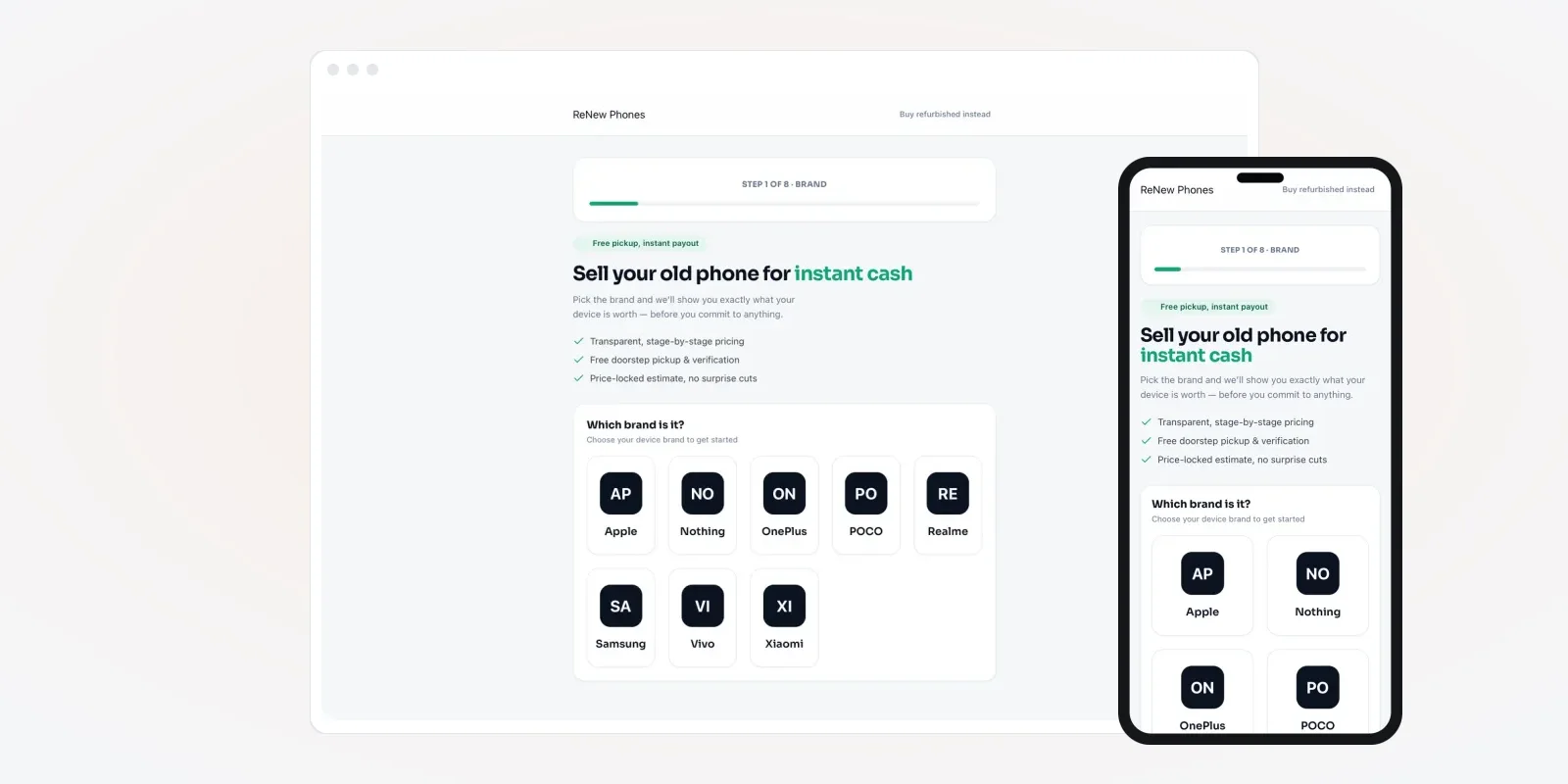
Buying is where the margin is decided. If you buy from the public, you need a sell-your-phone flow. The person picks the brand, the model, the storage and the city. Then the app asks a few questions about the condition and shows a price.
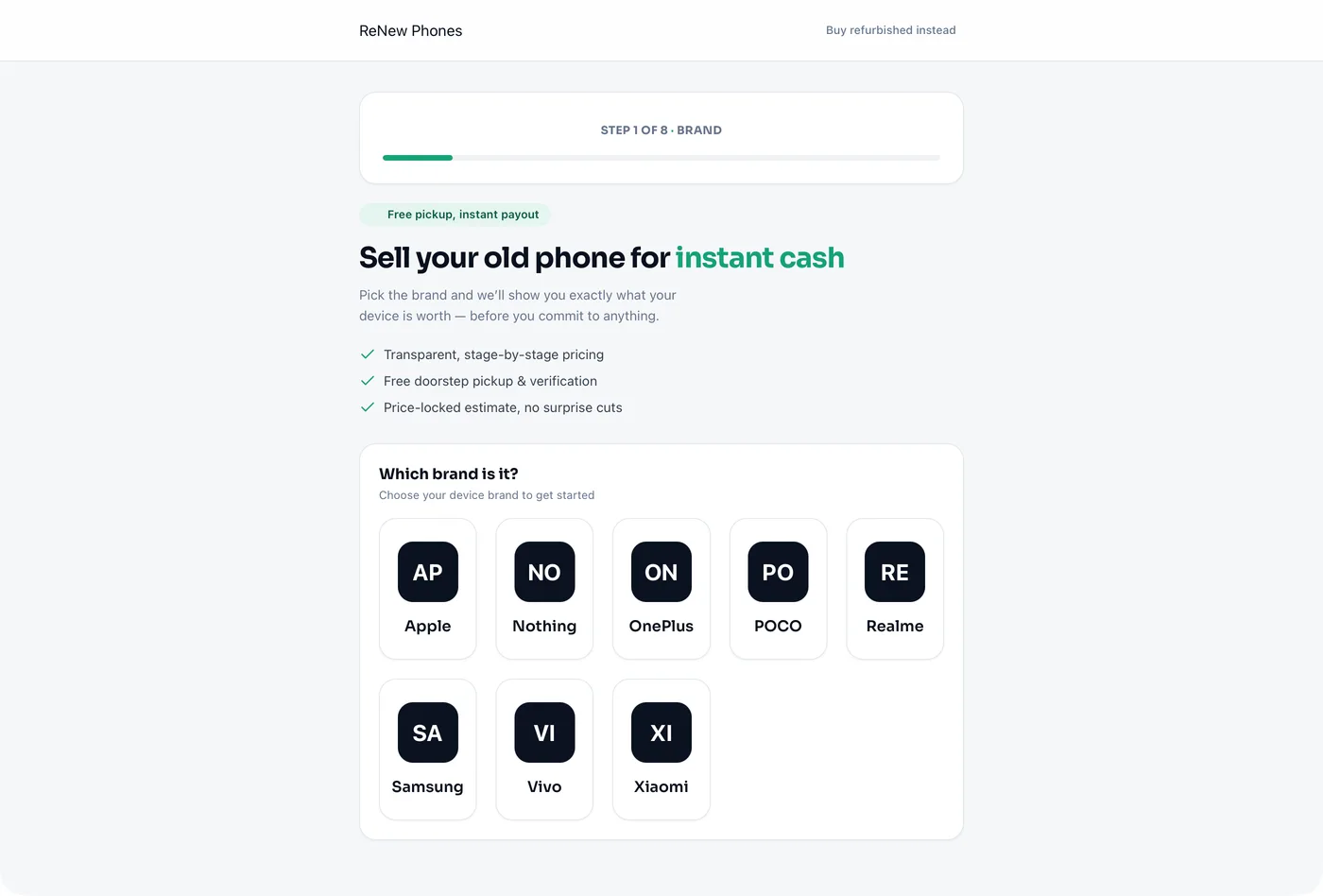
Below is the first step of a sell-your-phone flow we built. The screens in this guide come from software we have built for clients and for our own demos, filled with demo data.
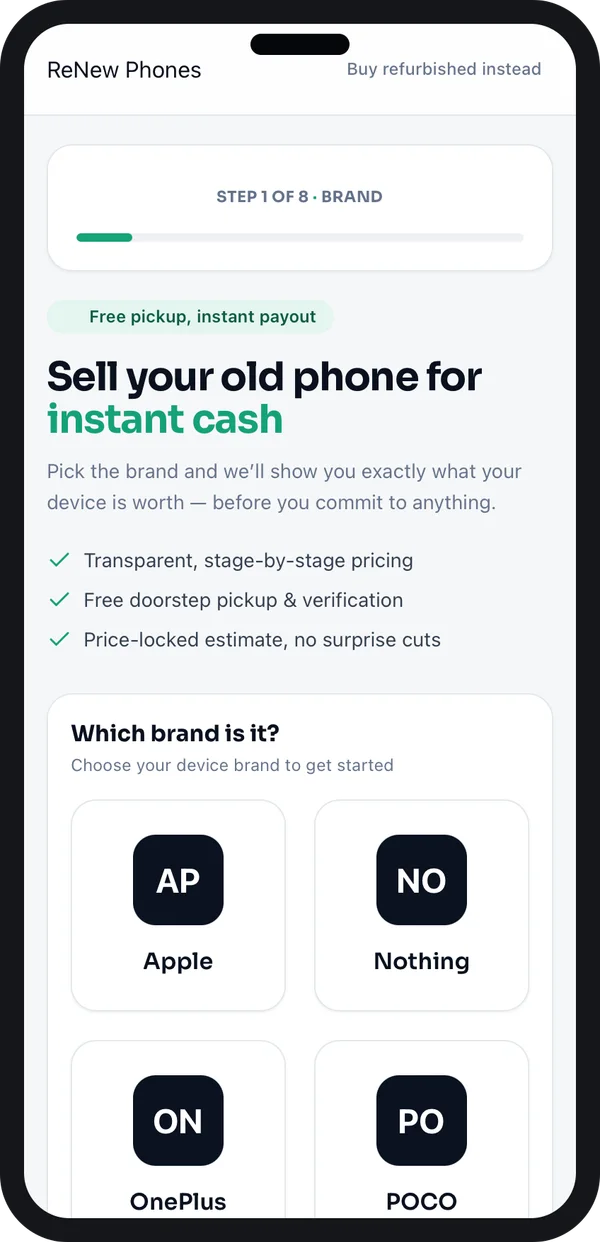
Pick the brand
Step 1 of an 8-step flow. A progress bar shows how many steps are left.
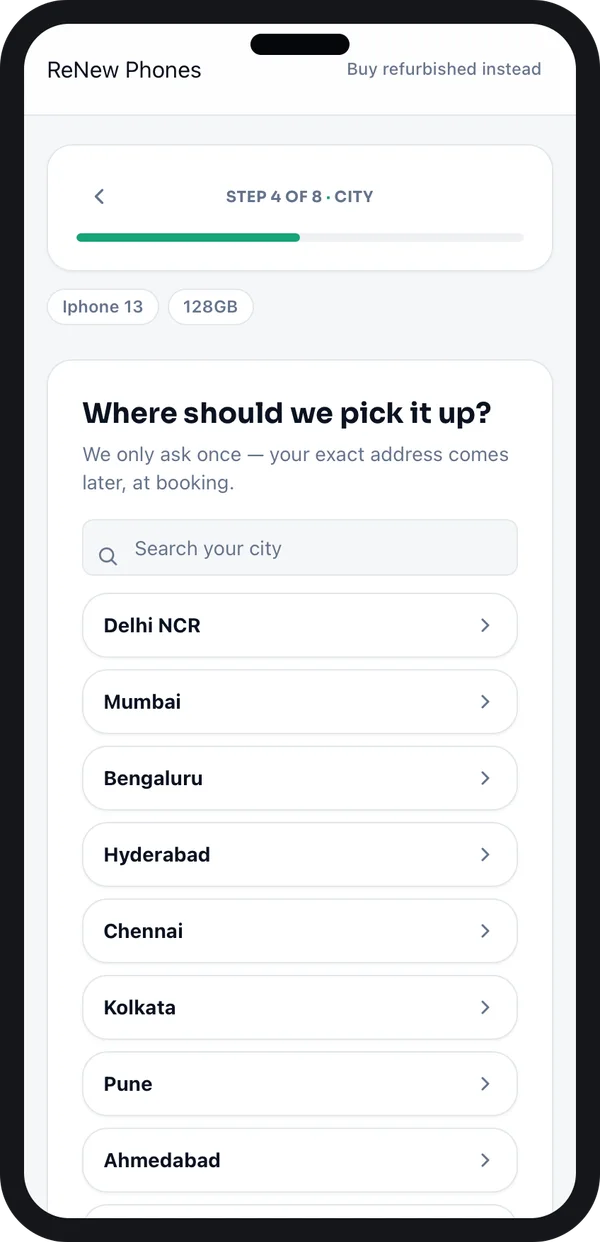
Pick the city
You only offer pickup where you have staff. Other cities can be switched off. Pickup runs work like a small delivery operation.
Keep the city list in your own settings. When you start in one city, the app shows only that city. When you open a second city, you add it in the admin panel. No new app release is needed.
Step 2: check every phone before you pay
This is the step most new businesses skip. Every phone has an IMEI number. The government runs a portal where anyone can check an IMEI. The Sanchar Saathi portal from the Department of Telecommunications has a "Know your mobile" check. It shows whether a phone has been reported lost or stolen.
Your software should make this check a required step. The pickup agent types or scans the IMEI. The app saves it with the date and the result. If the agent skips the check, the payment button stays locked. You can also save the seller's ID proof and a signed sale note with the same record.
Check the current rules. The rules on buying and selling used phones can change. Ask a solicitor what records you must keep for each phone you buy, and for how long.
Step 3: run the workshop from one screen
Once a phone reaches you, it moves through the workshop. Each phone should have a job card linked to its IMEI, much like stock and job tracking in an ERP. The job card shows:
- The tests done: screen, touch, battery health, cameras, speakers, buttons, charging port, network
- The parts used, with the cost of each part
- The technician who worked on it, and the time spent
- A data wipe confirmation, so no old photos or chats stay on the phone
- The final grade, with photos of every side
The data wipe matters for trust. The job card holds a tick and a photo as proof.
Step 4: list and sell refurbished phones
When a phone passes the checks, it goes on sale. The online store should show the grade, battery health, warranty, and real photos. A buyer of a used phone wants proof, not big words.
Store catalogue with filters
Each listing is linked to one IMEI in your stock. When the phone sells, the listing closes by itself. You never sell the same phone twice.
This screen is from an online store we built. Buyers filter by category, brand and price. For phones, we add filters for grade, storage and battery health.
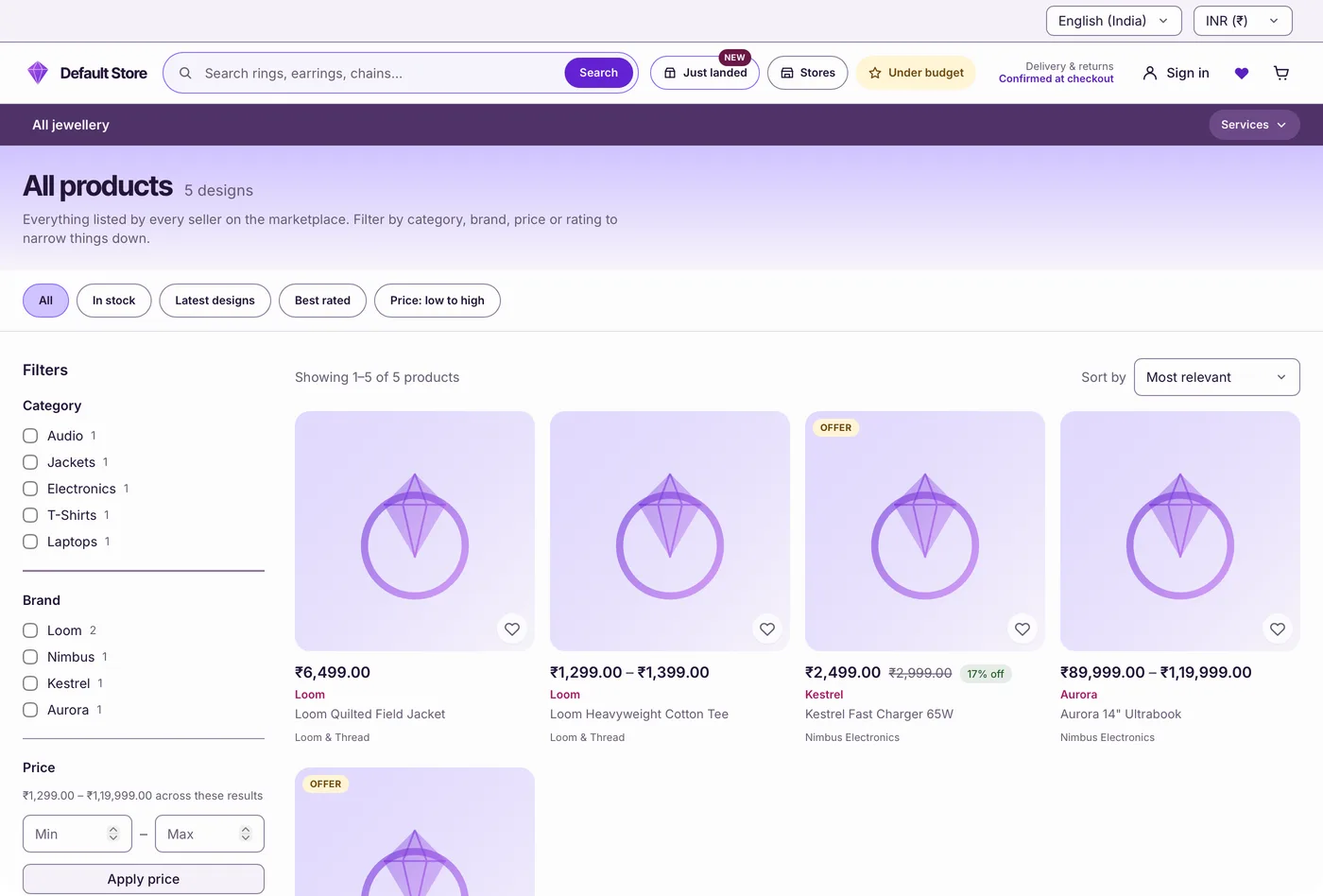
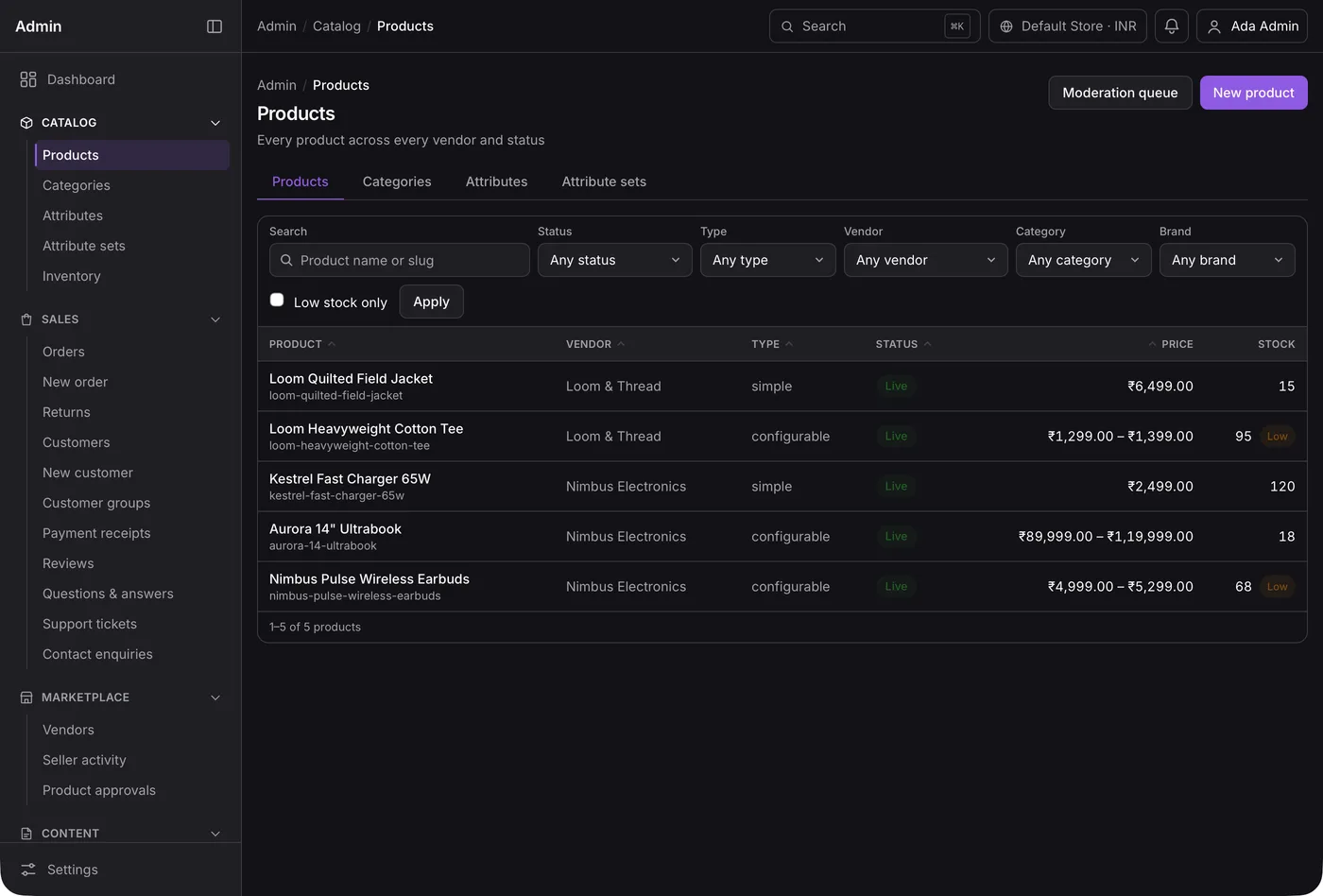
Admin product list
The admin sees every listing, its status and its stock in one table. Low stock is marked. Filters help you find a model fast.
In a refurbished build, each row also shows the grade and the IMEI count for that model.
Step 5: handle orders, returns and warranty
After the sale, the work continues. The buyer tracks the order. If the phone has a problem, the buyer raises a warranty claim. Your team looks up the IMEI. They see the full history: seller, tests, grade and repair.
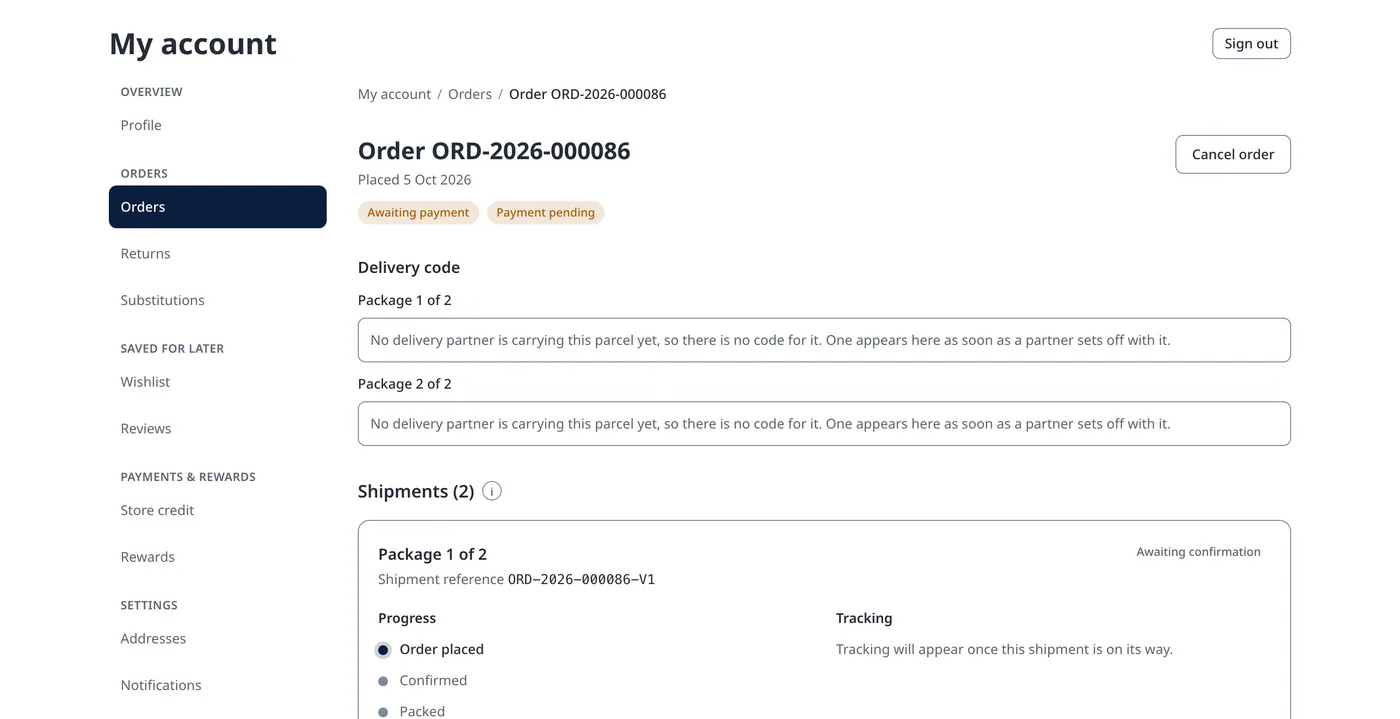
Order tracking for the buyer
Each parcel shows its own status, from packed to delivered. The buyer does not need to call you to ask where the phone is.
The screen is from an online store we built. For refurbished phones, the order page also shows the warranty end date.
The Department of Consumer Affairs sets rules for e-commerce sellers in India, including how returns and complaints must be handled. Show your return and warranty terms on every product page.
The registrations to check before you start
Software is only one part of starting. A refurbished phone business in India also deals with tax and e-waste rules.
- GST. Register on the GST portal if your turnover needs it. Ask your CA how GST applies to second-hand goods in your case.
- E-waste. The E-Waste (Management) Rules, 2022 name refurbishers as one of the groups that must register. Details are on the Central Pollution Control Board e-waste page. Your software can record which phones were sent for recycling.
- Customer data. You will store names, phone numbers, ID proof and bank details. The Digital Personal Data Protection Act, 2023 applies to this data.
Source: rules and portals linked above. Check each one for the current position before you start, and confirm with your CA or lawyer.
What the owner sees every day
As the owner, you want one report each morning. It shows phones bought, in repair and on sale, and the margin on sales.
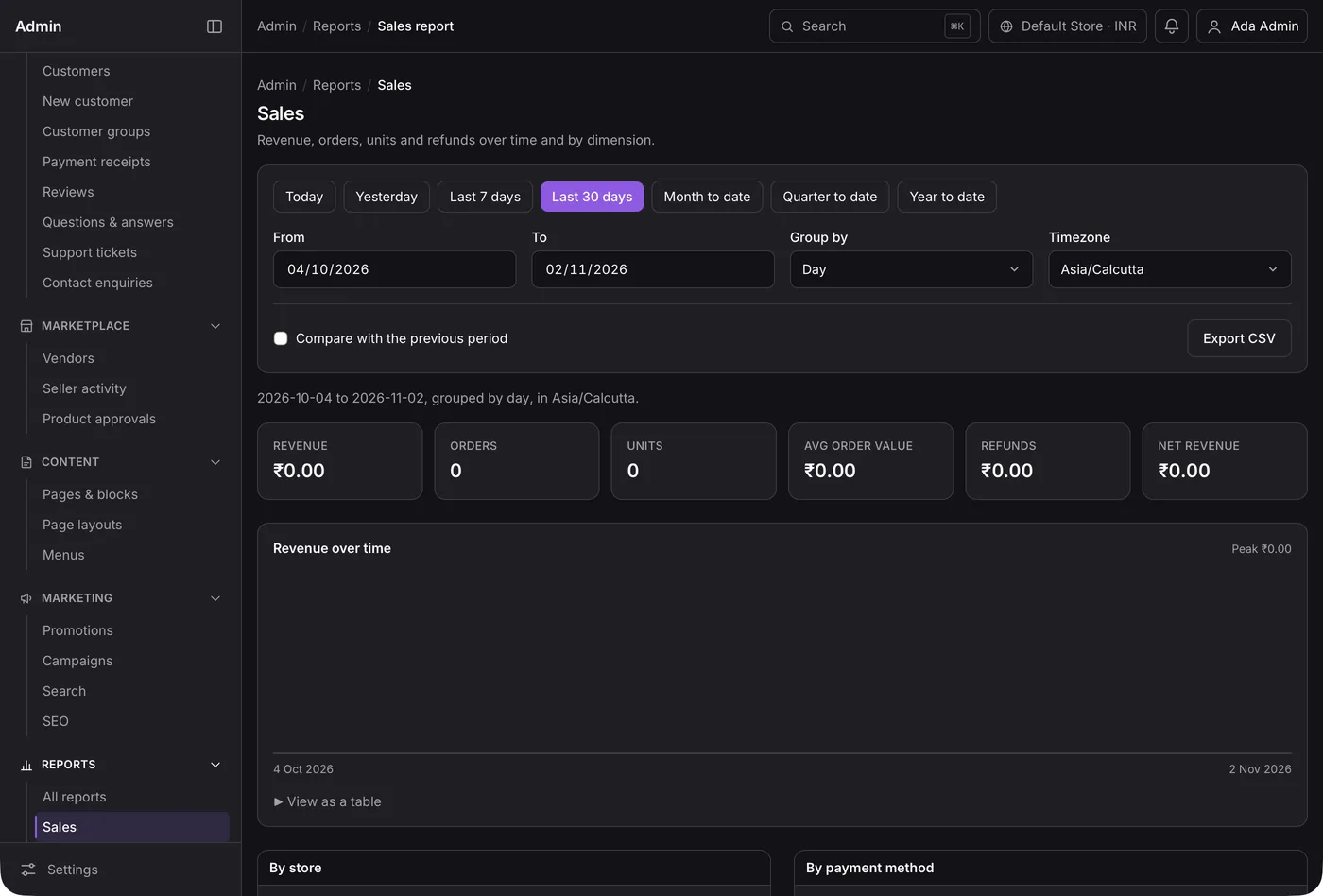
The most useful number is days in stock. A phone that sits for weeks loses value. The report flags old stock, so you can cut the price or sell to a dealer.
Spreadsheet vs ready-made tool vs your own software
| What you need | Spreadsheet and WhatsApp | Ready-made store tool | Your own refurbished software |
|---|---|---|---|
| Sell-your-phone flow with a quote | No | No | Yes |
| IMEI saved and checked per phone | By hand | No | Yes |
| Workshop job cards and parts cost | Hard | No | Yes |
| Grade, battery health and photos per listing | No | With add-ons | Yes |
| Warranty lookup by IMEI | Hard | No | Yes |
| Margin per phone | Error-prone | No | Yes |
| Your brand on the app | No | Partly | Yes |
Worked example: a small refurbisher in its first month
Here is how one phone moves through the software. The details are examples.
- Day 1, quote. A person opens your app, picks the brand, model, storage and city, and answers five condition questions. The app shows a quote.
- Day 2, pickup. Your agent reaches the door and checks the IMEI on the portal. The agent tests the phone and confirms the final price in the app.
- Day 2, payment. The seller gets the money by UPI, sent from a payout system linked to your bank. The app saves the IMEI, ID proof and payment reference.
- Day 3, workshop. A technician opens a job card, replaces the battery, wipes the data and adds photos. The phone gets grade B.
- Day 4, listing. The phone goes live in your store with its grade, battery health and a six-month warranty.
- Day 9, sale. A buyer orders it. The listing closes. The report shows the margin on this one phone.
- Day 60, warranty. The buyer reports a speaker issue. Support finds the phone by IMEI in seconds and books a repair.
Our service
How we build your refurbished phone business software
You start small. The software is planned to grow with you.
- Understand your model. We map how you buy, repair and sell, and what you want to launch first.
- Design the screens. You click through the screens first and change them before any code is written.
- Build the apps. A web admin for stock and the workshop, a customer app, and an Android and iPhone app for pickup agents.
- Test with your team. Your staff use it on real phones. We fix what they find.
- Launch under your brand. Your name on the apps and the store, your data on your own server.
- Grow it. We add cities, dealer sales, new payment methods and new reports as you grow.
Refurbished phone software development cost: what decides it
We do not publish a fixed price, because every business starts in a different place. The cost depends on a few things:
- How many apps you need: customer app, agent app, admin panel, online store
- How detailed the quote engine is: number of questions, price rules per model
- Which connections you need: payment, SMS, WhatsApp, courier, accounting
- Whether you start with one city or many, and one store or several
If you only want to sell, an online retail store can come first, with the buyback side added later.
| Monthly store plan | Your own software (built for you) | |
|---|---|---|
| Start | Quick to start | Takes a few weeks to build |
| Cost over years | Monthly fee, often per order or per user | One build cost, then optional support |
| Buyback flow and IMEI checks | Not included | Built in |
| Workshop and grading | Not included | Built the way you work |
| Data and source code | Stay with the vendor | Yours |
Share your plan, and we will send a written quote after one call.
Whoever builds your refurbished phone software, make sure it can:
- Track every phone by IMEI, from purchase to the end of its warranty
- Stop a payment until the IMEI check is saved
- Keep job cards with tests, parts, wipe proof and photos
- Close a listing the moment that phone is sold
- Show margin per phone and days in stock
- Let you add cities, models and price rules yourself
- Export all your data whenever you want
FAQ
How do I start a refurbished phone business in India?
Decide whether you will buy from the public, from dealers, or both. Register for GST if needed and check the e-waste rules for refurbishers. Then set up software that tracks each phone by IMEI, from purchase to sale and warranty.
What software does a refurbished phone business need?
At least three parts. First, a sell-your-phone flow or a purchase screen. Second, a stock and workshop panel with job cards and grades. Third, an online store or sales screen. A pickup agent app is needed if you collect phones from homes.
How long does it take to build refurbished phone software?
It depends on how many apps you start with. After one call, we share a plan with dates for each part. You see clickable screens first, before any code is written.
Will I own the software and the source code?
Yes. We build it under your brand and hand over the source code. Your data stays on your own server.
Which platforms do you build for?
We build a web admin panel, an online store, and Android and iPhone apps for customers and pickup agents. You can start with the parts you need first.
How do I check if a used phone is stolen?
Check its IMEI on the Sanchar Saathi portal of the Department of Telecommunications. Your software can make this check a required step and save the result with the phone record.
Is my customers' data safe in this software?
It should be. Only chosen staff should see ID proof and bank details, and each view should be logged. The Digital Personal Data Protection Act, 2023 applies. We build these controls in.
Can I start with only an online store?
Yes. Many refurbishers start by selling phones they buy from dealers. The buyback flow and agent app can be added later, if the store is built on the same IMEI-based stock.
Can PRS India build software for my refurbished phone business?
Yes. We build the sell-your-phone app, the workshop and stock panel, and the online store under your brand. Book a consultation and we will show you screens for your plan.
Related guides
Written by
Aditi
Building software at PRS India.