FealDeal
Kutchina
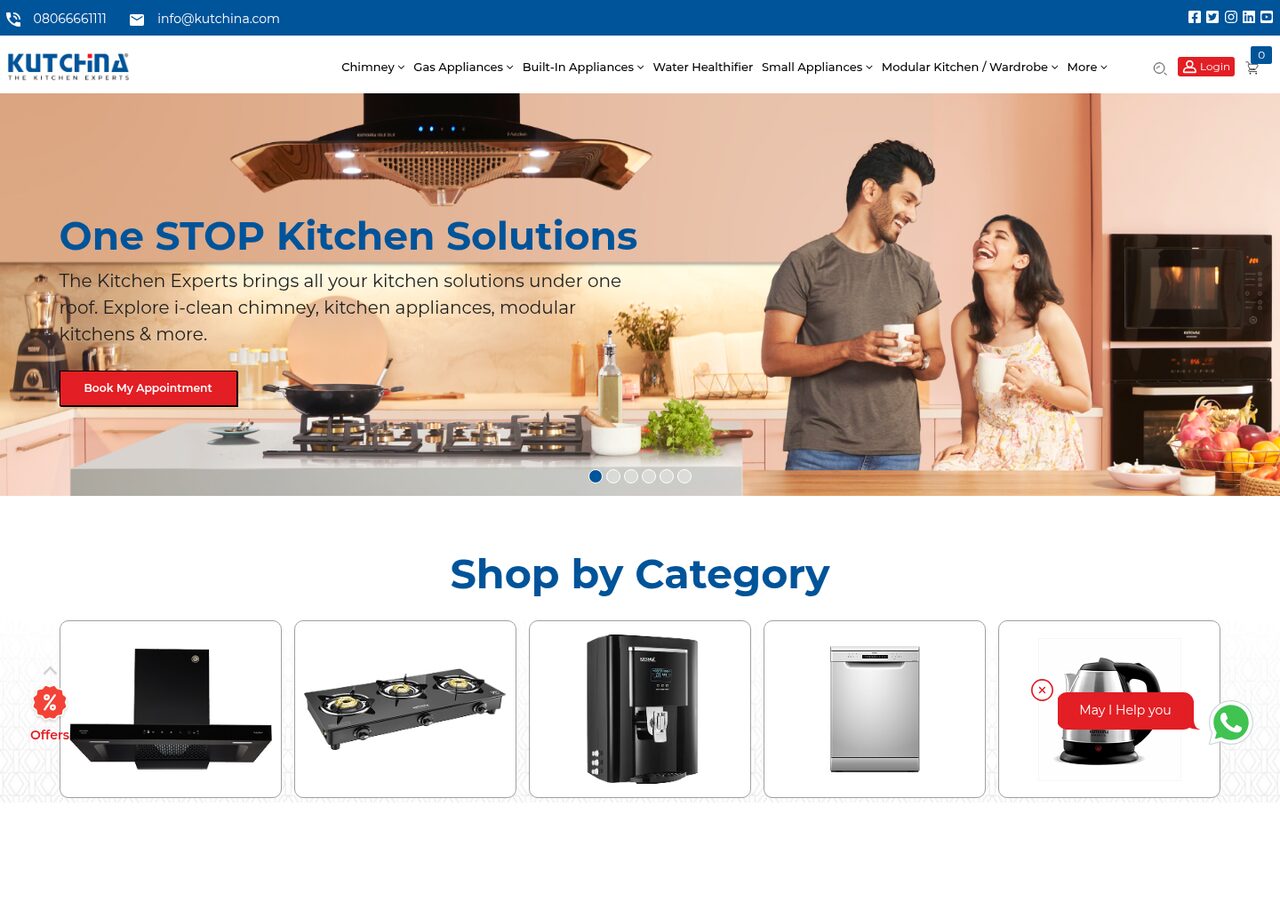
A single Laravel application holding a mixed appliance catalogue, an e-commerce storefront, a design-and-estimate lead engine, a showroom locator and after-sales — for a brand that markets itself as a one-stop kitchen solution.
Laravel
Platform
8+
Product categories in one catalogue
Unified
Storefront + design/estimate lead capture
Pan-India
Showroom locator
01
Kutchina is a home-and-kitchen appliances brand with two decades in the market and a catalogue that spans far more than a single product line — chimneys, hobs and cooktops, built-in dishwashers and ovens, water purifiers, a long tail of small appliances, and modular kitchens and wardrobes. The brief was not "build a shop"; it was to make one website carry a brand catalogue, a selling storefront, a lead engine and an after-sales service area, all at the same time.
The real problem was integration: a brand catalogue, e-commerce, a "design-your-own" configurator, an estimate calculator, a store locator and a content/blog engine all needed to sit behind one login and one admin, rather than as a patchwork of separate tools.
02
We built the site as a single Laravel application so that catalogue, commerce, lead capture and content are run by one data model and one admin, rather than joined together from plugins.
Products are detailed enough to describe a technology-led chimney and a boxed small appliance without pretending they are the same thing. Categories map to the brand's real taxonomy — chimneys, hobs, built-in appliances, water purifiers, small appliances, modular kitchens, wardrobes, hardware — and each product decides its own next step: buy now, request an estimate, or book a showroom visit.
The "Design Yourself" exploration and the budget estimate calculator are treated as lead sources in their own right. A visitor sizing up a modular kitchen is a strong lead, so the flow is built to catch that interest and pass it on, not to stop at a price.
The shop — cart, product browsing, ordering — runs in the same codebase as the blog (kitchen tips, comparisons, buying guides), the showroom locator, and the after-sales surface for AMC and authorised service centres. WhatsApp and phone paths sit alongside the forms because many appliance buyers in India still want help from a person.
Server-rendered Blade keeps product and content pages fast and crawlable, which matters for a brand that depends on search traffic for buying-guide queries. A conventional Laravel + MySQL foundation keeps everything on one platform that is easy to run and well known.
03
The outcome is a single branded platform that behaves like several products at once, without the brand team having to operate several products.
Because catalogue, commerce, leads and content share one model, the brand team edits a product once and sees it reflected everywhere it appears — storefront, category page, and any campaign surface — instead of matching copies across separate tools. That is the quiet win of building this on one Laravel application rather than putting it together from a shop theme and a pile of plugins.
The site is positioned to keep absorbing new product lines and service offerings as the brand grows, because adding a category is a data task, not a rebuild. For a brand that markets itself as a one-stop kitchen solution, the website finally works the same way the business is meant to.
Under the hood
Technology
Services used