Turant Logistics
FealDeal
A high-catalogue ethnic-wear storefront for FealDeal
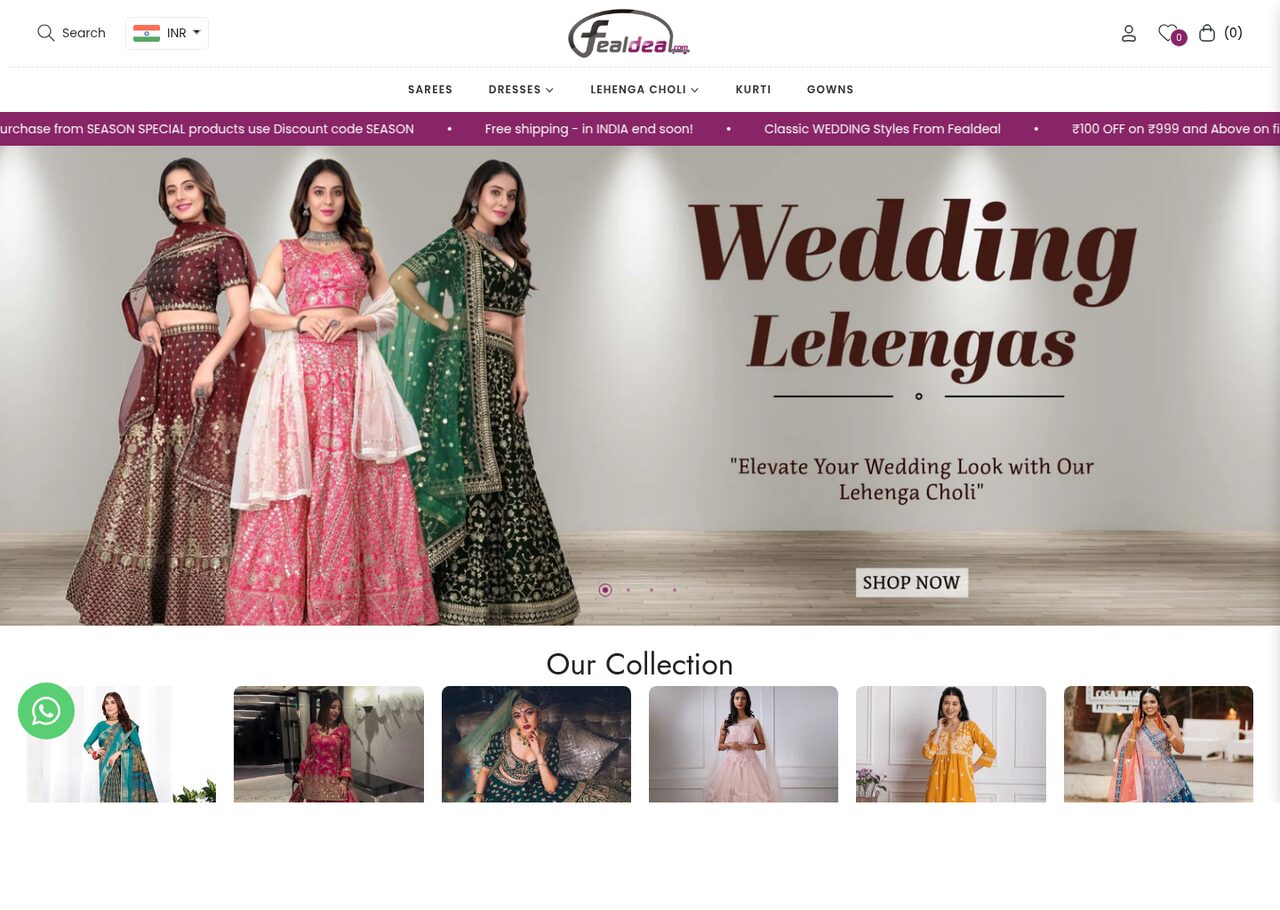
A Shopify store for a Surat ethnic-wear label. It has 200+ SKUs of lehengas, sarees and suits, sorted by type, colour, fabric and work. Shoppers can filter, pay by COD, ask for custom stitching and order from other countries.
- Client
- FealDeal
- Industry
- E-commerce — Ethnic Fashion
- Location
- Surat, India
- Duration
- 10 weeks (build timeframe)
- Published
- Feb 2018
- Updated
- Oct 2026
Shopify
Platform
200+ SKUs
Catalogue
Mobile-first
Storefront
COD + Intl
Checkout
01
The challenge
FealDeal sells designer Indian ethnic wear straight to buyers. It makes and sells lehenga choli, sarees, salwar and Anarkali suits, kurtis and gowns from Surat. The catalogue is the whole business. There are over two hundred styles at any time, and each fits several groups at once. A single lehenga is a type, a colour, a fabric and a work (sequins, zari, mirror, embroidery), and a shopper thinks in exactly those terms.
Where a default theme falls down
- A ready-made theme cannot handle this many products. Nobody can browse a hundred-plus lehengas and seventy-plus sarees in one long grid. Shoppers need groups and filters that match how they shop: by occasion, colour family, fabric and embroidery. Without them, the catalogue is a wall, and sales are lost at that wall.
- Ethnic wear has many options and is often made to measure. Sizes, semi-stitched or stitched, and an optional custom-stitching service must all be shown clearly on each product. A listing must not turn into a long form that the customer leaves.
- The audience shops on a phone, on mobile data. For clothes like this, photos from many angles do the selling. They are also the heaviest part of the page. Photos must load fast on a mid-range Android phone. This is a must, not a nice extra.
- The store has to sell both at home and abroad. Indian ethnic-wear buyers expect cash on delivery. Buyers living abroad need international shipping with rates for each country. These are two very different checkout needs in one store.
The brief, then, was less "build a store" and more "make a big catalogue easy to browse" on mobile, for two groups of buyers who pay in different ways.
02
What we built
We built this on Shopify. We put our design effort where it helps a big catalogue most: how things are grouped, filters, and fast images.
A collection structure that matches how people buy
Products are sorted into groups by occasion and by garment: lehengas, sarees, suits, kurtis and gowns, plus a hand-picked "customer loved" group. Shoppers then find them through filters on type, colour, fabric and work. Rules based on product tags fill these groups on their own when new stock arrives. So the team only needs to tag products, not keep lists by hand. Search suggests items as you type, so a shopper who wants an "Anarkali" gets there in one keystroke.
Variants and made-to-measure, kept clean
Size and stitching choices are set up as product options. The custom-stitching service is a clear, optional step, not something every buyer must do. The product page starts with photos from many angles, details of fabric and work, and reviews from other buyers.
Mobile-first and image-disciplined
The theme is built for mobile first. Images are the right size, and they load only as you scroll, so a product page full of photos stays quick on 4G. The merchant runs offers with levels, such as "buy 2, get extra off", and free-shipping limits. These are set up with the built-in Shopify discounts and theme banners, not with heavy add-on scripts.
Checkout for two audiences
Checkout runs on Shopify's hosted, PCI-compliant flow with Indian payment methods and cash-on-delivery for the domestic buyer, alongside international shipping with country-wise rates for overseas orders. Returns and stitching rules are shown in the store, so buyers know them before they order, not after.
03
The outcome
The result is a store that holds a very large ethnic-wear catalogue without feeling crowded. We can show what was built and what it can do. We do not hold the client's sales figures.
What the build delivers
- A browsable 200+ SKU catalogue. Lehengas, sarees, suits, kurtis and gowns are split into groups and can be filtered by type, colour, fabric and work. A big range feels like choice, not clutter.
- Made-to-measure, built in. Sizes and optional custom stitching use the standard product options, so product pages stay simple and still offer a custom service.
- Mobile-first storefront. Product pages full of photos are built to stay quick on mid-range Android phones using mobile data. Most of this audience uses these phones.
- Two checkout paths on one store. COD and free-shipping offers for buyers in India; international shipping with country rates for buyers abroad.
Why it holds up
The groups run on tags and automatic rules. So the catalogue can grow with new fabrics, new occasions and seasonal drops, without rebuilding the store or filling every list by hand. Offers are set up inside the platform, so the marketing team can run them without a developer. Checkout, payments and fraud checks sit on Shopify's hosted flow. So the merchant gets a payment system that is kept up to date and compliant, without having to run one. The store looks like a designer label and is built to grow.
Under the hood
How it's built.
Technology
- Shopify
- Liquid
- JavaScript
- Shopify Payments
- Cash on Delivery
- Shopify Apps
Services used
- Shopify Development
- Store Setup
- Theme Customisation
- Payment Integration
- SEO
- Performance