
FealDeal
Orly Dry Fruits
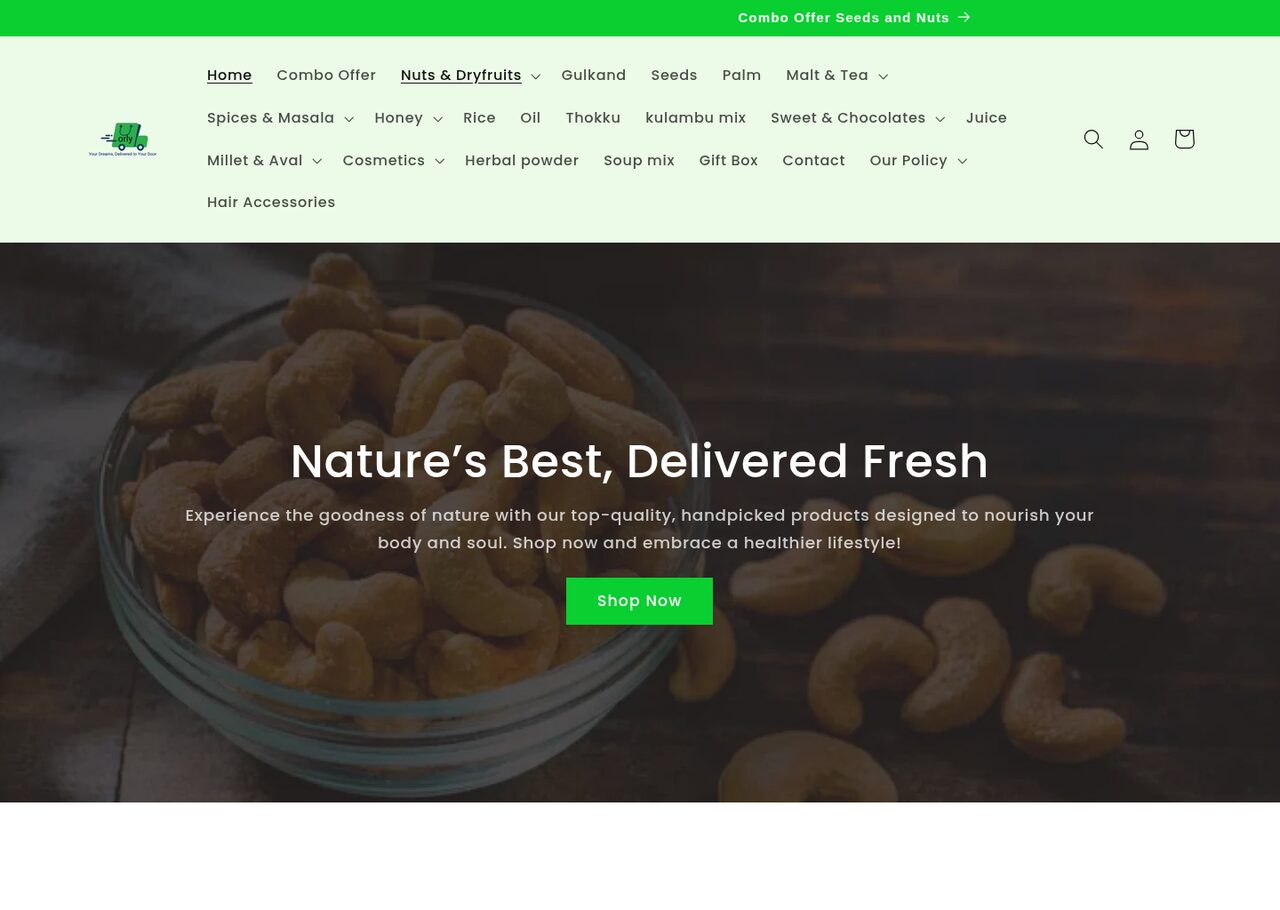
A Shopify store for a Coimbatore organic-foods brand. It sells dry fruits, seeds, spices, honey, millet products and natural cosmetics. It has pack-size options, combo offers and a category tree that keeps a wide range easy to shop.
Shopify
Platform
Multi-range
Categories
Weight variants
Products
Mobile-first
Storefront
01
Orly Dry Fruits is a Coimbatore-based organic and natural-products brand whose range is much wider than its name. Alongside nuts and dry fruits (cashews, almonds, walnuts, pistachios, dates, makhana), it sells seeds, spices and masalas, honey, millet products (dosa mixes, noodles, pasta), teas and malts, rice and oils. It even has a line of natural cosmetics like soaps, oils and serums. This wide range is both a chance and a problem.
The task was to make a very wide, mixed catalogue feel like an organised pantry, not a jumble. Pricing by weight and bundles also had to stay simple to run.
02
We built the store on Shopify and put most of the effort into the categories, so a wide and varied range stays easy to shop.
Products are grouped into clear main collections: nuts and dry fruits, seeds, spices and masalas, honey, millet products, tea and malt, staples like rice and oils, and natural cosmetics. Each one has smaller collections under it. Automatic collection rules based on product tags keep those aisles filled as the range grows. Search lets a shopper go straight to an item like makhana or millet pasta.
Pack weights and formats are set up as variants with the right price for each pack. So a single product page covers every size of an item, instead of spreading the catalogue across duplicates. This keeps listings tidy and stock easy to manage.
Combo and hamper offers are the backbone of dry-fruit gifting. They are set up as their own products and collections. Offer prices and free-shipping limits use the built-in Shopify discounts. The team can create a festival hamper without a developer.
Product pages carry the detail a food buyer wants, backed by on-page reviews and clear shipping and returns policies. Checkout runs on Shopify's own checkout in Indian Rupees with common Indian payment methods. The theme is built for phones first, so the store works well on a phone. The result is a wellness store that feels organised and believable, not messy.
03
The finished store turns an unusually wide organic-foods range into a clear catalogue that is easy to shop. We describe what was built, not internal sales numbers we do not have.
The category tree runs on tags and rules. So Orly can keep adding new lines, like new millet formats and new cosmetics, without rebuilding the menus. Built-in discount and payment tools mean the platform looks after promotions and checkout, and the seller can manage them alone. The store can grow with the range instead of fighting it. This is exactly what a growing organic-foods catalogue needs.
Under the hood
Technology
Services used